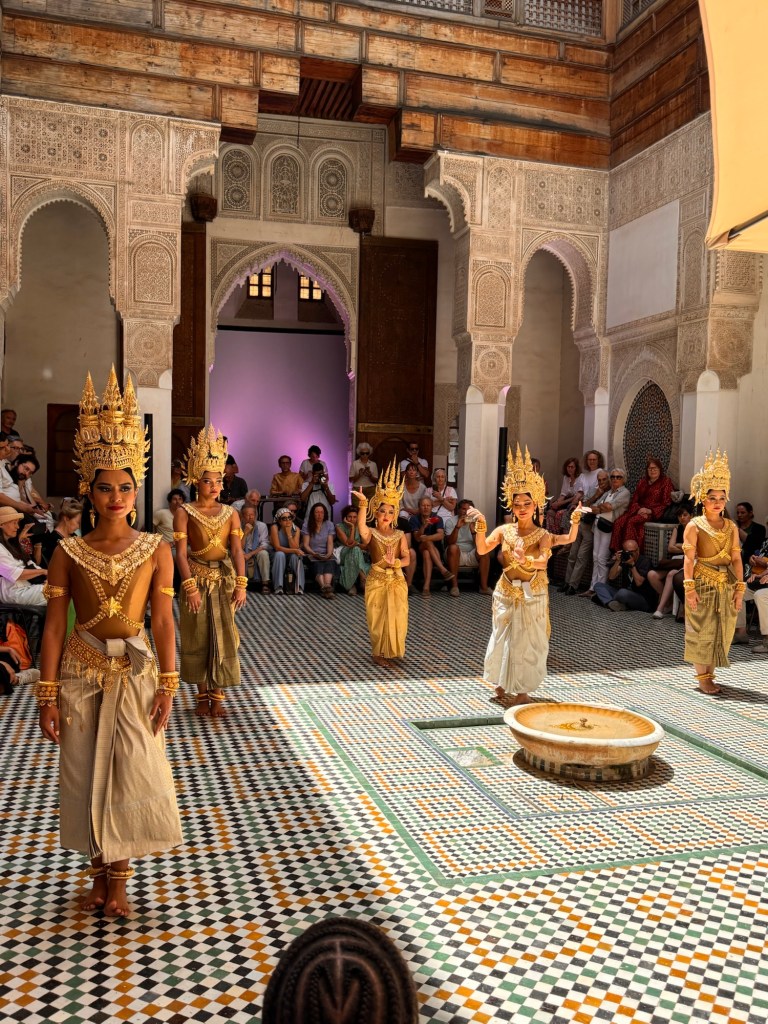
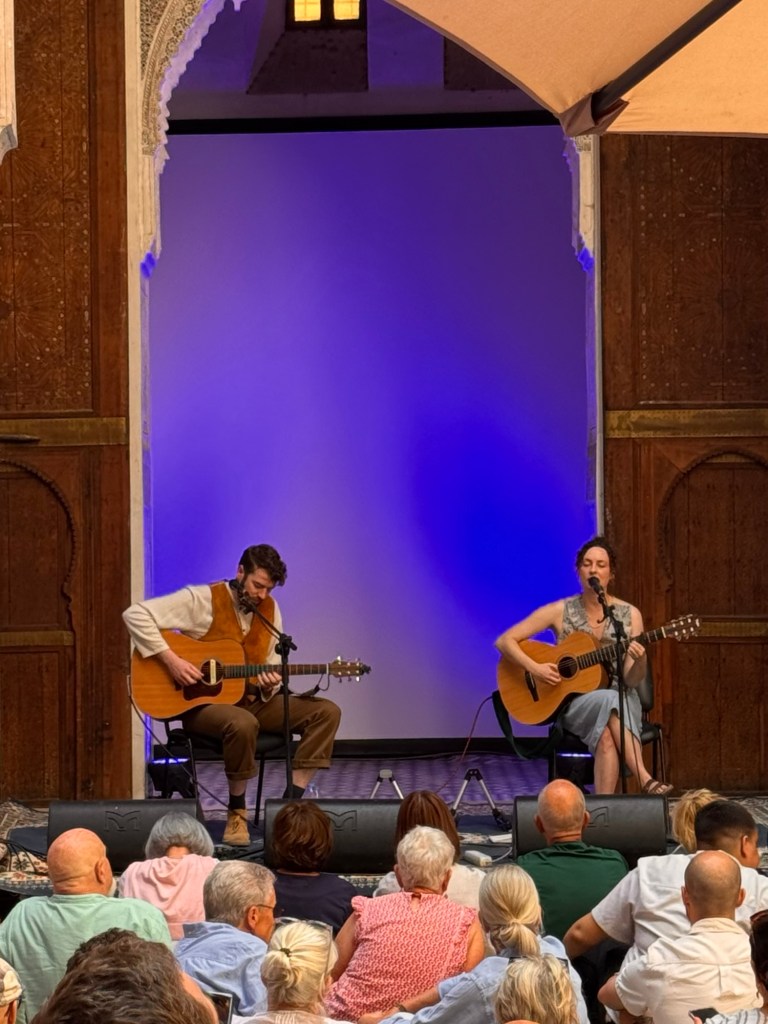
The 29th edition of the World Sacred Music Festival unfolded as the sun retreated. The intense daytime heat slowly gave way to a breeze. More than a hundred performers, arriving from various countries—Kyrgyzstan, Turkey, Pakistan, Ireland, Lebanon, Cambodia, Australia, India, Germany, France, Iran, and all-over North Africa—filled the stage.
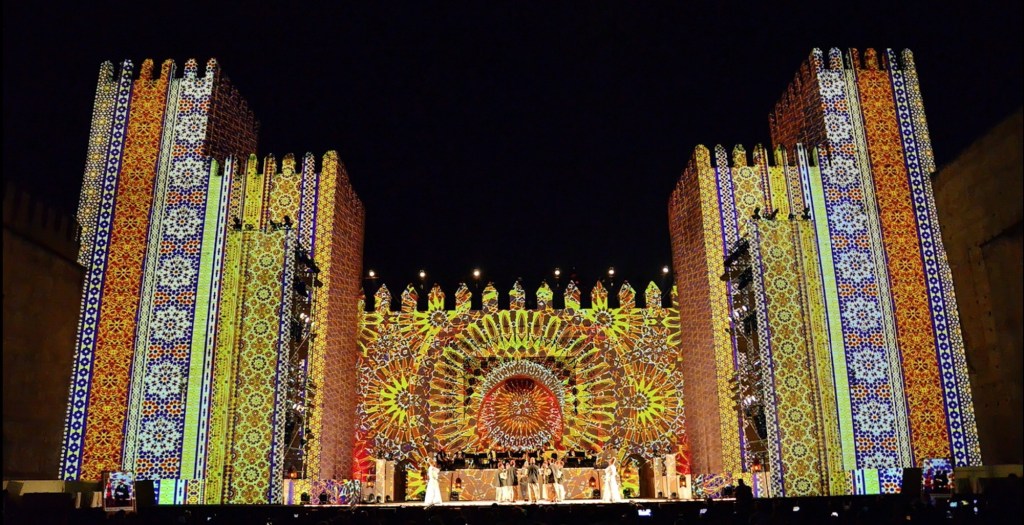
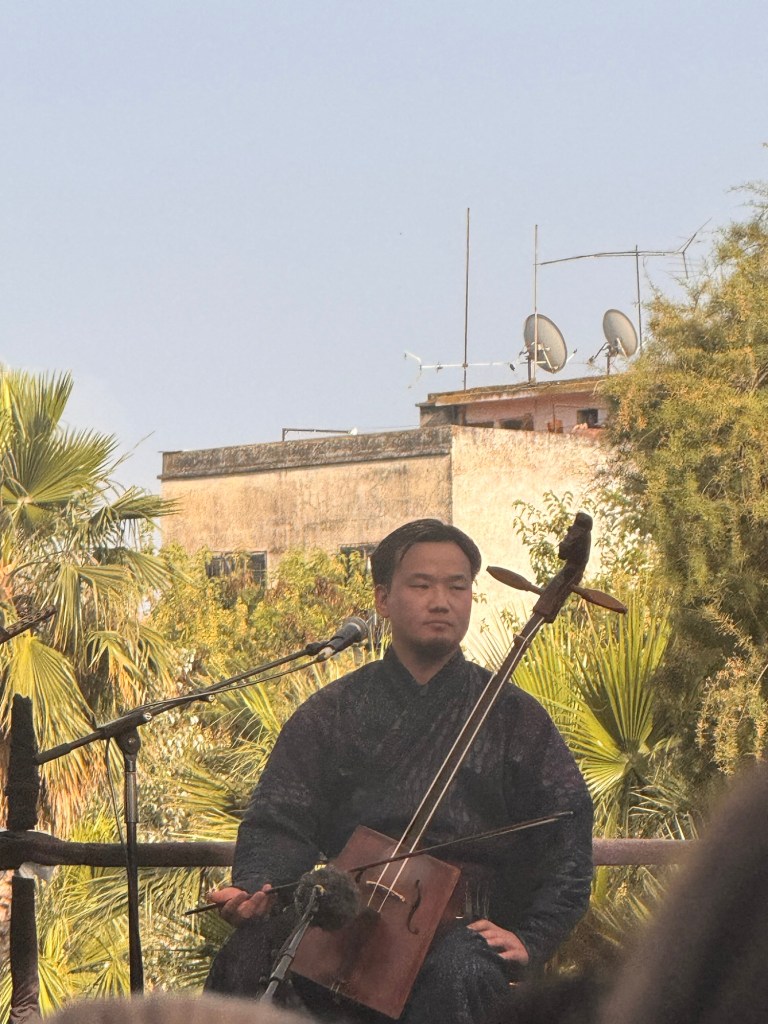
The stage, set within an open-air 19th-century stone fort, burst into a spellbinding pageant of colour, sound, and precisely choreographed movement as the sky grew dark and the stars became indistinguishable from the patterns of shifting light on the thirty-foot-high walls—much to the delight of three or four thousand attendees.
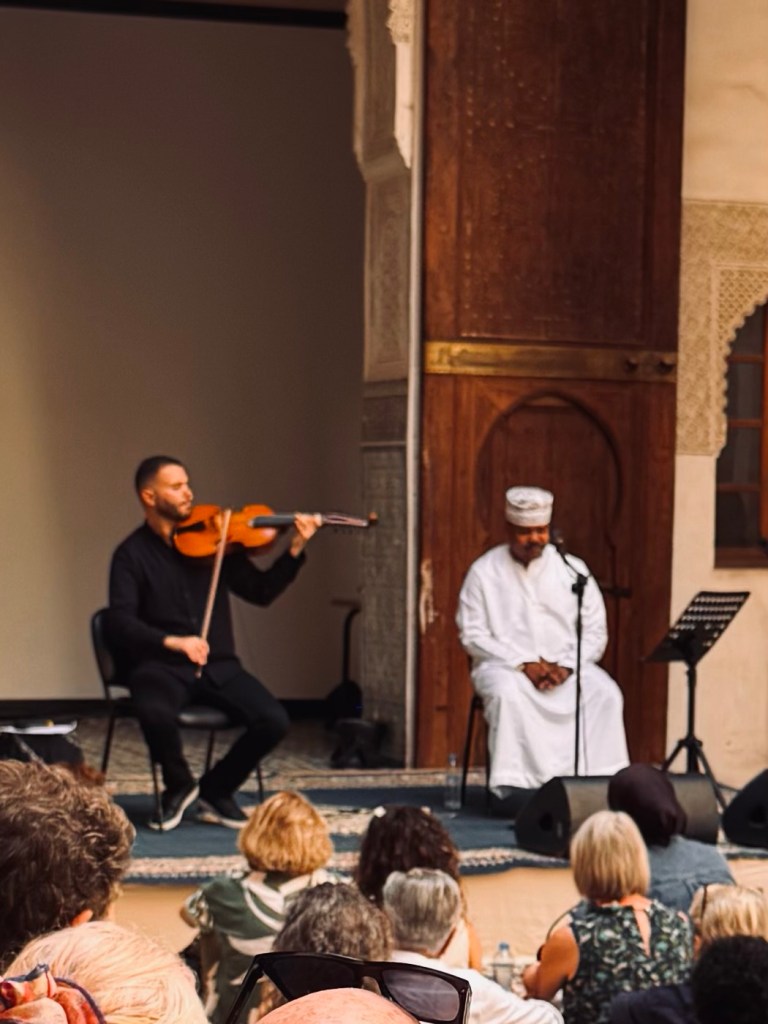
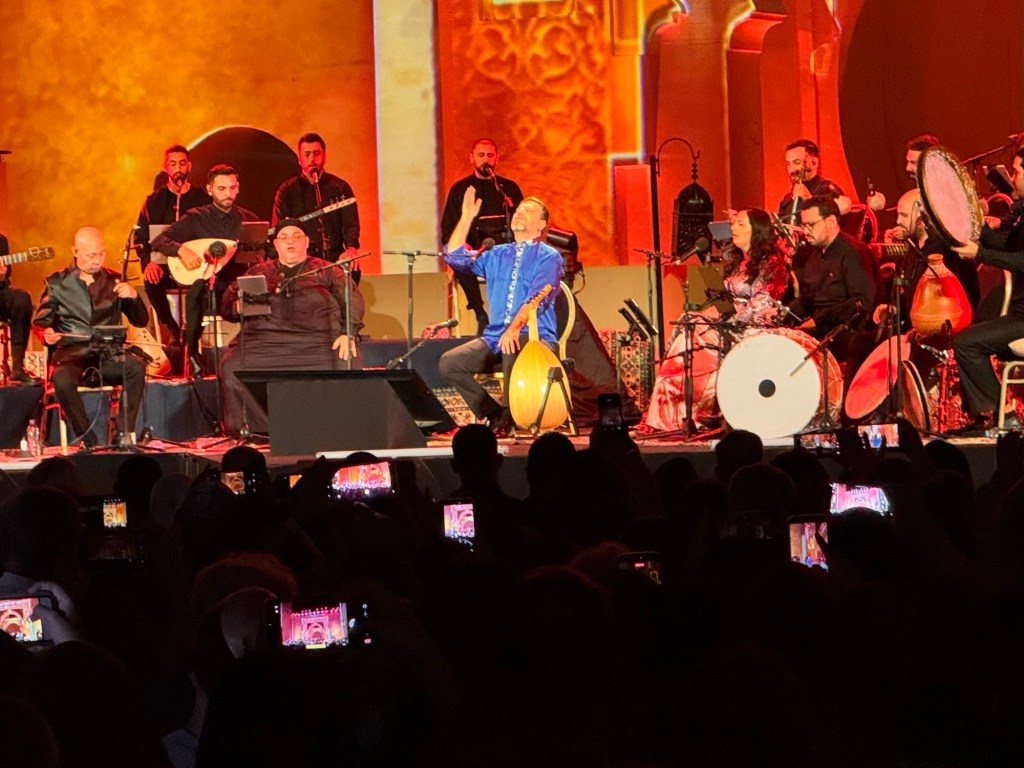
Tarab mystique – Tunisian Violinist Jasser Haj Youssef & Tanzanian Sufi Mystic hussein Abdallah
The festival’s founding ideal—that spiritual traditions might meet not as rivals but as reflections—felt ironic, even among the many ironies that served as the underlying rhythm of the four-day event.
The venue, built in the 19th century by Sultan Moulay Hassan—five generations before the current king—was intended to be a manufacturing facility for modern weapons. Alas, the European powers whose armies he feared declined to help him with his project, leaving Morocco to fall under French protectorate rule. Not unlike modern technology transfer fears. Today, the fort serves as a venue for sacred music of diverse traditions.
This year, the drumbeat of war waged by the United States and Israel in the Gulf cast a shadow over the event. In one of the greatest ironies, the Muslim king Abu Mohammed Abd al-Haqq offered protection to Jews persecuted by Christians in Spain in 1438 AD by granting them a neighborhood (mellah) next to his royal palace. All have since left for the modern state of Israel—a country allied with America (led by a Secretary of War who has crusader crosses burned into his chest), now waging unrelenting war on Muslims.
The words of the innovative Muslim singer Sami Yusuf, a British-Iranian-Azerbaijani artist who has mastered music ranging from Indo-Pakistani Urdu traditions to Christian hymns, struck a chord with the audience: “The world is troubled at this moment. It is not time to turn our backs on music. Rather, it is now a necessity—to return to what is most essential, most human.”
“Sacred music,” he added, “reaches toward the noblest parts of us.” But even as he spoke, one sensed the fragility of his words, as though they demanded a kind of faith bordering on naïveté—a faith in global community that the West now seems to reject, despite having once given birth to it. Many of the musicians here, like Sami Yusuf, learned their craft in European capitals.
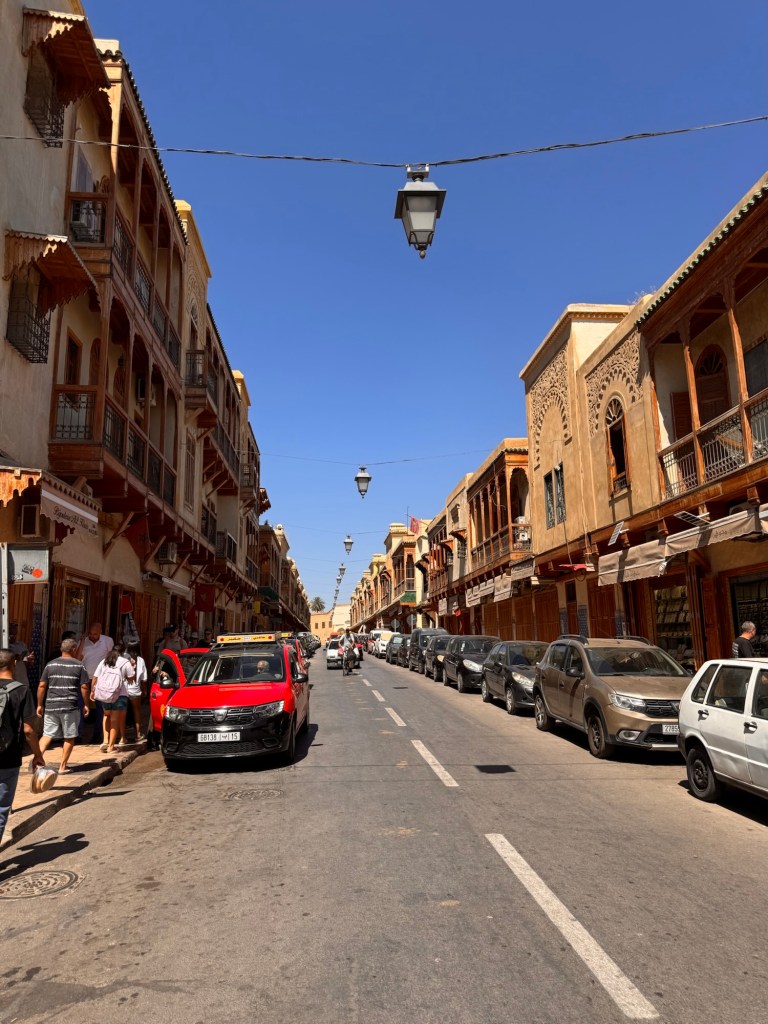
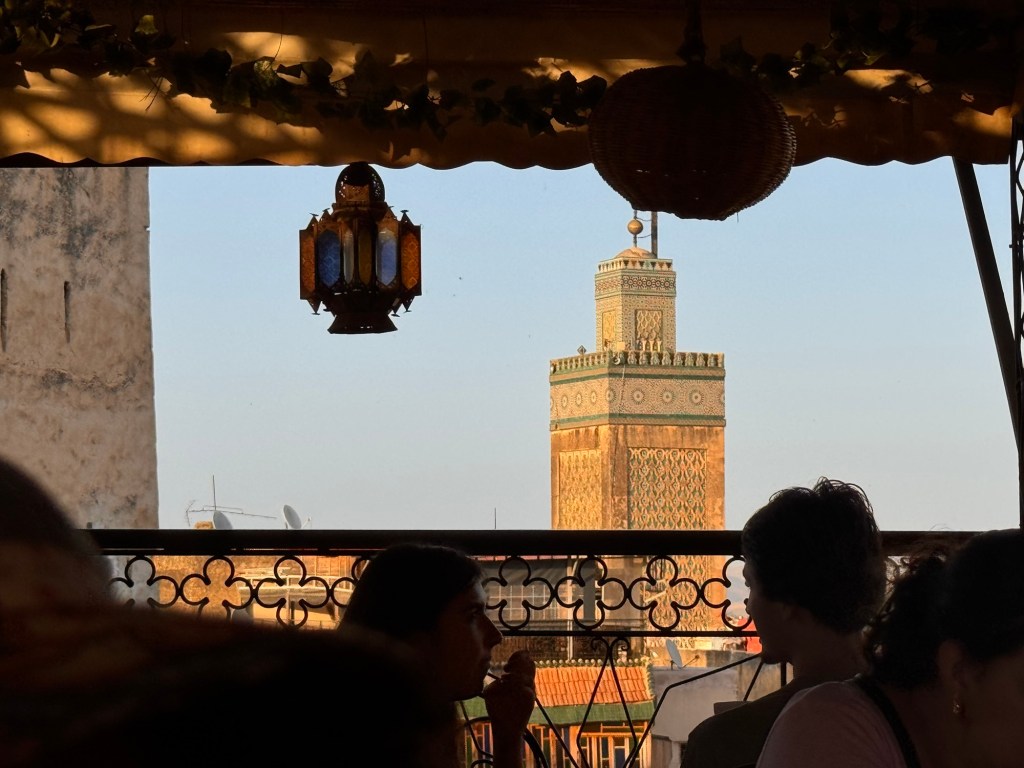
Beyond the stage, the medina persists in its older, quieter truths. Founded in 789 by Idris I, its 700 acres of narrow, cobbled arteries hold generations layered upon one another. Over 150,000 residents move through its compressed spaces alongside as many trades and small economies, in rhythms that feel unchanged by the passing of centuries.
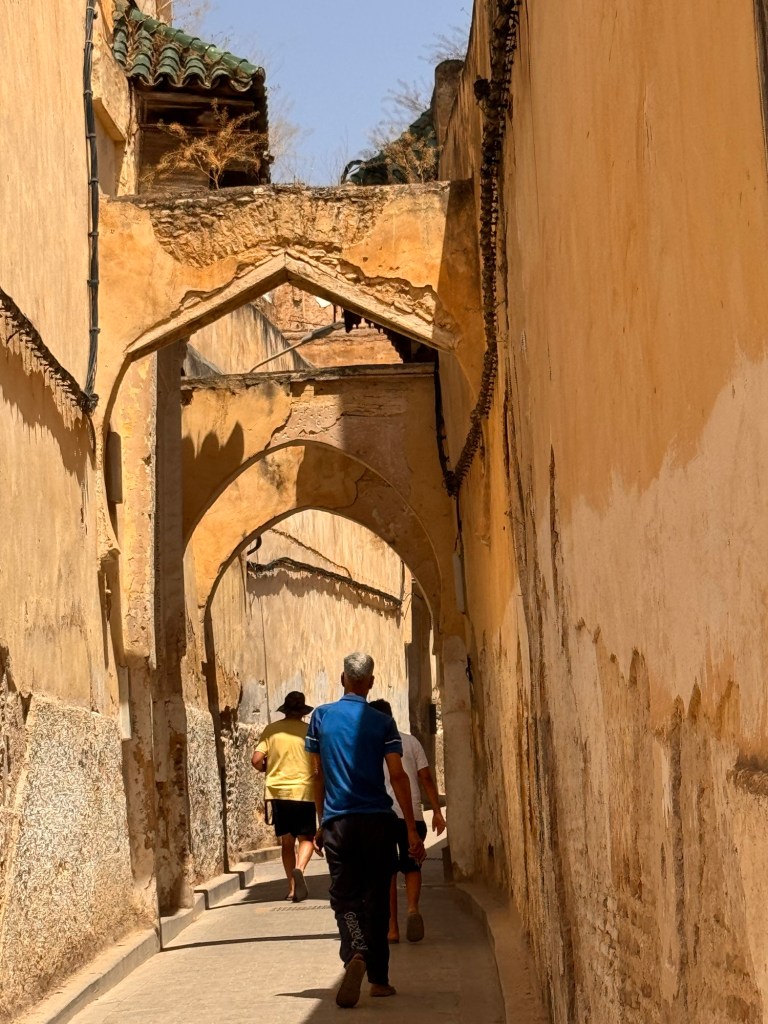
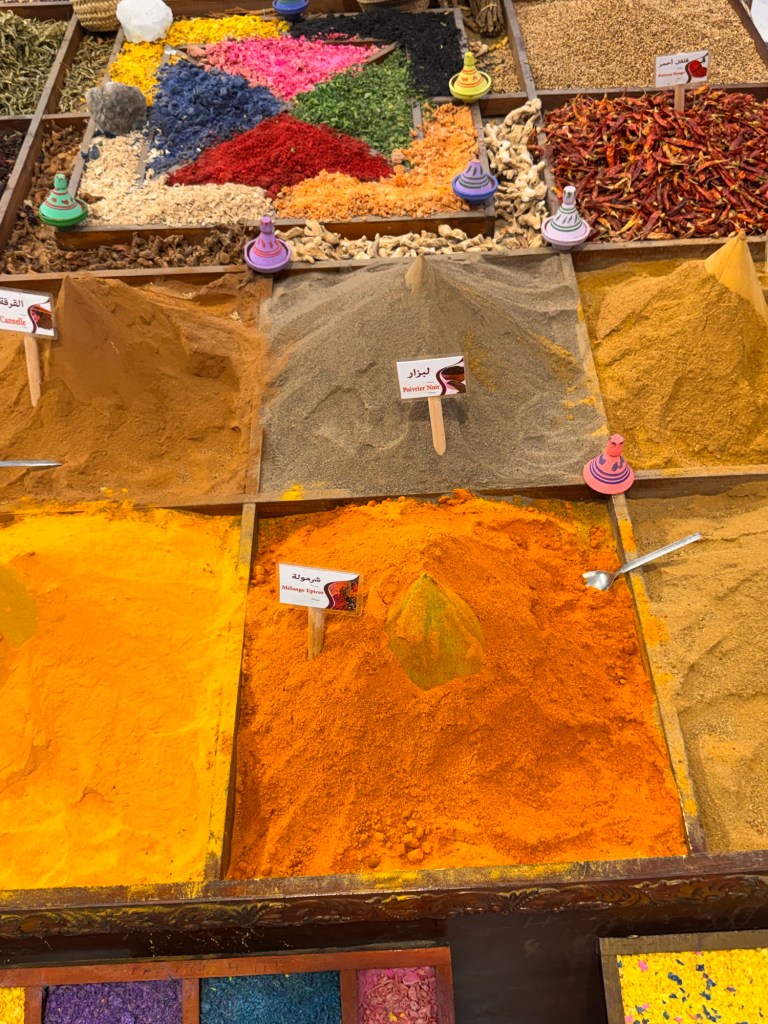
The air carries everything at once: spice, decay, voices, memory. Cats linger at the edges of human life; donkeys trudge through the unmotorized alleys, carrying goods and garbage.
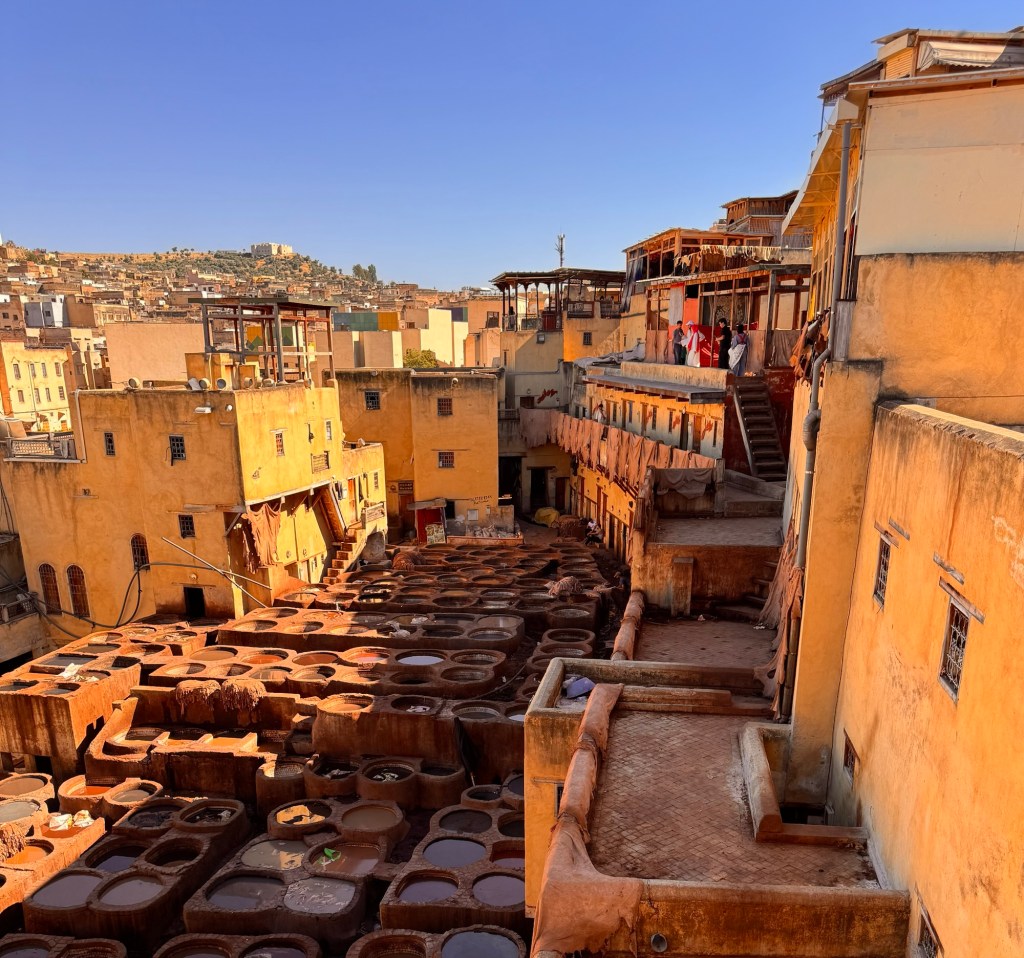
In this density, music pours out of venues—much of it devotional, searching, often luminous. Voices reach toward something that feels older than doctrine, older even than language. For moments, it seems possible to believe that beneath the world’s many names for the sacred, there exists a single, indivisible longing.
Even the gathering of attendees—mostly French, Spanish, German, and Moroccan—carries its own muted dissonance. Many in attendance—grey-haired, reflective, shaped by the intellectual and moral aftermath of post-war, post-colonial Europe—belong to a generation that once believed deeply in dialogue, in openness, in the possibility of coexistence. It is the company of secular westerners and westernized orientals seeking spiritual truths without the harder edges of politicized religions. Yet the world they helped imagine now turns, in places, toward suspicion and retreat, reverting to 19th-century tactics of coercion and brute force. The ideals embodied in this festival feel, at times, like bitter nostalgia.
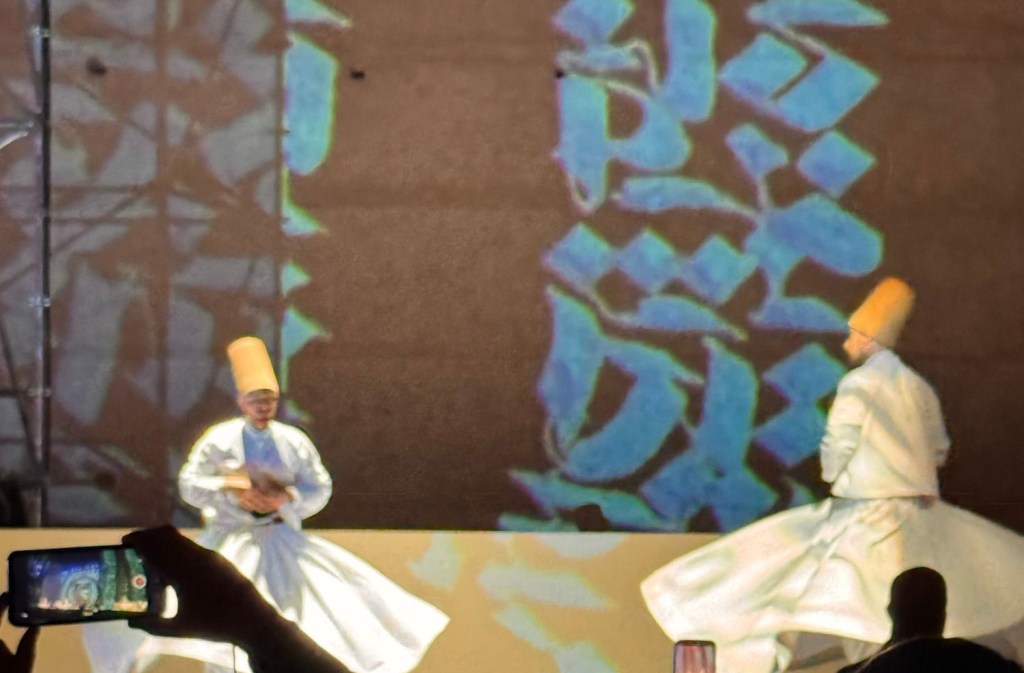
And still, the music plays. Sufis whirl in ecstasy. A Tanzanian mystic plays with an accomplished Tunisian violinist trained in Paris, leaving the audience in profound silence. Ghana Shbeir sings in Aramaic – the original language of Christ. Men and women nod pensively—some moved to tears. A remarkably talented trio, L’Antidote, from Albania, Lebanon and Iran enthral the audience with virtuoso performance of piano, cello, and percussion. For a few hours, within the ancient stone and night air, that impulse finds a voice. It rises, trembles, and fades.
What remains is not certainty, but a quieter, more fragile question: whether the truths that feel so universal in song can survive the divisions that define our waking world. Yet a disturbing thought lingers: this venue, this festival, may be in danger of becoming a graveyard for those ideals.

