The Dust Storm, the Lost Road, the Oasis and the Richest Man in the World.
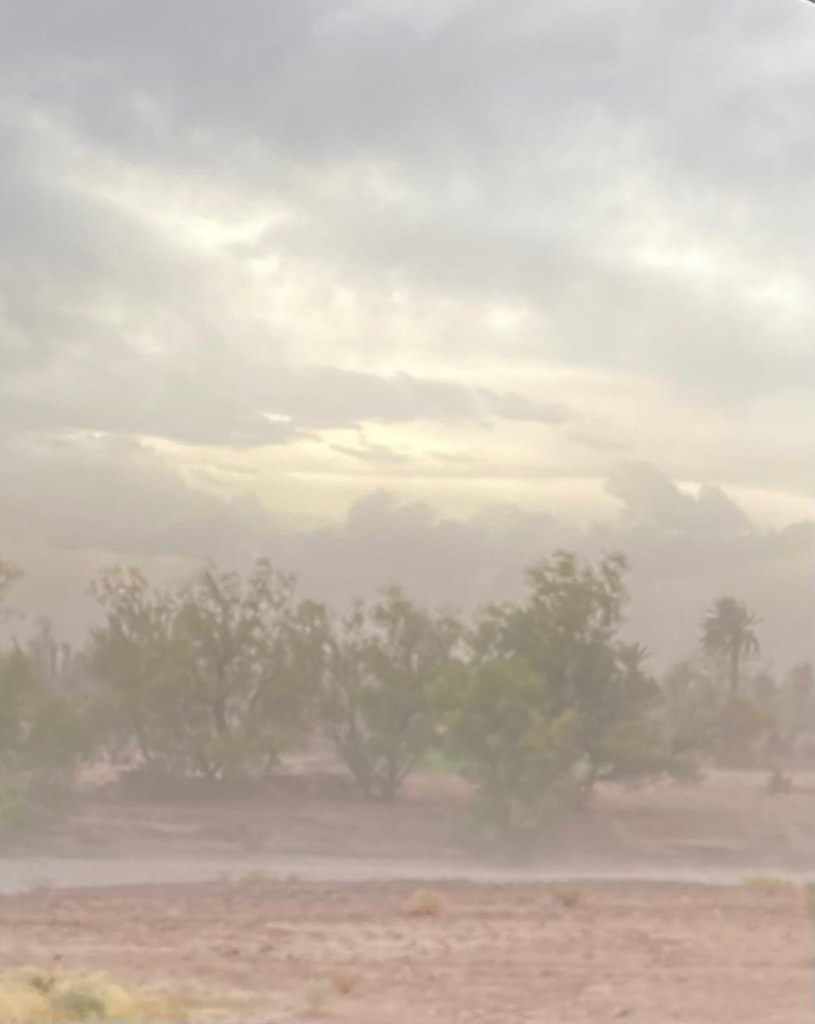
After an entire day driving through the winding roads of the majestic High Atlas Mountains, we were greeted by the sudden burst of hot, dry, desert wind. Its dramatic breath briefly foreshadowed by flying debris and dust, it swept across the green oasis and turned the air to sand, drew a curtain of ochre haze across the sky until the sun was merely a pale suggestion, before dissolving into nothing. The dry riverbed which in other seasons carried the life-giving waters of the Atlas Mountains bellowed clouds of dust into the sky.
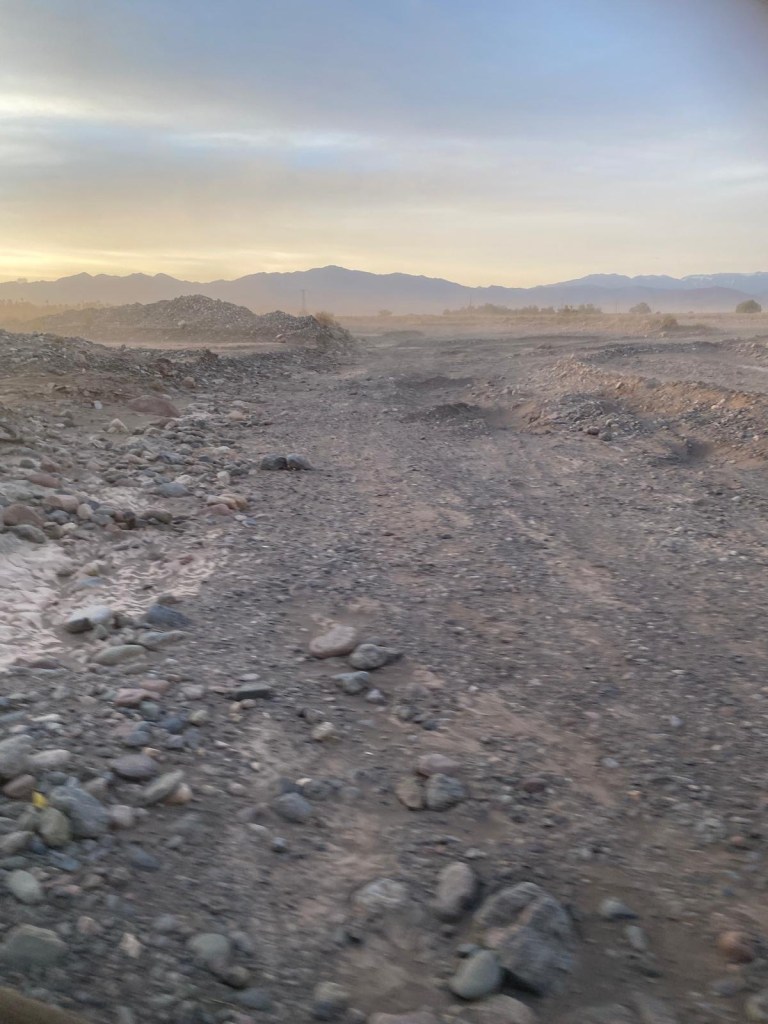
The palm groves vanished in the haze. We turned off the main road onto a dirt track, chasing GPS directions toward The Sawadi Ecolodge (Thai translation of Sanskrit word for ‘well being’) in the bosom of the palms. The track narrowed. The gravel deepened. The road stopped being a road and became a gravel pit threading between trees we could no longer see. We were lost! As the sand blew the sun sank somewhere behind the dust, its descent invisible except for the ochre and amber haze that began to give way to the darkening horizon.
I reversed slowly, feeling for the edge of the track, the rear tyres sliding on loose stone, trying to retrace two kilometres toward the last certain thing I had known: the paved road.
Then through the blowing wall of sand, a man, his white scarf wound so tightly around his face that only his eyes were visible, moved through the dust storm. He seemed at ease navigating the sudden cloud of dust as a man living close to his own element – moving through in his small scooter barely inconvenienced, like a fish in its own bowl.
I called to him then yelled out the name of the ecolodge over the blowing wind. He raised his arm and gestured into the wall of nothing. I looked. There was only more sand, more shifting shadow, more swirling ambiguity.
Hastily, I assembled a few words of French, Arabic, a set of arm gestures and a smattering of English to ask if he might lead us there. He waved in the opposite direction as if to say his village was the other way. I tried again — the same broken multilingual theatre, the same inventory of gestures — and he looked at me for a long moment with the patience of a man who has seen stranger things than a lost foreigner pleading in three languages at once. His eyes smiled. And then he led the way.
We crept behind him through the storm. He turned often to confirm we were within sight, and then at a sharp bend the narrow kasbah gates of the ecolodge materialized from the dust. In that exact moment, a loud thud went through the chassis of the brand-new rental SUV (that the Avis agent assured us had only one driver before us) and shook us. The rear passenger wheel hung directly over a deep cement gutter running beside the gate and turned aimlessly.
A villager appeared on a bicycle and stared nonplussed at the offending wheel and consulted the motorcyclist in Berber. I joined them. The three of us stood in the blowing sand and studied the problem with the seriousness it deserved. Hand gestures alone were enough for us to fetch large stones and jam them against the bottom of the hanging wheel. (All the while I was congratulating myself for having bought the entire insurance package from the agency – protection from my privilege Visa card be damned!).
We pushed and rocked. We pushed again. And finally, with a screech the car came free and miraculously unscathed! Our newfound village friends directed us carefully through the narrow gates. Finally unable to suppress their curiosity, they asked if I was from India. Taking this as a cue for camaraderie, I declared, ‘Shah Rukh Khan!’ and they smiled broadly in recognition of the Indian Bollywood star’s name which is a household name in Morocco! It would henceforth be amongst the opening words of any conversation with local villagers.
The storm fell away as quickly as it had come. Inside the Sawadi Ecolodge was another world entirely – French guests – almost all of them working for French companies in Casablanca – feasting on organic Moroccan dishes and fine Moroccan wines made by French vineyards, children laughing and jumping in a heated pool, and a remarkable canopy of trees – fig, olive, pomegranate, apricot, grape vines, orange, pear and palms. Mature trees pressed close along the paths that ran beside rows of herbs – coriander, lavender, rosemary, and vegetables – tomatoes, kale, cabbage.
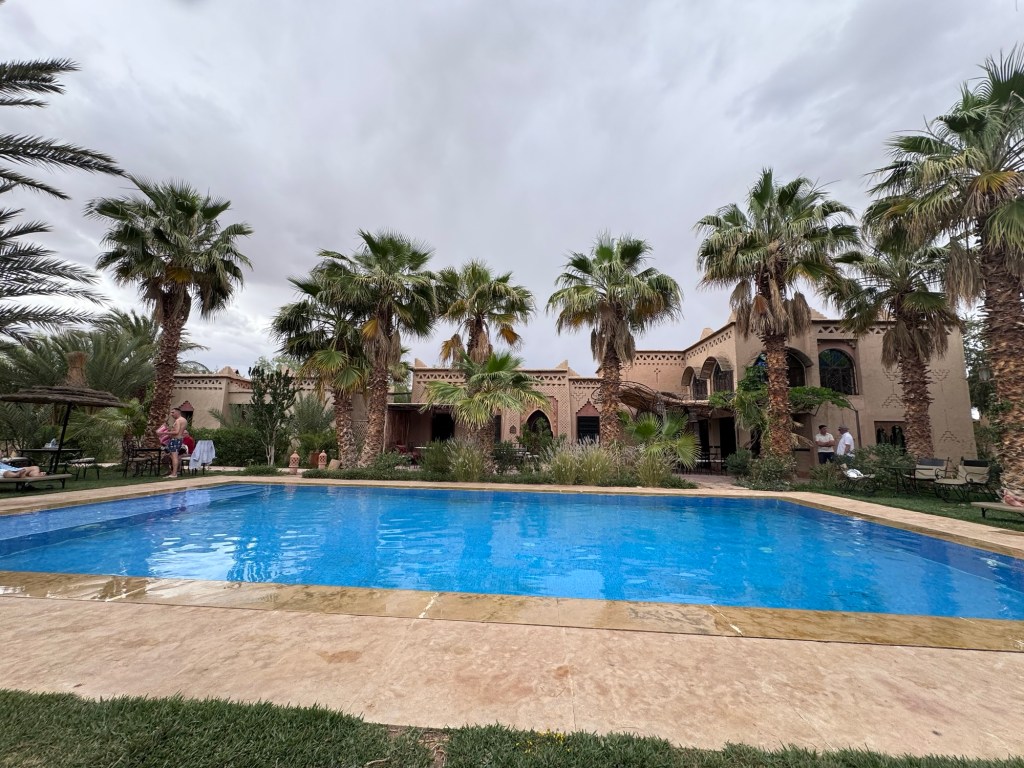
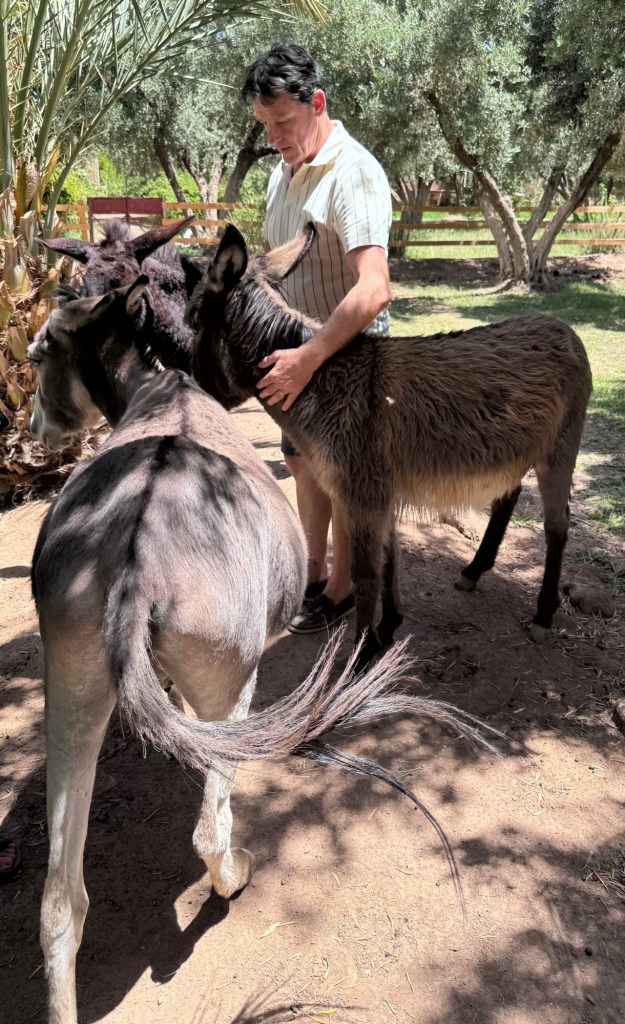
An organic farm every corner of which articulated the two decades of loving labour of Nicola – a Frenchman from Bordeaux – and his family. Nicola greeted us with the unhurried warmth of a man who made exactly the choices he meant to make and had time to grow comfortable with them. Donkeys gathered around him competing for his affection as he whispered warmly into their ears. Chickens, turkeys, horses wandered freely.
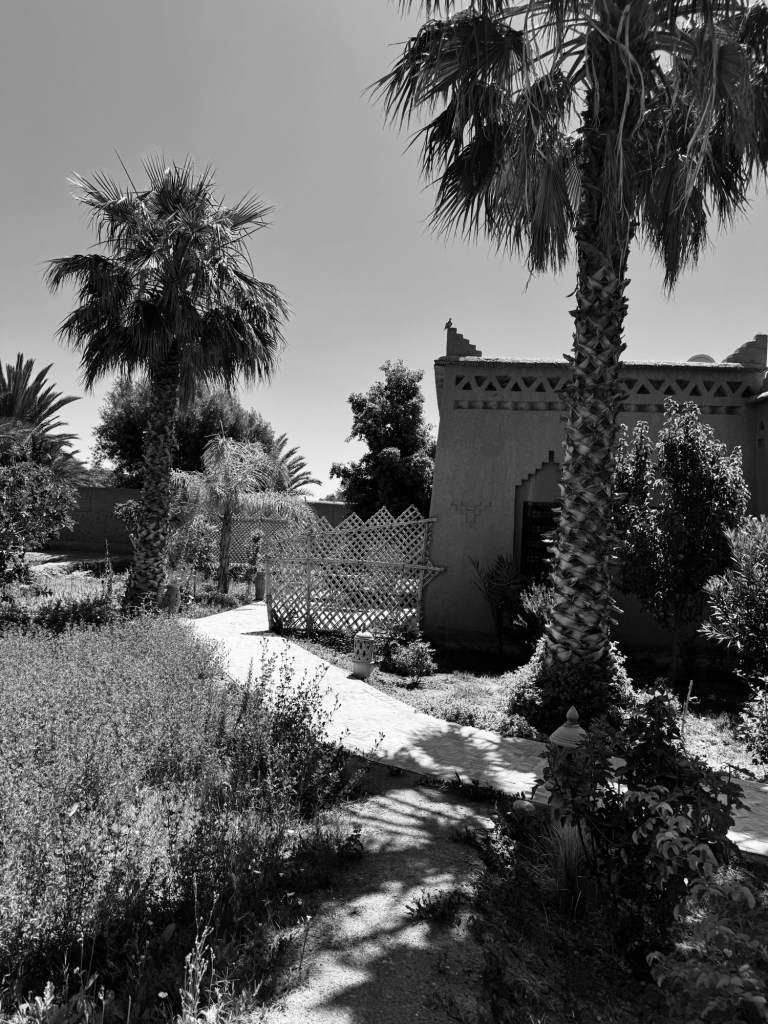
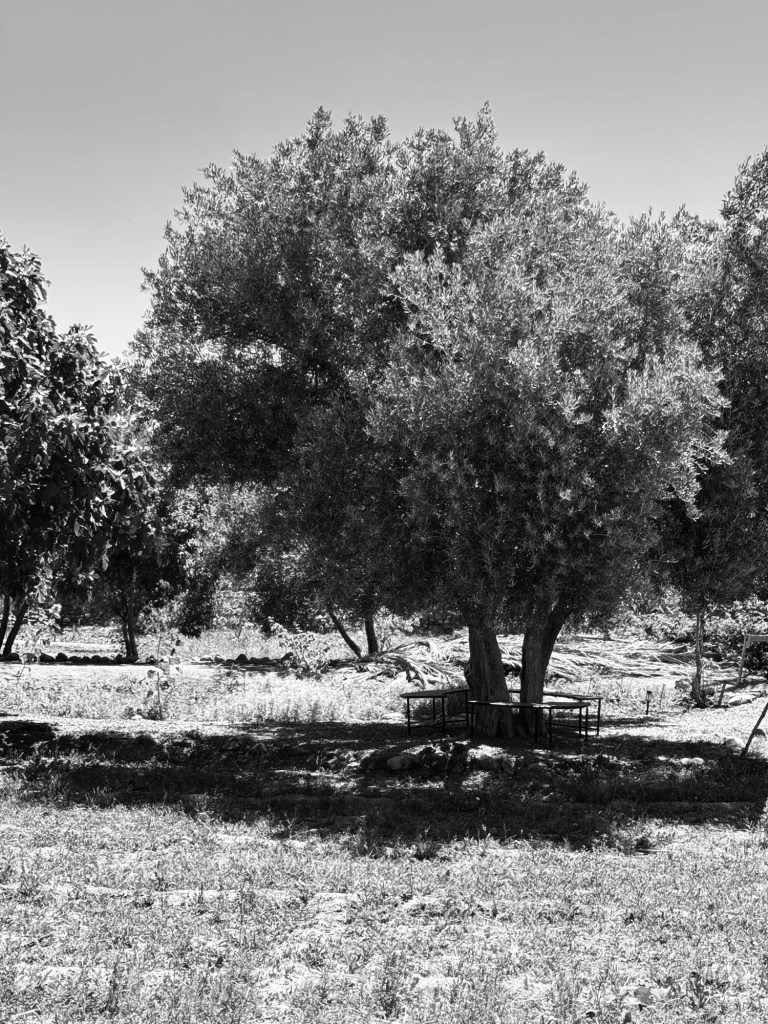
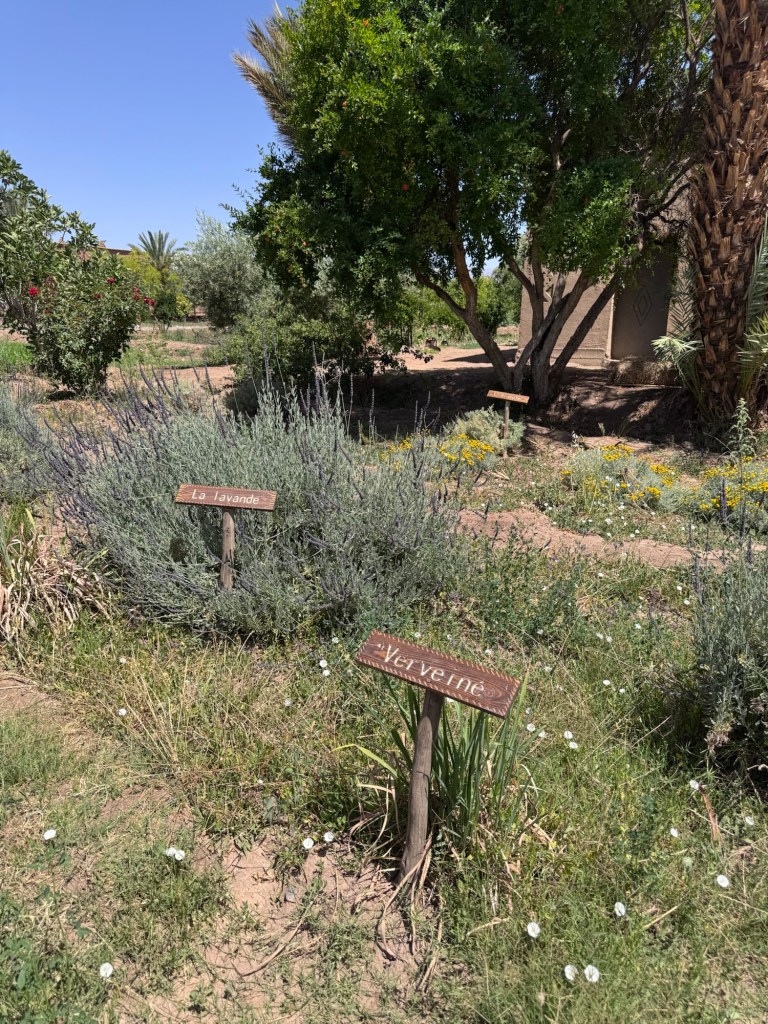
The ancient Persian irrigation system, Nicola explained – ran through the entire 4500 hectares of the Skoura oasis through a network of underground canals (khettaras) and above ground channels (sequias) for over three thousand years! The subterranean Atlas Mountain waters were mined into underground wells and carried through interconnected tunnels to gently feed the soil.
“I am the richest of men,” he said, as though reporting a simple fact, when I asked about his life.
“People told me, how do you dare build something here, in a remote part of a country that we colonized?” And he paused before adding dramatically, “They may despise you for what your history did to theirs?” He had listened to every version of the warning. Then his face broke into its wide, uninhibited smile.
“C’est la vie,” he said as only a Frenchman could shrug “Everyone who lives in fear will find the object of their fear. N’est-ce pas?” He laughed, easily, and generously. “I have a wife and four children. That is all the wealth I need. This place is all the ambition I ever had”
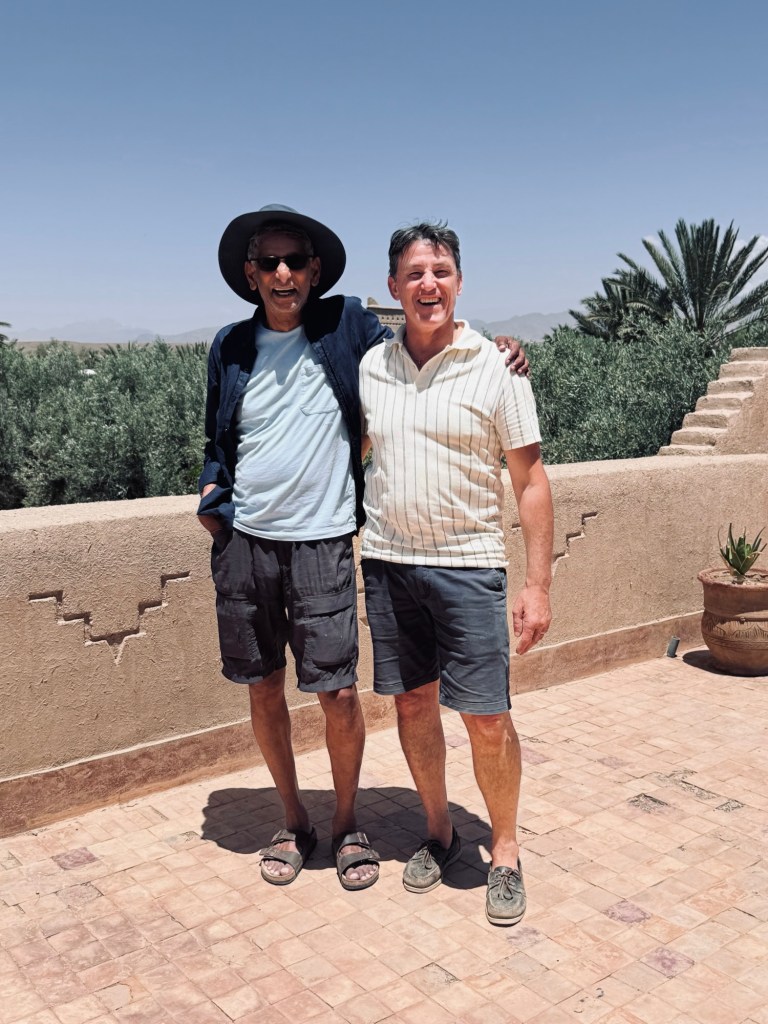
Outside the walls, the oasis of Skoura continued its ancient work — sustaining, yielding, receiving — as it had for millennia. The oasis is not merely land made fertile. It is a living argument, three thousand years long, that ingenuity, water, and patience, given enough time, can make even the desert generous.
It refreshes the body and restores the soul. And occasionally, if you arrive in a sandstorm and fall into a gutter to be led out through the dark by a man with kind eyes and a white scarf, it will also make you feel, however briefly, like the richest of travellers.

