The chaos of Marrakech begins the moment you enter the Medina, that ancient, enchanted part of the city packed with narrow alleys, tiny shops (souks), restaurants, mysterious doorways, and people who all seem to know exactly where you should go, even when they do not.
In truth, the adventure begins even earlier, the moment you take a taxi towards the Medina. Your first encounter with Marrakech will certainly be a short but educational haggling session with the taxi driver, a contest that you will leave you with a slight loss of dignity, a little confusion, and certainly deprived of a larger banknote than you ought. The driver will then assure you, with magnificent confidence, that he can take you directly to your riad, one of those traditional Moroccan houses now transformed into small, opulent hotels.

Taxi driver arguing about the fare.
This is, of course, impossible.
Taxis cannot enter most of the Medina. The true art lies in discovering how close the driver can get you, which may or may not be the same as how close he finds convenient. There will follow a lively discussion with several strangers in a mix of languages, some not fully shared by both parties. At this point, the helpful onlookers will appear and kindly recommend a man with a hand-drawn cart, who will transport your bags through the alleys and, naturally, guarantee that he knows the way to your riad.
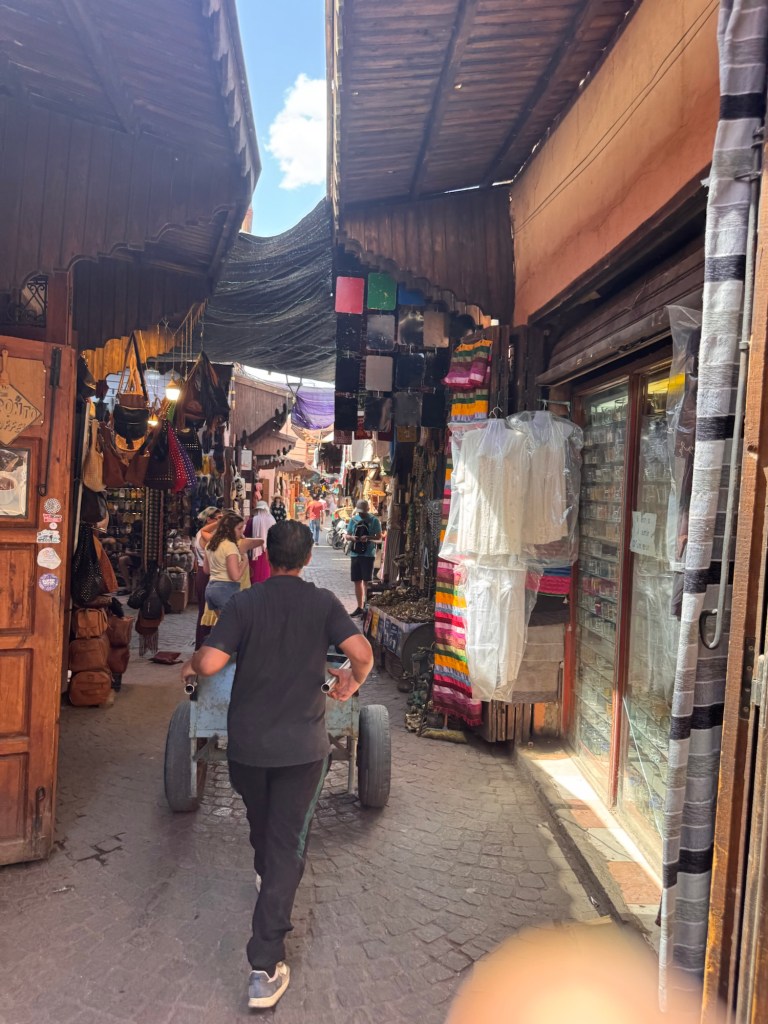
He may even know it.
Then begins the next stage of the expedition: consultations with strangers, shopkeepers, boys on bicycles, elderly men seated in doorways, and passers-by who wave their arms with great authority. Directions will arrive in a cheerful mixture of Arabic, Berber, French, and occasional English, all accompanied by sweeping gestures that show a direction with some authority. You will follow the man with the cart through alleys that narrow, twist, vanish, and reappear. There will be children kicking soccer balls, women in hijab whispering to each other as you pass, and old men smoking meditatively in the shade.
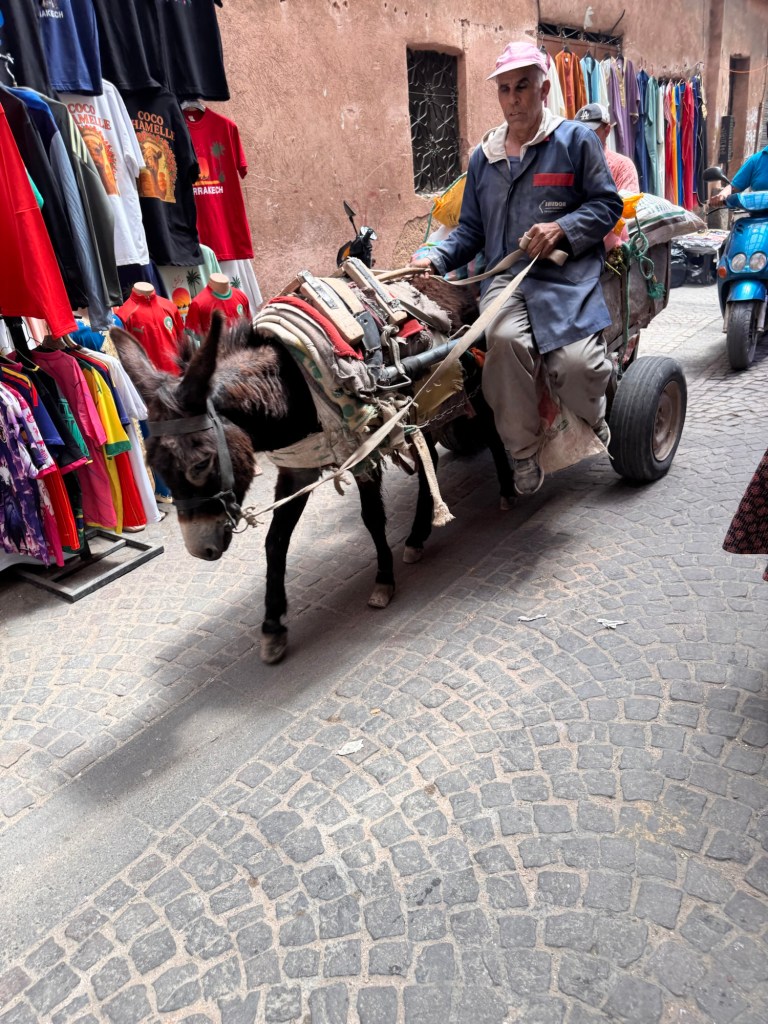
Eventually, and sometimes quite suddenly, you will arrive at your riad.
For travellers who dislike uncertainty, unlike those of us who nobly insist that uncertainty is the very soul of travel, it is wiser to contact the riad well before arrival. They can arrange a pre-negotiated taxi and a pre-negotiated man with a pre-negotiated cart. This will save you several unknowns, a few unnecessary alleys, thirty minutes of wandering, and a great many arm gesture and most certainly with more money.
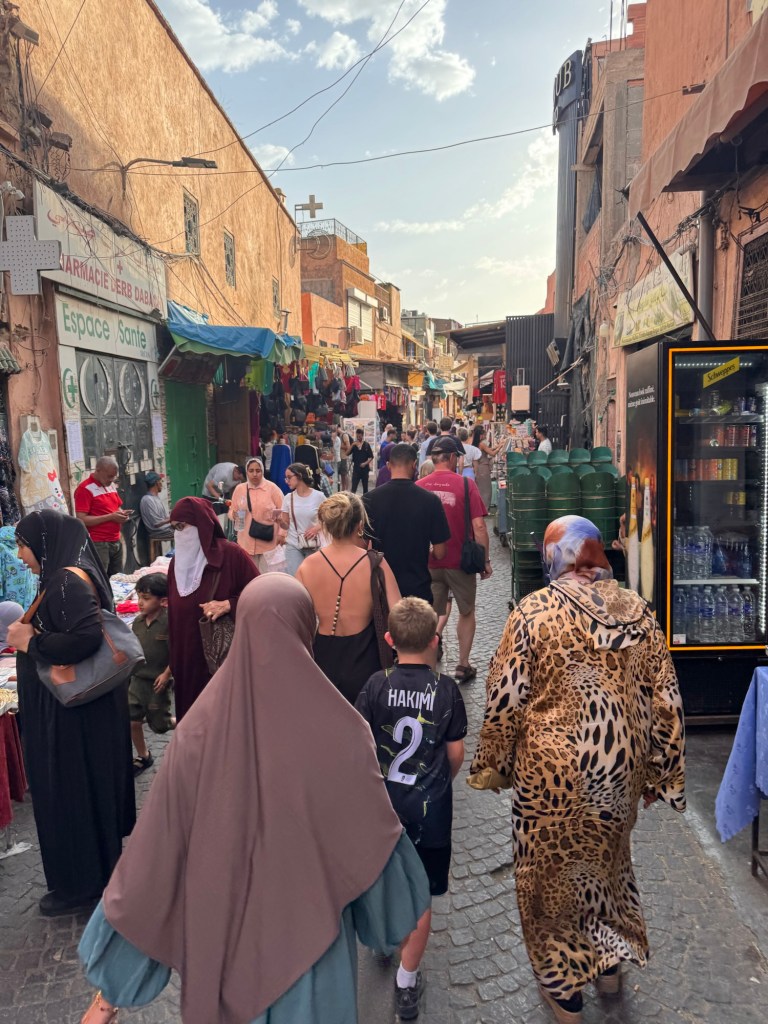
But if you do arrive by the more traditional method, slightly dazed and gently cooked by the heat, you begin to understand something essential about Marrakech. The history and culture of Morocco are built into the thousand-year-old cobbled lanes, the rhythm of life in narrow alleys, the weathered wooden doors, the ornate ironwork, the hidden courtyards, and the cool, serene riads concealed behind plain walls.
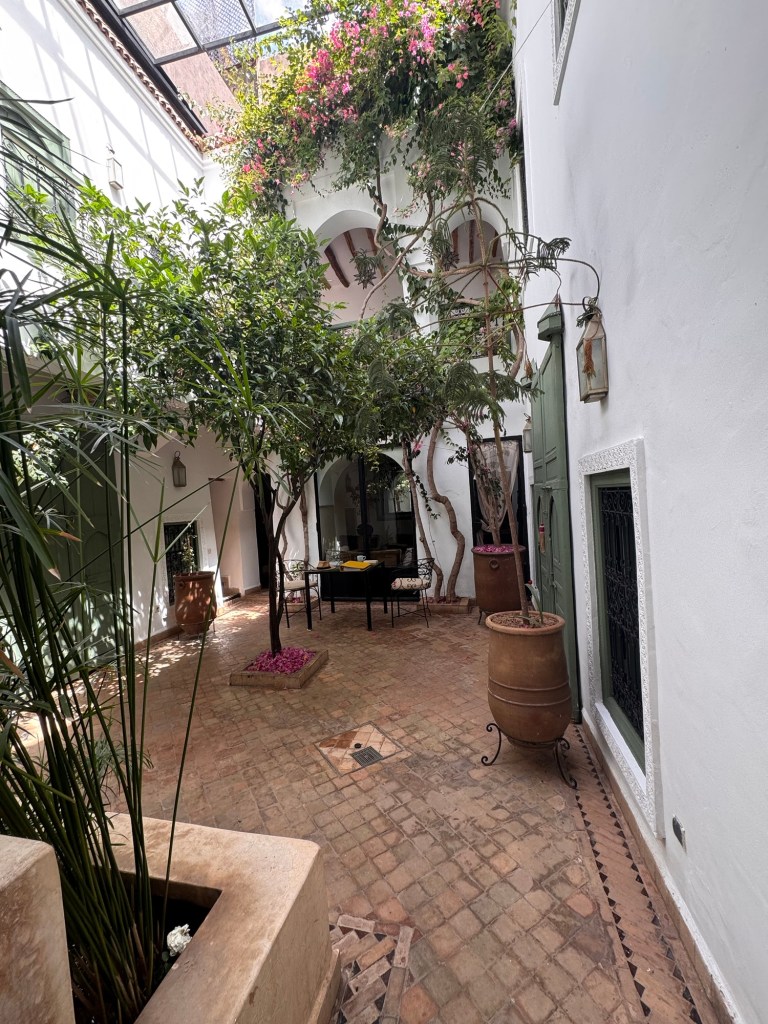
The ancient Medina was, in its own way, a natural fortress. Invaders would have had to pass through narrow alleys two or three at a time, vulnerable from both sides and from the rooftops above. Today, the same alleys defend the city against a different enemy: the overconfident tourist with a wheeled suitcase.
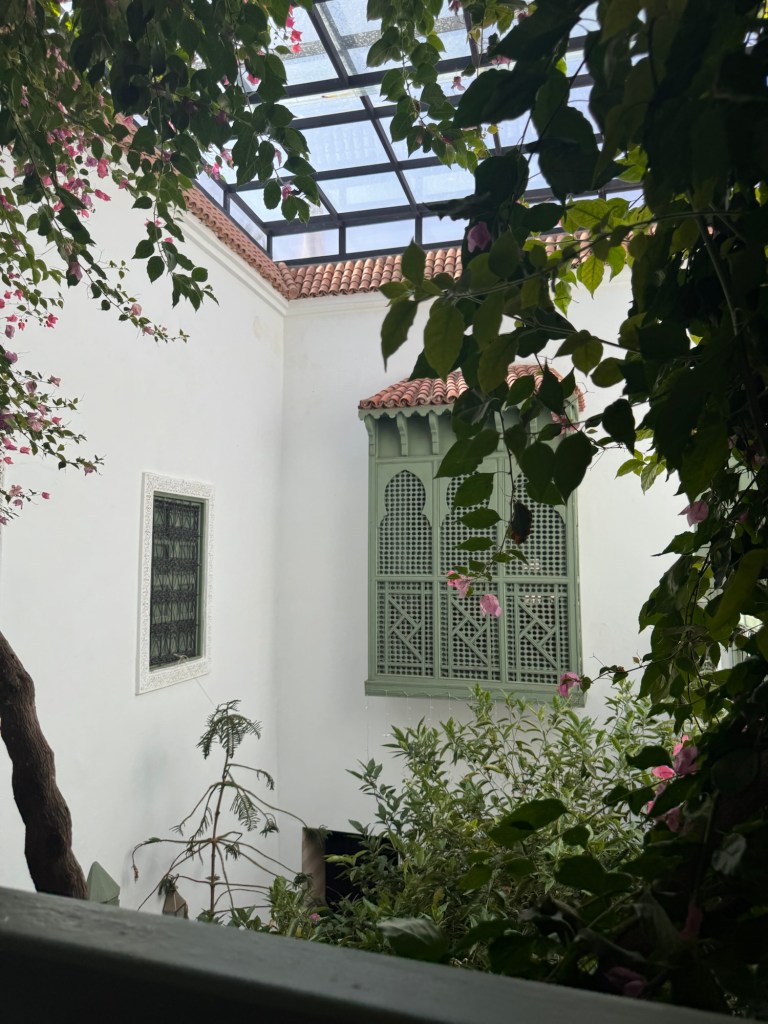
The preservation of Morocco’s medinas also owes much to French colonial history. In the early twentieth century, Marshal Lyautey, the French Resident-General, and his urban planner Henri Prost developed a policy that preserved the old medinas as living heritage while building modern districts around them. Whatever the contradictions of colonial rule, this decision helped protect the ancient urban fabric that gives cities like Marrakech their enduring character- the source of one of Morocco’s biggest industries, tourism.
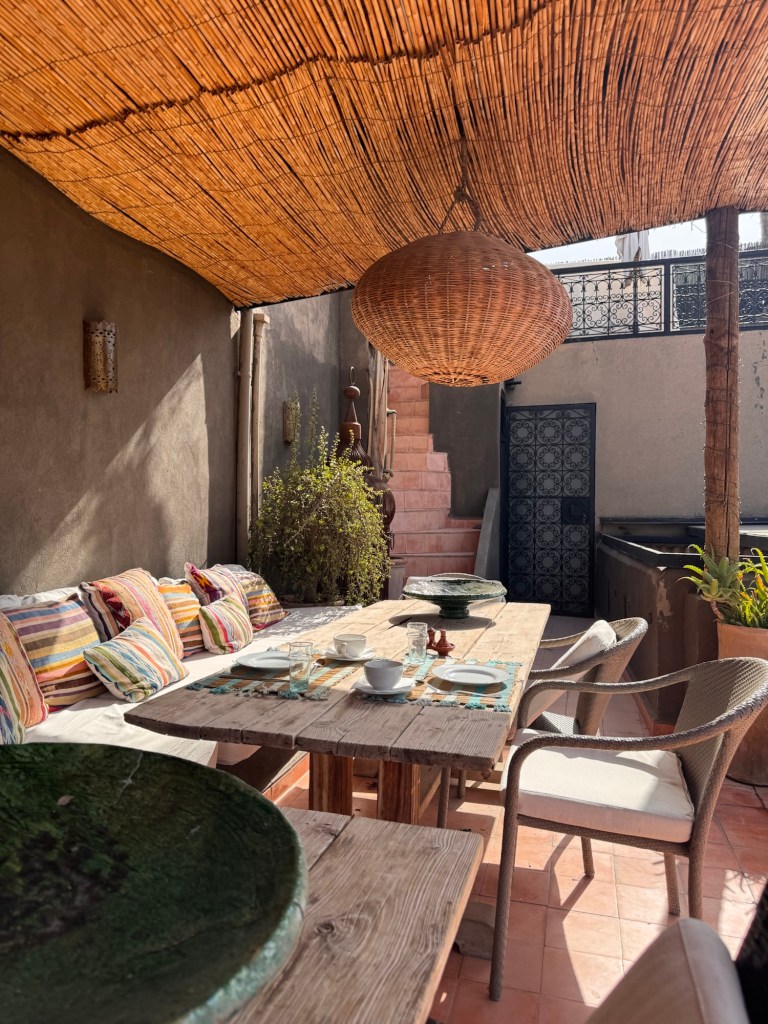
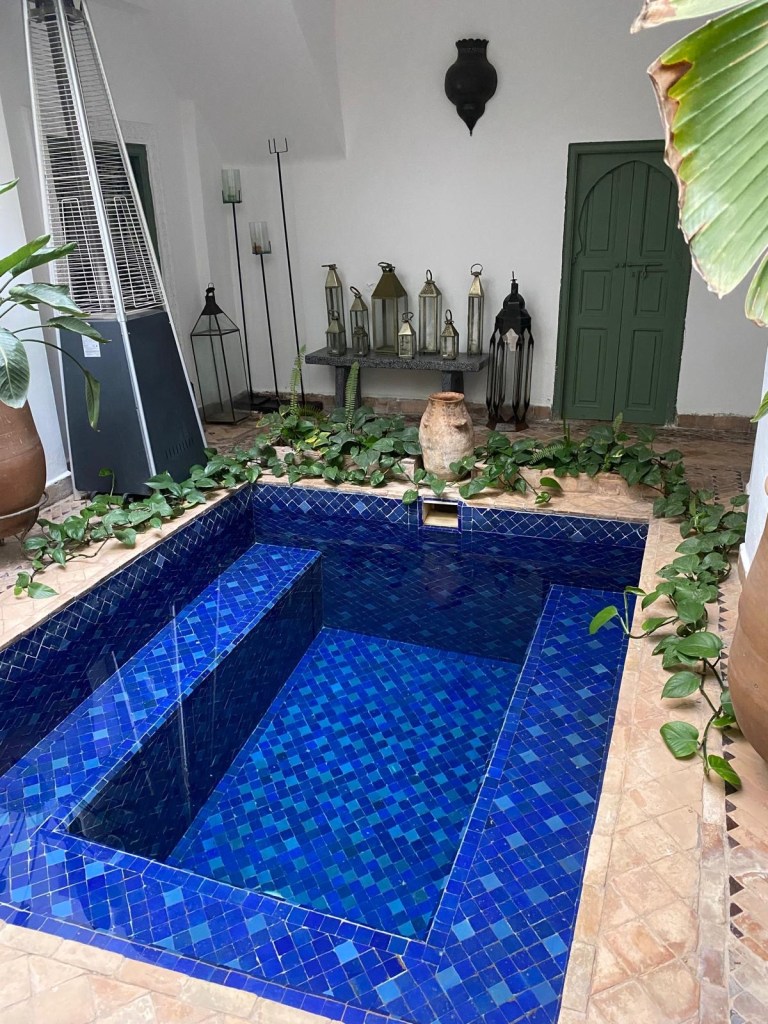
The riads themselves are marvels of discreet beauty. From the outside, many appear almost secretive, with high walls, few windows, and heavy doors. But step inside and the world changes. There are open-roofed courtyards, tiled pools, shaded gardens, carved plaster, polished wood, and rooms arranged around silence and cool air. Many offer generous breakfasts, extravagant rooftop dinners, and midday refuge from the forty-degree heat.
After wandering through the Medina’s magnificent confusion, that first glass of mint tea in the shade feels less like hospitality and more like rescue. As evening descends the snake charmers, street musicians and hawkers emerge, and life bustles in the retreating light- restaurants serving traditional Marrakech tajines – meats slow cooked in clay – and a host of other cuisines. In the face of the retreating sun, the loud thumping beats of the flying, somersaulting circus youth give way to the late afternoon prayers flowing out of mosque into the marketplace turning noise temporarily into silent whispers before erupting again as the muezzins cry fades into narrow alleys.

