The young men surged around the groom, their laughter rising above the beats of the Pentecostal band. They tossed him into the air, and caught him – Rand notes fluttering like paper moths—slipped behind his ear, pressed into the gleaming line of his hair, tucked into his pockets. Moments before, the bride had appeared. An entourage of young women led her along the aisle: some laid sheets of cloth in front of her so her feet would not touch the floor, others trailed behind, holding a plastic umbrella over her head. Her eyes were lowered in ritual humility, her embroidered dress catching the light each time she moved.
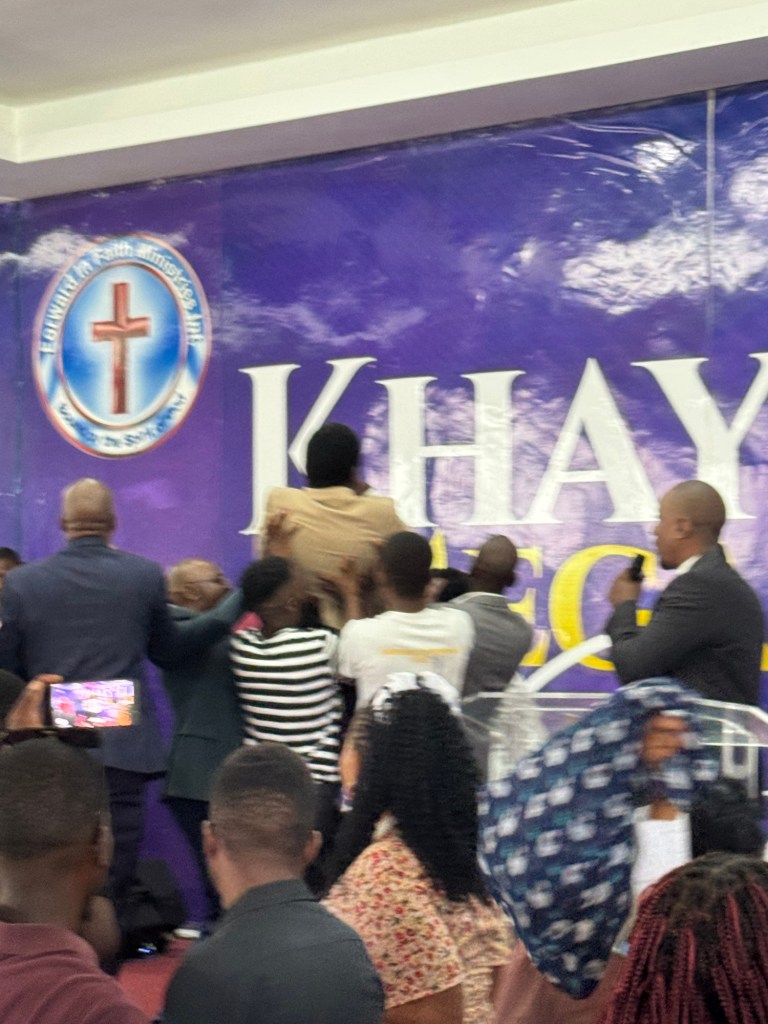

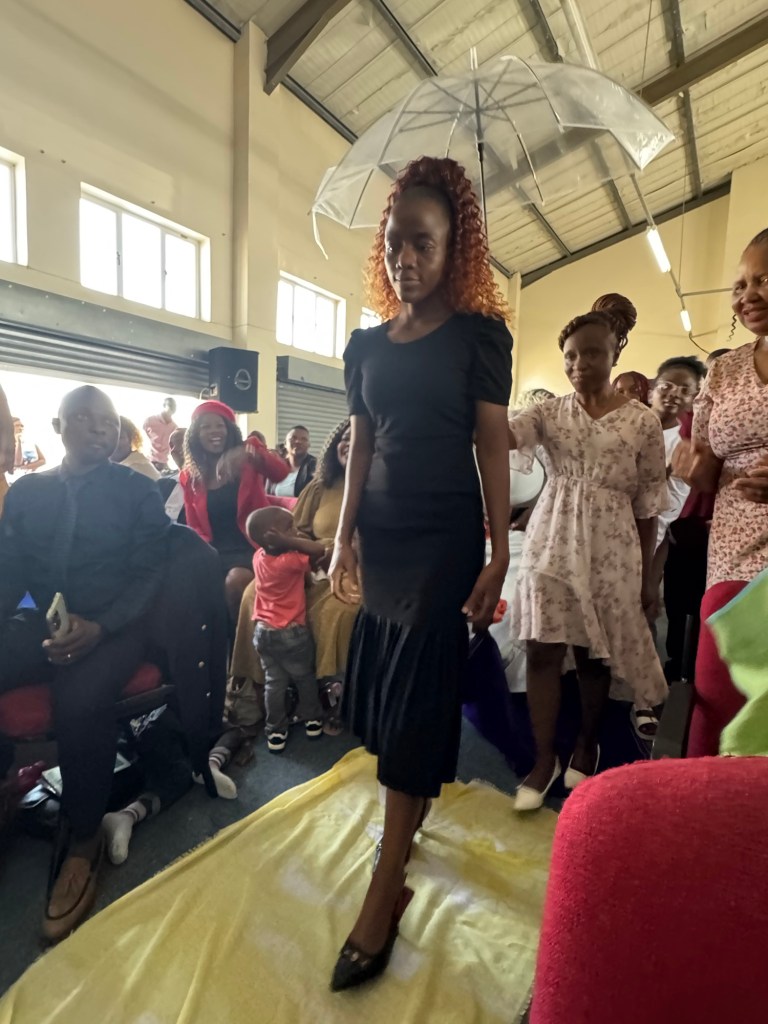
Inside the church, more than a thousand worshippers swayed and danced, the sound thick and electric in the air. All of them were refugees from Zimbabwe – almost all without legal status and most worked in menial jobs despite being educated. For all the joy and laughter, beyond the sheet-metal walls and barbed wire, violence brooded. Fire licked in the township’s densely packed, poorly built homes —a reminder that joy existed in defiance, of lurking danger. The tiny corner shops are run by enterprising Somalis and Ethiopians, well organized, they dominate the retail economy selling items in such small quantities as the market could bear: sugar by the spoonful, cell access for an hour – further perpetuating poverty.
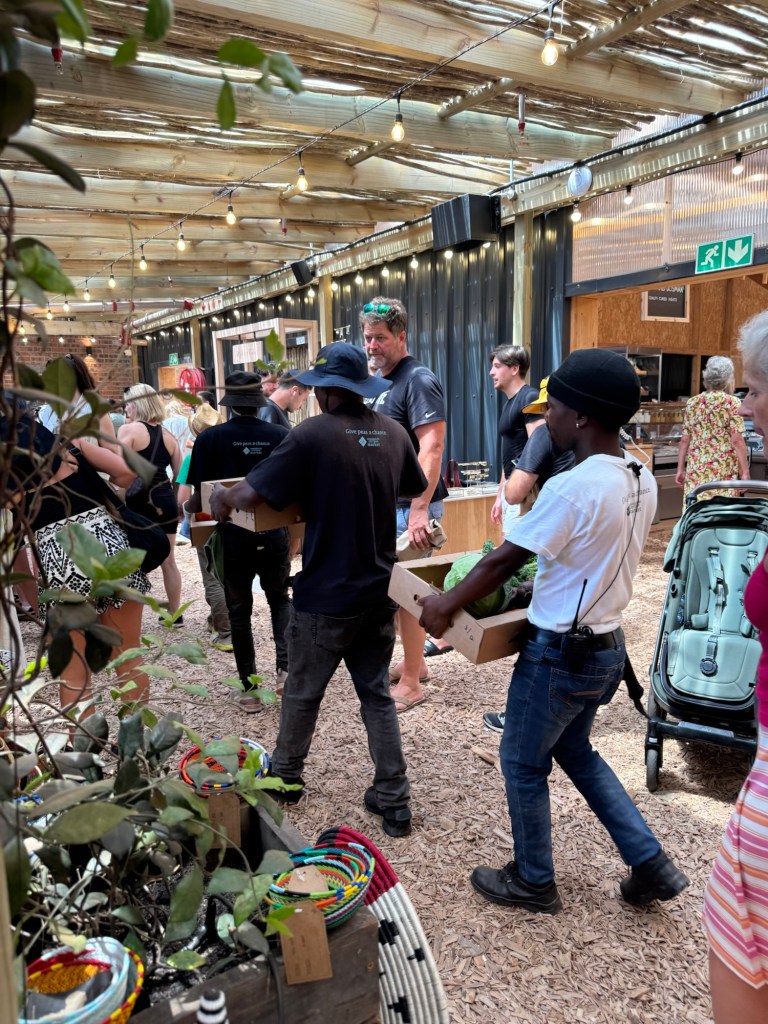
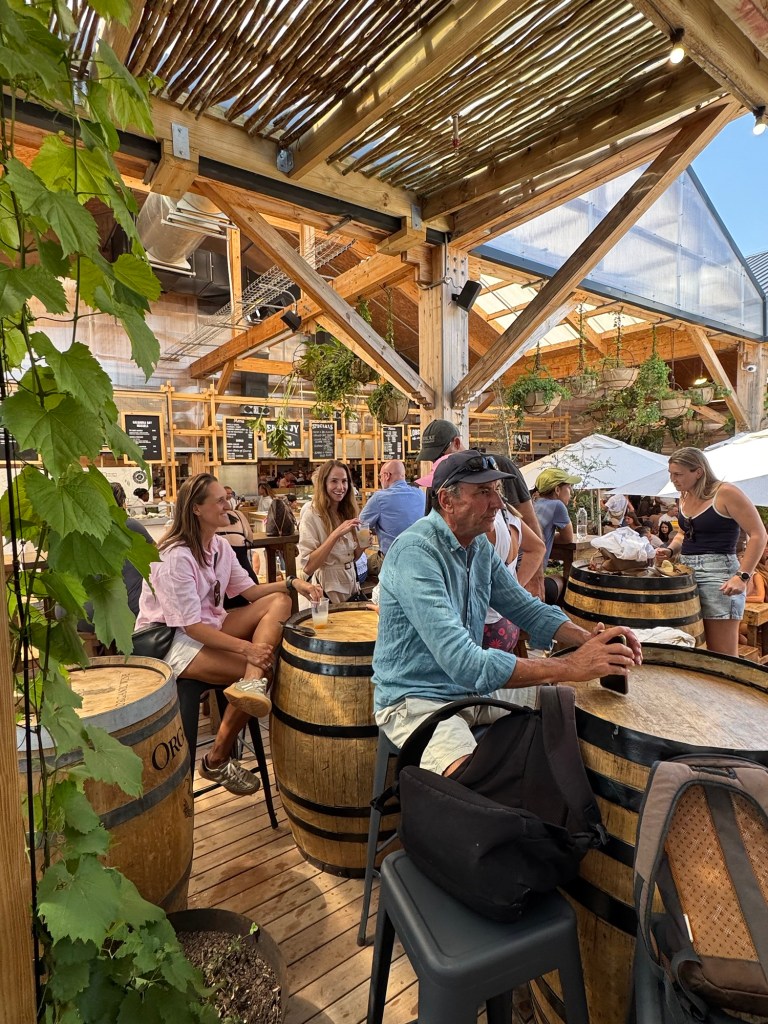
I had already been bored of Cape Town’s pristine tourist face – the V&A Waterfront – polished glass, fine wine, curated beauty, and spotless pavements. In relief, below the majestic Table Mountain, the city’s postcard Sunday market gleamed with designer boutiques, pastel textiles, artisanal cheeses, and perfectly arranged pastries. Of course as a constant reminder of the traumatic history of this country, the shoppers were white and the servers mostly township blacks and coloureds (racial terms are not derogatory here). It could well have been Manhattan’s Chelsea market on High Line park, minus the frayed edges that lend their uneasy authenticity. Unlike in the V&A district where everything shines, but nothing feels real.
‘Where do you live?’ I asked the waiter after my second glass of wine which accompanied a rich, well prepared, generous seafood platter.
He hesitated at first, wary of his supervisor who entered the room .
When his supervisor turned away, he whispered, ‘in the township by the airport’.
I asked softly, “Will you take me to your township?”
“No, no, no,” he said and after a pause added. “I could not protect you.”
The word ‘township’ carries the lingering weight of the past—its syllables still holding the geometry of apartheid: separation, distance, survival. Yet what he said next erased abstraction.
“There is no value in human life there,” he murmured. “Your colour will kill you. Holding an iPhone will kill you. Nice shoes will…”
The sentence dissolved as quickly as it came, as his supervisor re-emerged. The silence that followed said more than words could.
I shifted the conversation when the supervisor moved to another area. “Is there a church in your township?” I asked, grasping for common ground.
He nodded. “Many churches. My Uncle, Uncle Joe. His wife leads the choir.”
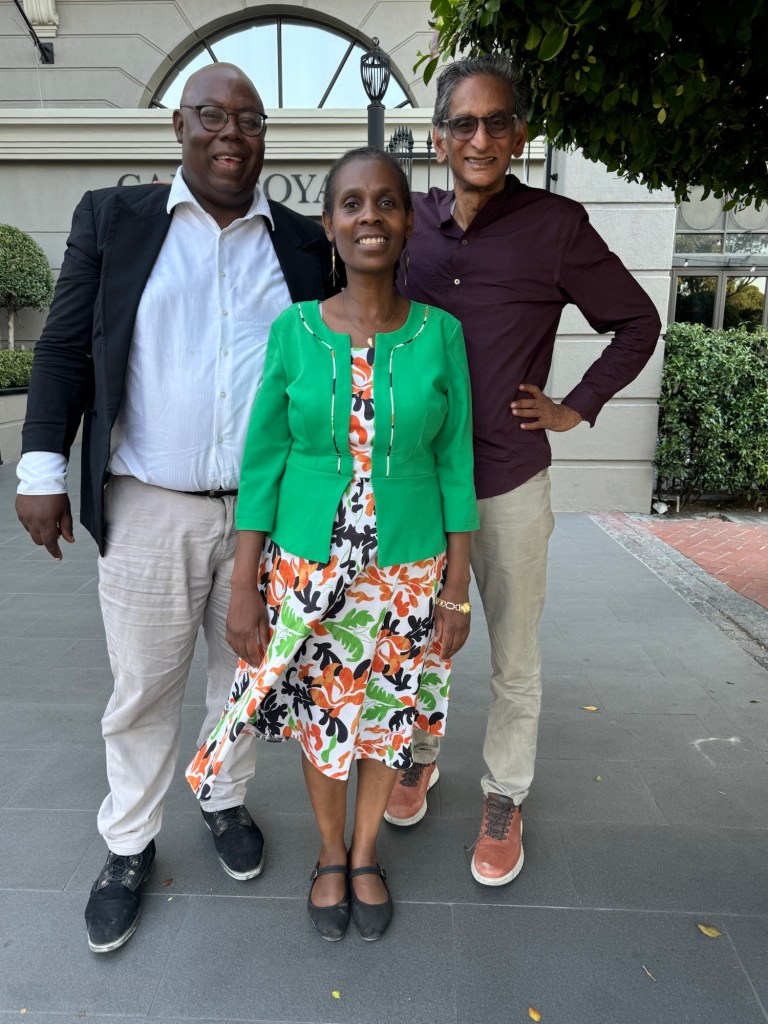
The next morning, Uncle Joe arrived at my hotel—tall, rotund, composed, eyes alive with chatter. We greeted each other with a sequence of handshakes and smiles,
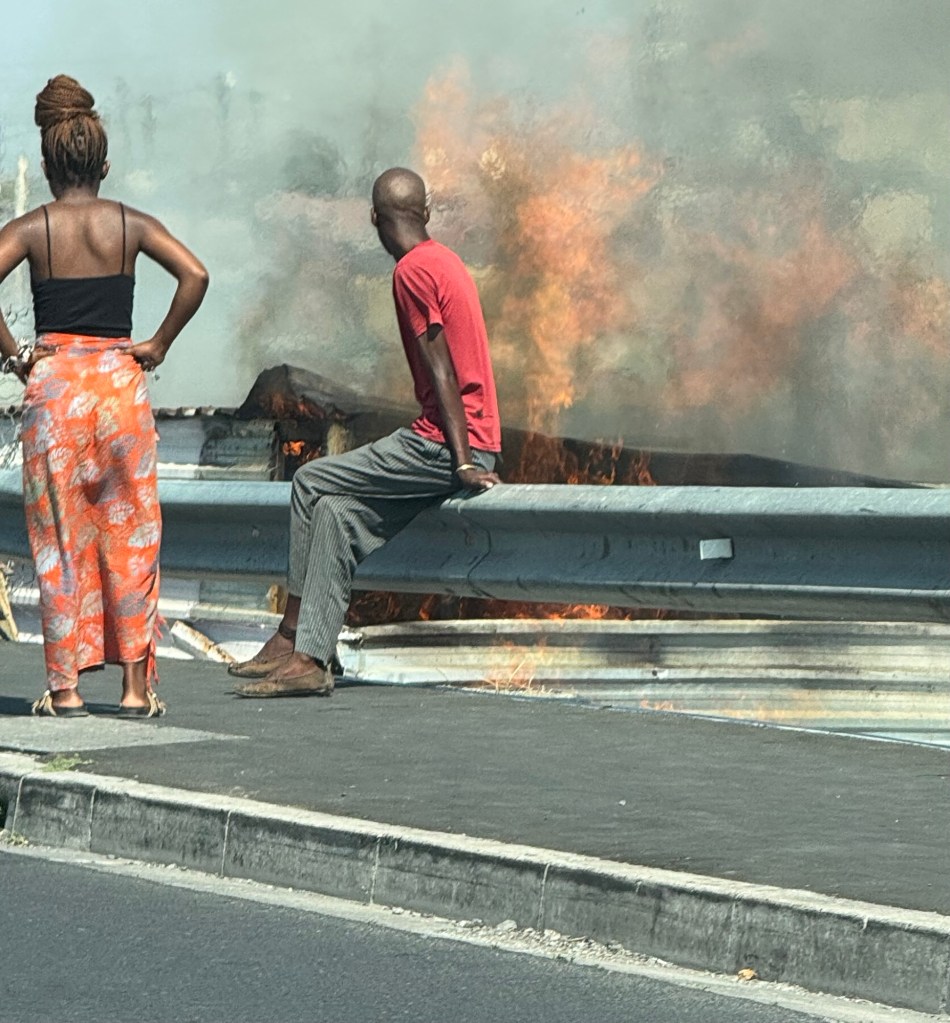
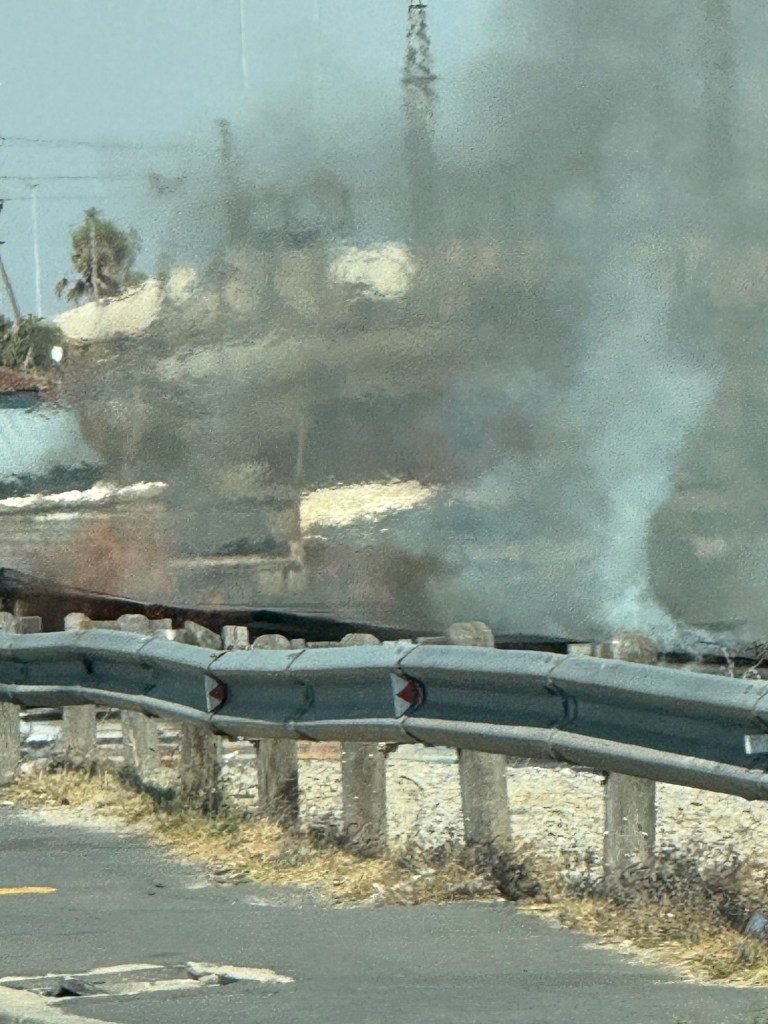
‘I have arranged everything. The whole congregation is excited. The pastors are expecting you.’ We drove on the pristine N2 highway past well ordered power stations – a legacy of the apartheid regime. But as we turned into the township we were greeted by a raging fire.
My arrival days earlier had carried its own cargo of warnings. From Dubai’s departure gate to the airplane’s descent over the Atlantic rim, strangers repeated a single refrain: ‘Don’t go out at night’. Their words carrying a note of conspiracy. “I was born in a township,” one man told me, his vowels shaped by the polyphony of South Africa’s history—Indian, Black, coloured, white. His wife drew a small invisible circle with her finger. “Always keep your eyes moving,” she said.
By the time the plane dipped toward Cape Town, unease had calcified from curiosity to fear. I was arriving from a cathartic trip to India, where poverty evokes pity rather than menace. Yet here, on the threshold of another postcolonial democracy, a different truth waited—one that lived in contrasts too sharp for comfort.
On the map, South Africa is a nation poised at the continent’s edge, where the Atlantic and Indian oceans meet in a turbulent seam. In its political imagination, it remains a place of unfinished reckonings—a country that dismantled apartheid’s architecture yet still bears its shadows in land, wealth, and everyday gaze. Modern democracy here was grafted onto the bones of empire, and those bones still show.
For months before arriving, I had studied its stories from afar—films dense with violence, novels weighed with moral ambiguity, the voices of Coetzee and Gordimer dissecting conscience with surgical precision. Yet nothing in print or image could prepare me for the human landscape that awaited, where faith, fear, hope, and survival intertwined like the harmonies of a township choir.
All I learned crumbled in the face of the stark truths of the nation: low economic growth, growth without employment, dramatic population growth in the townships where youth unemployment is said to be eighty percent. Now I wonder, when I witness the deep divisions between its citizens and remarkable disparity of wealth, what Nelson Mandela would say: his ANC’s socialist and communist patrons abandoned for the capitalism of the minuscule minority – the bridge between citizens too wide a chasm to breach.


A visit to The Union of South Africa in 2026 must qualify as the mark of a True Traveler.
Yet in spite of a history of political rancour and outright war, the country has continued to attract visitors and settlers for hundreds of years. Enough of a mystery to draw that True Traveler I guess.
The groomed, protected tourist sights and sounds are insufficient for this individual though. Even if it means dealing with a place boiled down to “Nice shoes can get you killed.”, the ante has to be worth it. Even in remote Canada, the power and skill of South Africa’s choirs recurs in popularity every few years, I hope you were able to experience some of that if it was available. Better than the Vineyard Tours!
Trying to take in the history of the place must be overwhelming. So much conflict and blood. All nation building is murderous but some are worse than others and South Africa’s far from done. What will it be in another generation, orbiting among the emerging nations of the southern world? Apparently newcomers pour in from the neighbouring countries continuously, perhaps dividing the prize thinner by the day. They seem determined to succeed in their own way and they’re persevering through many challenges.
Great hearing (and seeing) your adventures. This instalment really provided a sense of the streetscape of the place, the competition all people experience, but keener and steeper in today’s South Africa.
LikeLike
David,
It seems it has been my lot in life to enjoy a certain degree on adrenaline. Some parts of South Africa deliver.
LikeLike
A lot of us have or have had a taste for challenge.
Some might try hang gliding. Others may cultivate dangerous acquaintances. Quite a few will have some version of “Rolling the dice.”
If we get past 70 it’s seductive to muse that we’ve been clever enough to do what others were too timid to attempt. Also, we might congratulate ourselves, having been wise enough to step sideways in the nick of time. If we’re really, really lucky though, we’ll inwardly roll our eyes at these thoughts and thank the gods we were lucky while self deceived or better, had some responsibility to distract us.
Timidity isn’t always safe or useful though. We take risks everyday or we are effectively dead. There was great illustration of this I once stumbled on. A photo of a man confirmed to be 85 and he looked great, appeared to be no more than 45 and obviously suffering from no aches, pains or stiff joints. He was a monk who had lived in the same monastery since adolescence. He had traded life for longevity. His choice and that’s fine, but most of us wouldn’t agree.
We get past 70, we have learned a few things about ourselves and how to test the lines, so far.
Continued success in your explorations. Looking forward to further reports of the wider world.
Best Regards DM
LikeLike