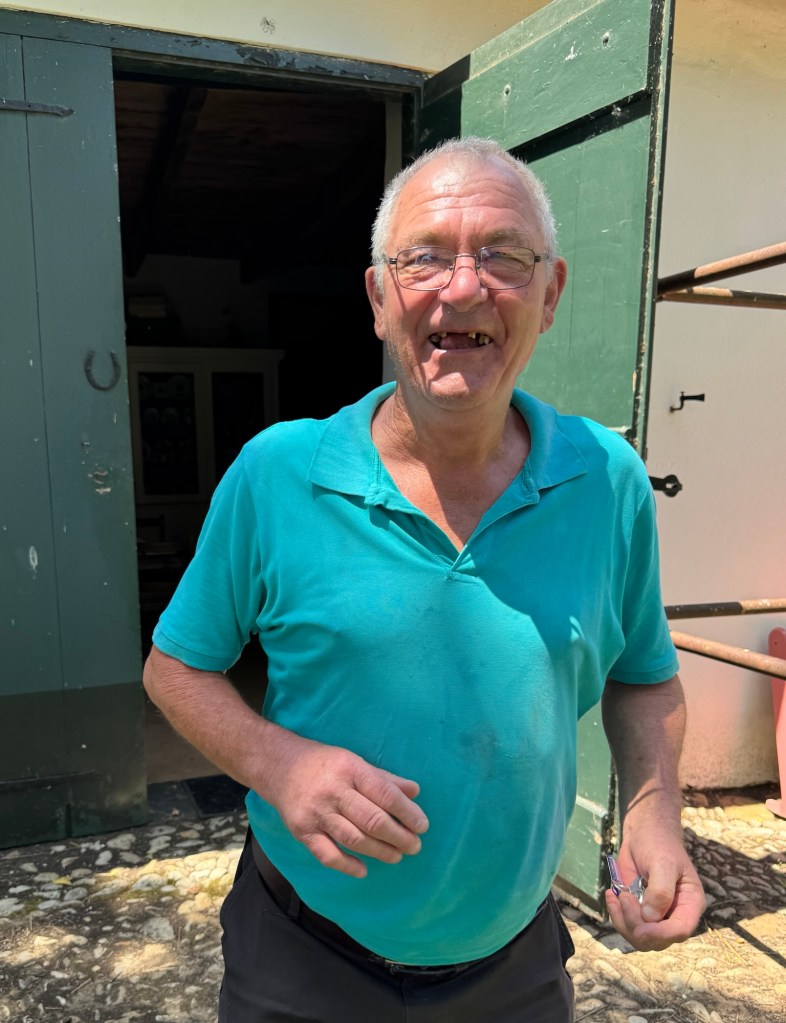
The man stood tall, shoulders squared, his presence cut sharp against the midday light. His gaze at first held both suspicion and restraint, the look of someone guarding old ground. But slowly it gave way to his loud and jolly disposition as if he had longed to talk to someone, anyone.
“I’m not a racist,” Kobus said flatly. The vowels flattened and curled in his thick Afrikaans accent rolling each ‘R’. Then, almost as if reminding himself rather than convincing me, he added, “You’re foreigners, yah? You live somewhere else—only visit.”
“Yes,” I said.
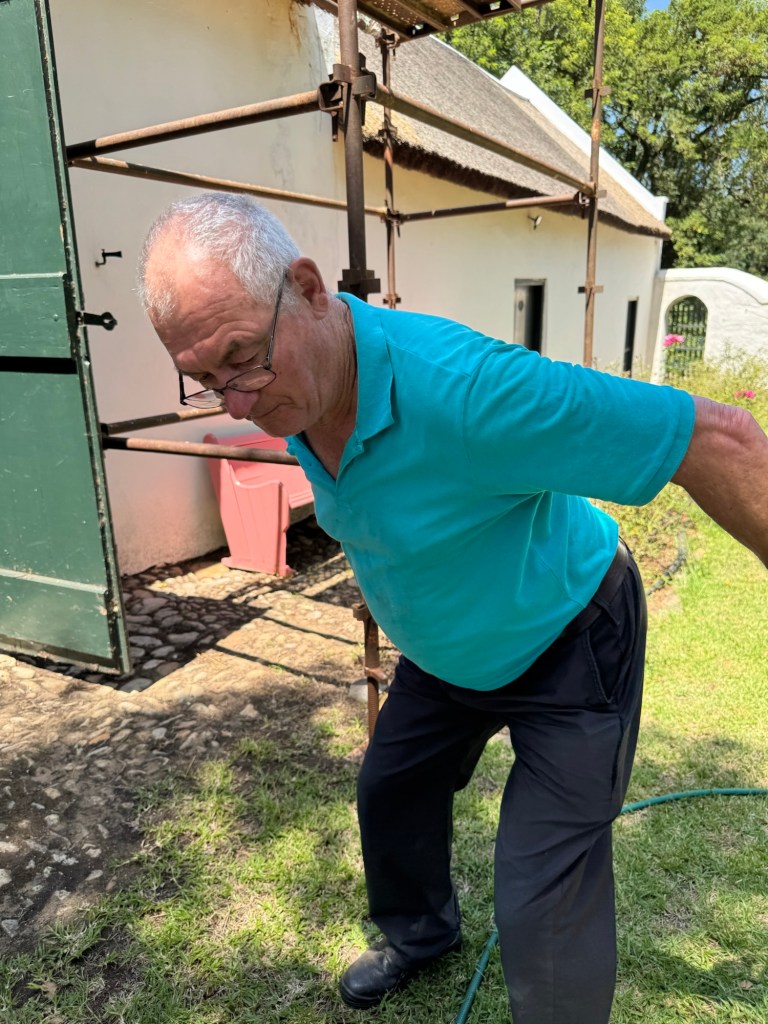
He nodded, the gesture small but certain. “This country’s being destroyed,” he went on. “Now only blacks get jobs—some empowerment thing.” As he spoke, his hands carved restless shapes in the air, physicalizing the unease. “Think about it,” he said, spreading his arms wide behind him, “how can a black policewoman, with hips like inner tubes and breasts like melons, chase a criminal?” He laughed—a raw, unguarded sound that startled the still afternoon.
To prove something invisible, he rolled up his pant leg and pointed to a pale scar that crossed his knee like a fault line. “Thirty-five stitches,” he said. “When I worked in Emergency response, Cape Town, fifteen years ago. Still waiting for the police to call.” Pride and grievance seemed woven together, indistinguishable. When he looked back at me, almost searching my eyes for judgment; finding none, he mistook politeness for kinship.
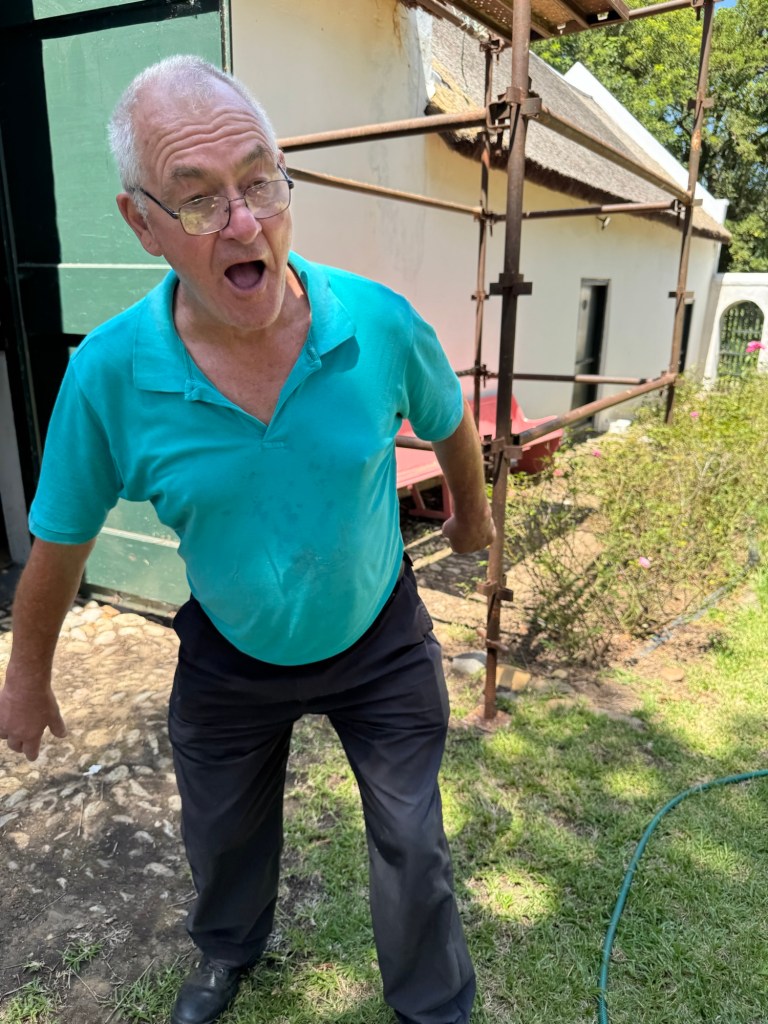
“I am not a racist,” he said again, quieter now. “We treated the blacks badly. The English treated us badly—concentration camps, women and children dying by the thousands. But we can’t hold on to such things forever. We must move ahead.”
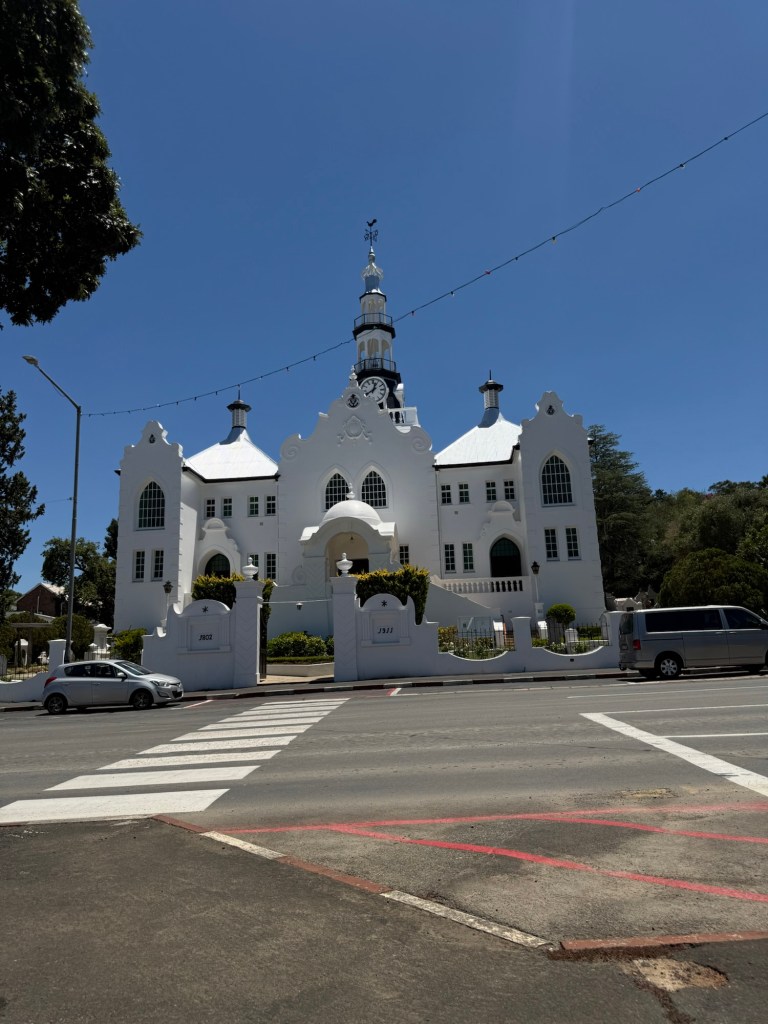
Swellendam rests in a basin beneath the Langeberg Mountains—a town of whitewashed walls and thatched roofs. Once a frontier post to the east, it still harbours an echo of settler enterprise, the architecture preserved as though time itself paused.
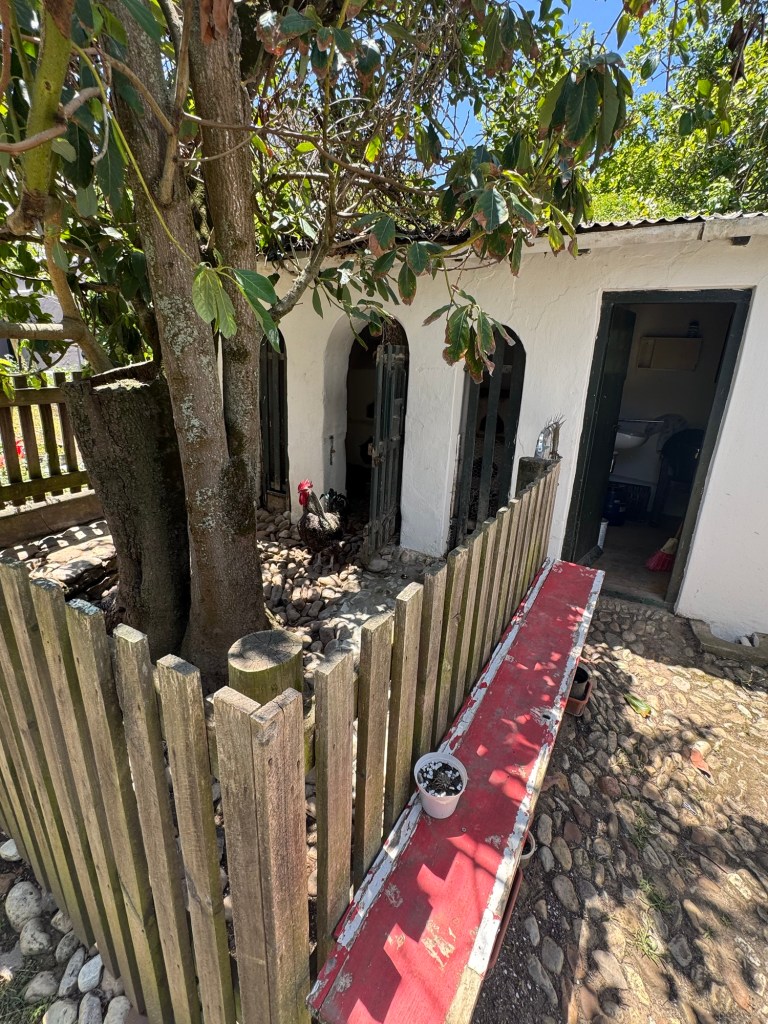
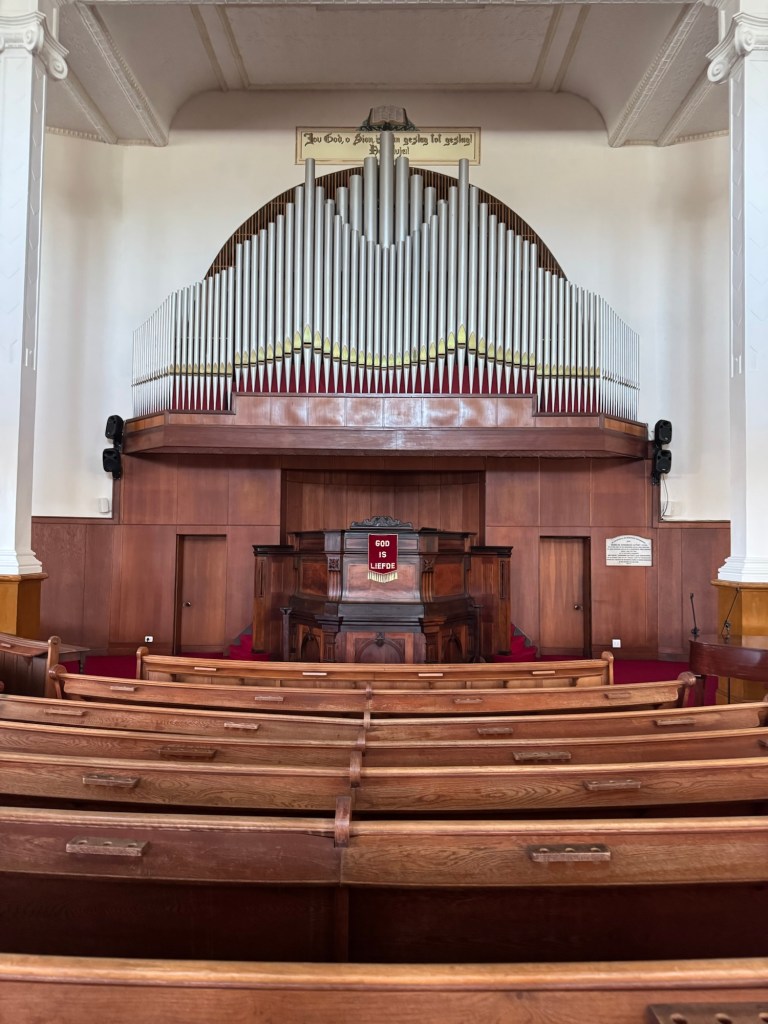
At its center, the Dutch Reformed Church rises, its white plaster blazing in the Overberg sun. Across the square, a tiny hand-painted sign—Anglo-Boer War Museum—leans at the edge of a narrow lane lined with 18th‑century cottages. Following it, I found not a museum, but a large angry rooster, its call splitting the silence. Beyond the low gate stretched a hidden garden—lush, unexpected. Persimmons bowed under their own weight, marigolds burned orange beneath the noon light, and the air pulsed with the scents of damp soil, Jasmin and lavender.
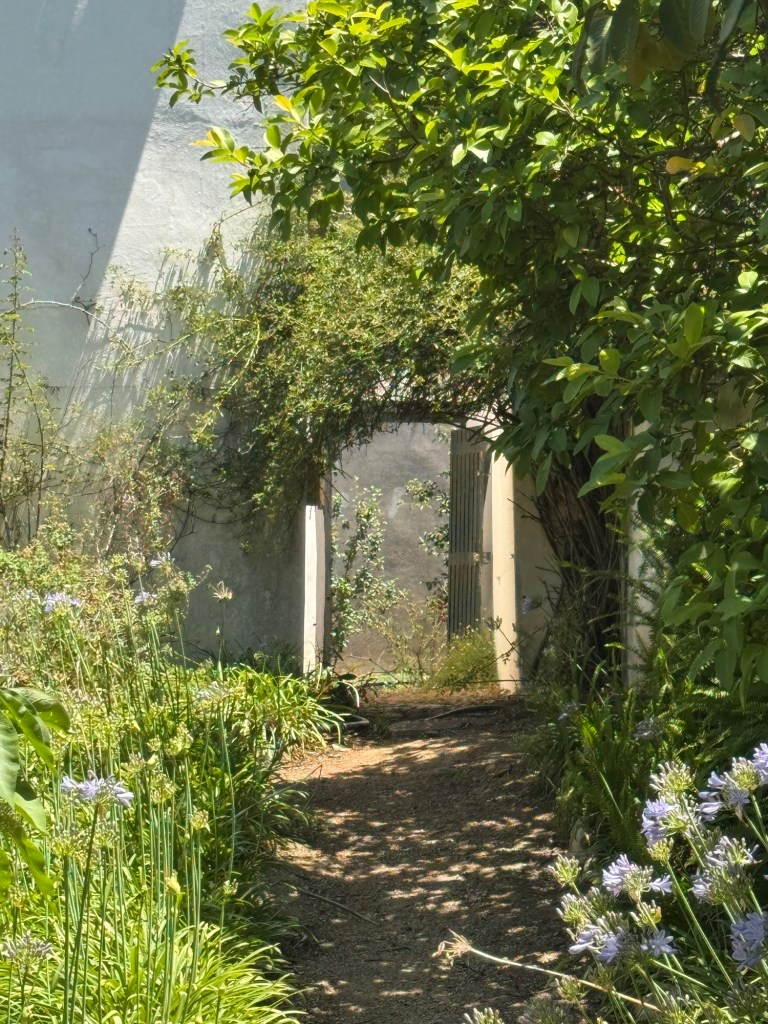
Three coloured gardeners rested on a shaded stoop, speaking softly in the heat, ringed by potted geraniums and poppies. It was from behind a clipped hedge that Kobus had emerged—ruddy, broad, eyes narrowed by the sun yet watchful with cautious pride.
“I am admiring your beautiful garden,” I said.
He nodded once.
“I saw the sign for an Anglo-Boer museum.” Almost apologetically.
“I am the gardener,” he replied. “The museum opens on Saturdays—but I can show you.”
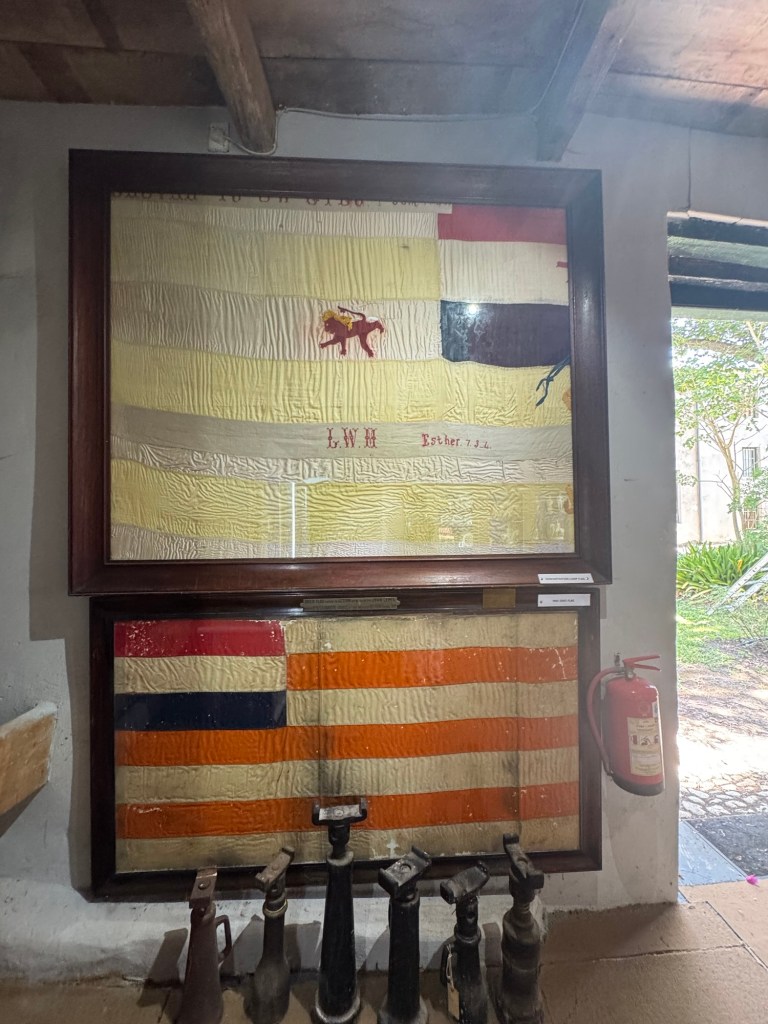
He led me into a small outbuilding, scarcely larger than a garage. Inside, the air was dim and cool. Flags hung from the rafters—the orange-white-blue of the old Transvaal, the golden Free State banner, a weathered emblem from the brief Republic of Swellendam, a rebellion that flickered and died in six months in 1795. On a shelves that lined the walls lay intimate remains of history: a chipped child’s cup, imperial British commanders itched into china, a rusted bayonet, a camp lantern dulled by time.
When I told him Cape Town seemed peaceful, he frowned slightly. “You were in the tourist areas, in daylight,” he said. “I know every inch of that city. In Nyanga, in Philippi East neighbourhood —they slaughter each other like sheep. I worked emergency for thirty years. I have seen everything.” And he says with undisguised contempt, ‘now the ANC wants to make them our bosses.”
Outside, the afternoon was still. The rooster called again, the sound echoing off old lime-washed walls and was answered immediately by a rooster far away. The streets of Swellendam shimmered in the heat. Beauty persisted at each step through the garden despite the scars men carry.
 Vidante
As Bob Dylan said, when will they ever learn? Long, long time ago.
LikeLike