The mountains on the northwest horizon step back in shadowed tiers, their slopes dissolving into a soft, blue-grey haze that blurs the edges.. To the south, sun-struck hills rise in sharp relief, bright and insistent, vineyards combed in clean, deliberate lines into the foothills of Franschoek, the preeminent wine valley of South Africa. It was the work of enterprising French Huguenots – Calvinist refugees who fled France in the 1600s.
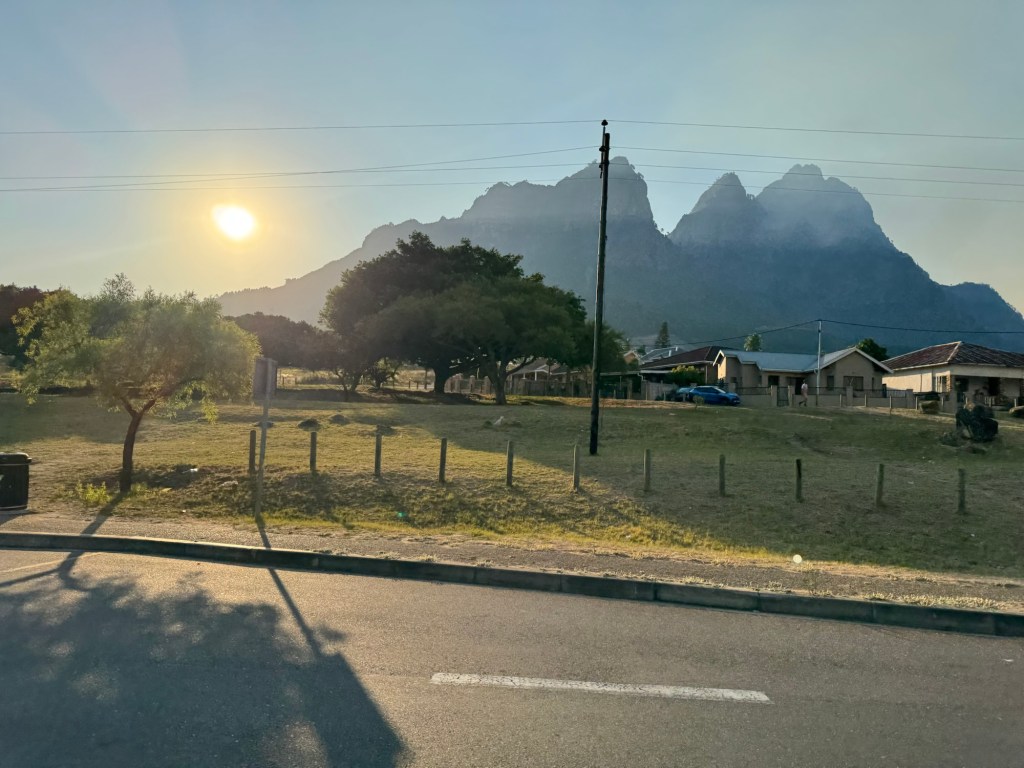
Large oaks, eucalyptus, and wild plume trees stand in ordered rows along improbably neat roads, as if the landscape has been brushed and straightened for visitors. As the day wears on and the sun begins its retreat, whatever little moisture the hills have gathered feels ready to slip down into the valley to kiss the grapes.

Rows of oaks and eucalyptus form a green canopy, interrupted now and then by pockets of the ancient fynbos, low and stubborn. The light that filters through these leaves settles on faces, and the calm it creates is something visitors carry with them for the day. Past the cusp of noon, the haze closes in like silk curtains drawn without a sound, hot wind easing into a gentle breeze.
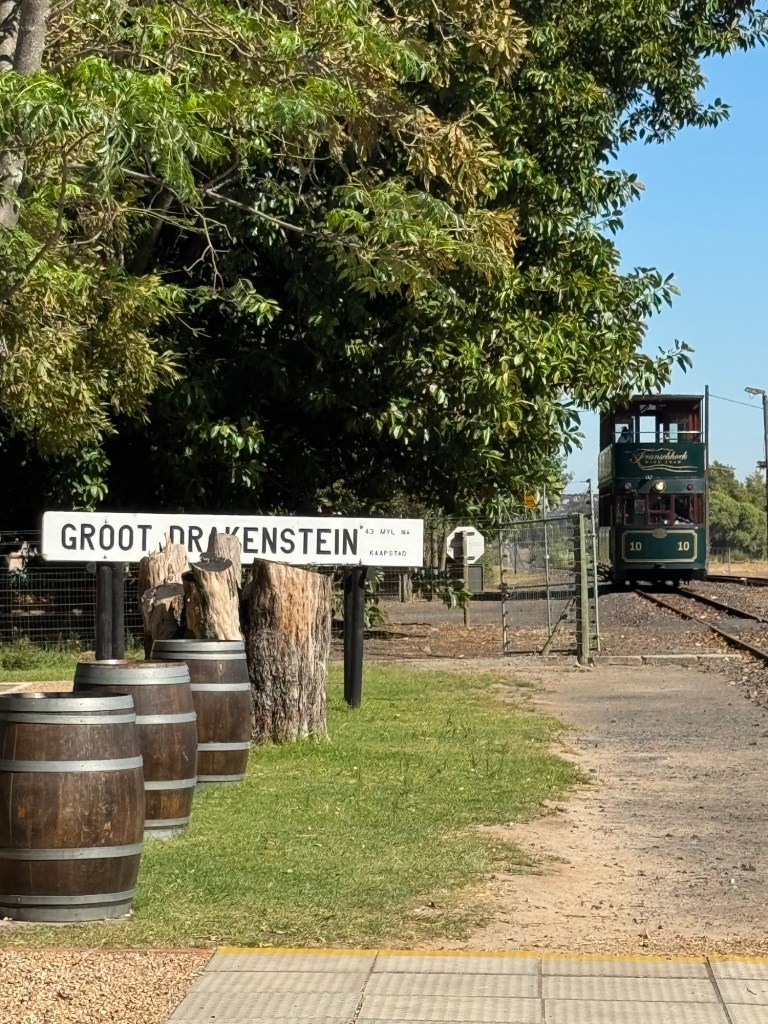
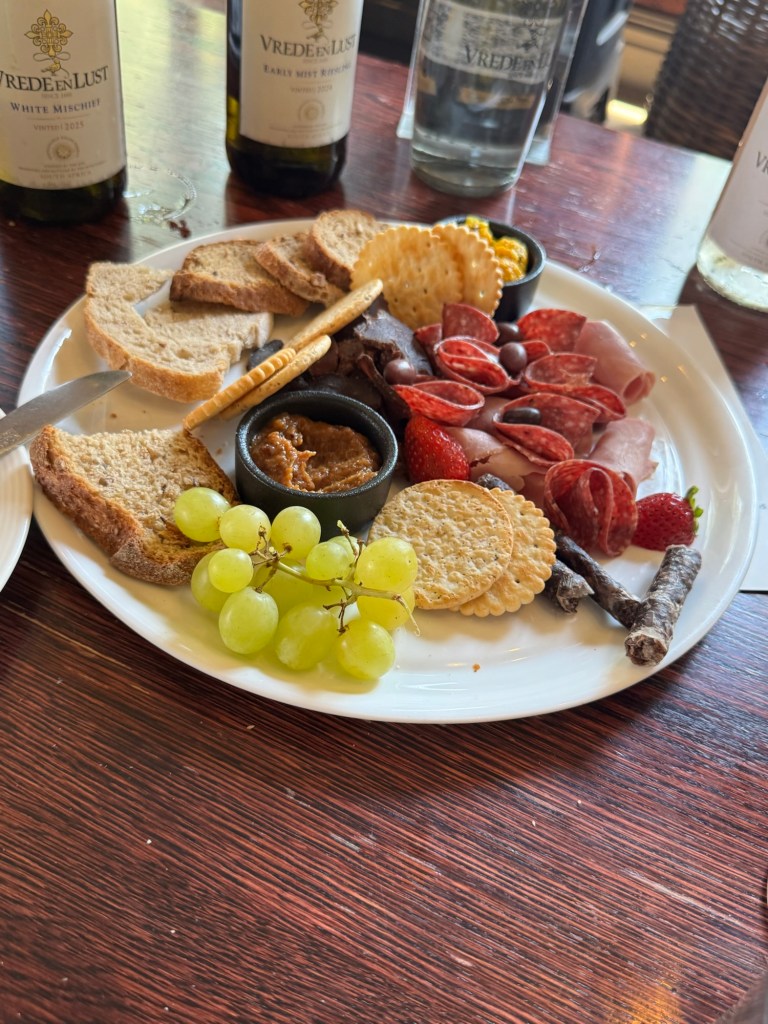
I am on the third vineyard of the Orange line of the Franschhoek tram wine tour – one of five lines. Vrede en Lust (pronounced “Frede and Lust”) – Peace and Passion – has been a farm since 1688, and it wears its age lightly: white gables, disciplined vines. A late-afternoon charcuterie board of dried meats and bread lands on the table just as the reds arrive – some soft-spoken like a Pinot Noir, others full-bodied and unapologetic like South Africa’s own Pinotage. It is a welcome shift after the mid-afternoon whites at the Italian-styled Bacco, where the wines were paired with savoury Cannoli: artichoke, smoked salmon, tuna with capers. Bacco practiced their craft around the Fermintini grape, and even for an inexperienced palate (I am hardly a connoisseur), the order of things felt right – to follow Peace and Passion with Plaisir, the fourth winery, where the wines met chocolate laced with pepper, coffee, and raspberry.
When boarding the tram after the fourth stop, the large contingent of Germans who had been restrained until now suddenly cracked open – howls of laughter, arms flung around strangers, each passenger being hugged as if we had all been traveling together for years, not hours.
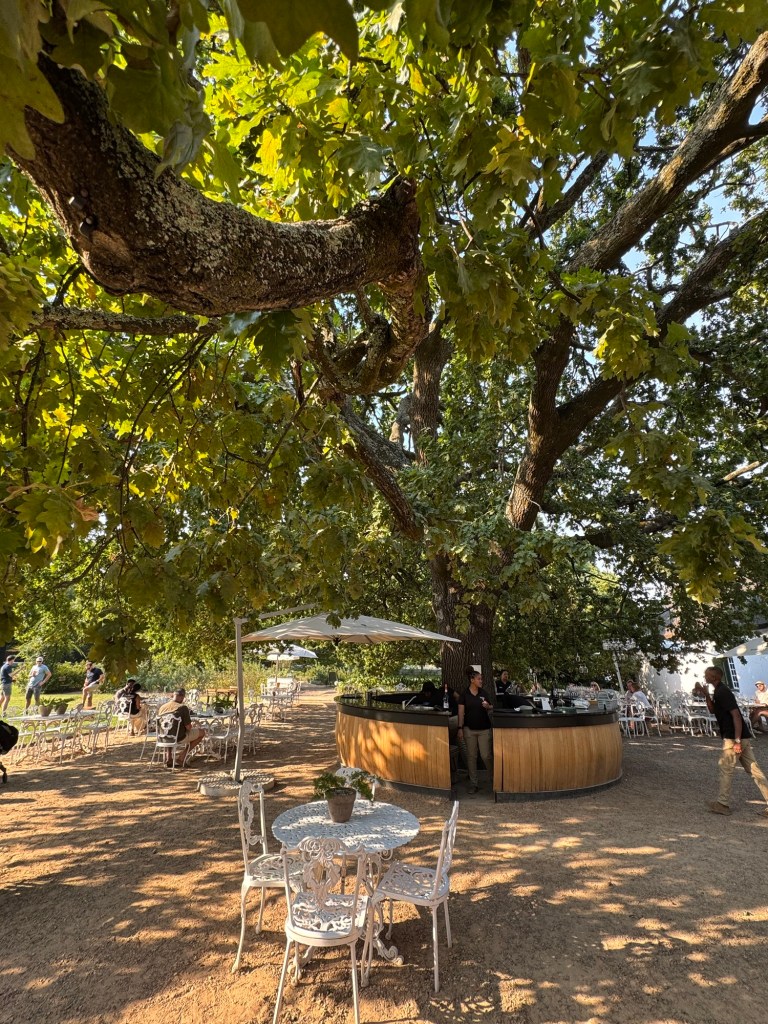
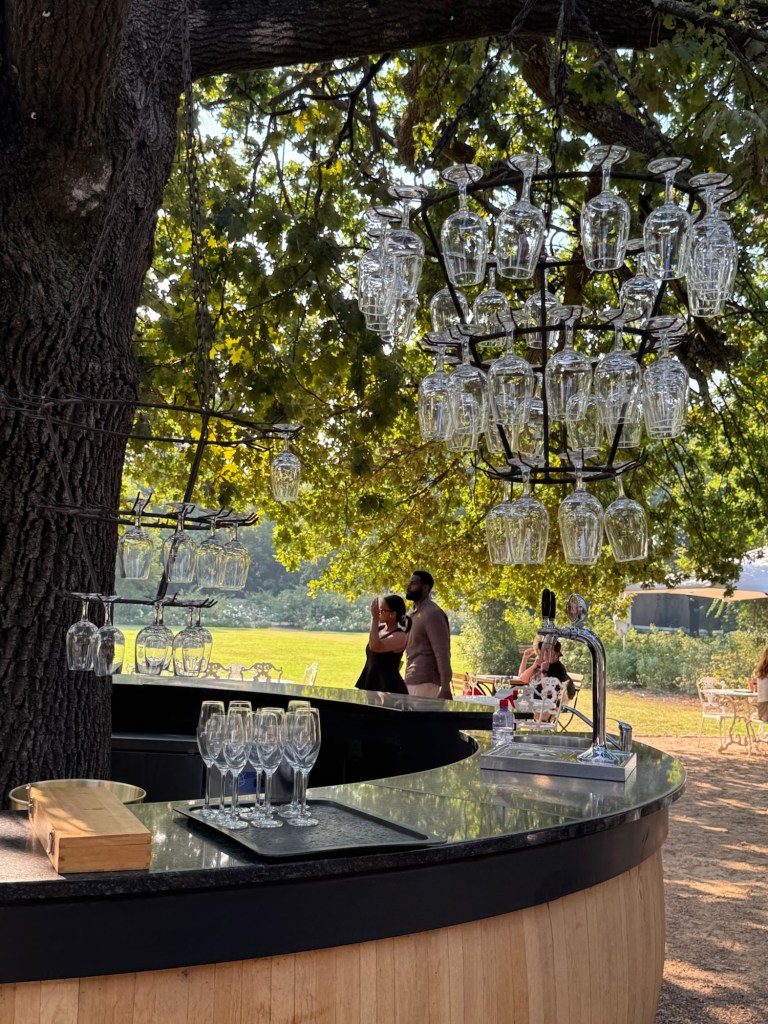
By the time the last stop of the Orange line appeared – the 340-year-old Boschendal – the camaraderie on board had become infectious. Boschendal’s sparkling wines, taken under the spread of a 335-year-old oak tree, gave way to its soulful brandy, the world tilting slightly on unsteady legs as if to underline the point that this, here, was the perfect finishing touch.
And yet, when it was all done and we stood waiting for our Uber driver, Givemore, the spell began to thin. Boschendal’s vast grounds stretched out in the failing light, the winery slowly emptying of visitors. The barks of guard dogs started to carry across the fields, sharp against the quiet. A security guard drove past with his caged dogs. We were about to flag him down when Givemore finally appeared in the parking lot, slightly out of breath, a little apologetic, entirely warm.
The dreamlike state that had carried us through the day – through wines and plates and orchards of apple, plum, guava, pomegranate, past olive bushes and flower gardens, with the ever-present scents of herbs and truffle at the feet of assertive mountains – gave way to an older, less curated story. Givemore is a Zimbabwean economic migrant with a warm smile and lively eyes with dreams of starting a business one day. His mother called to help him keep track of his responsibilities. Some of the workers in these vineyards have been here for generations, held in place by history as much as by employment – descendants of a dark colonial legacy in which slaves and later workers were kept close with cheap wine, tethered to their employers by dependence rather than choice. Gangs roam the townships nearby and security is extremely high. Townships to which blacks and coloureds were banished to from their homes in desirable areas under the apartheid Group Areas Act which was not repealed till 1991. Despite its reversal, the deep division lingers.
In the half-light, the valley showed both faces at once: the beauty that draws visitors in and the turbulence of a social structure that never really went away.
 Vidante
wonderful descriptions Ram.
LikeLike
Hi John,
Loving every minute of South Africa. Hope all is well.
Ram
LikeLike