Life, in its cunning, delivers grace at moments least expected. It moves in spirals—returning, revisiting, revealing fragments of ourselves we thought lost, yet each time casting new light upon them. In these helical turns, we glimpse our becoming reflected in those we love most. A son or daughter often carries forward the echoes of our counsel, our cautions, our restless hopes, and all our lived experience. The age-old admonition, “Don’t do what I did, but do what I say,” is never convincing. And so my daughter, passionate in her search, holds up a mirror to the very things I once turned away from.
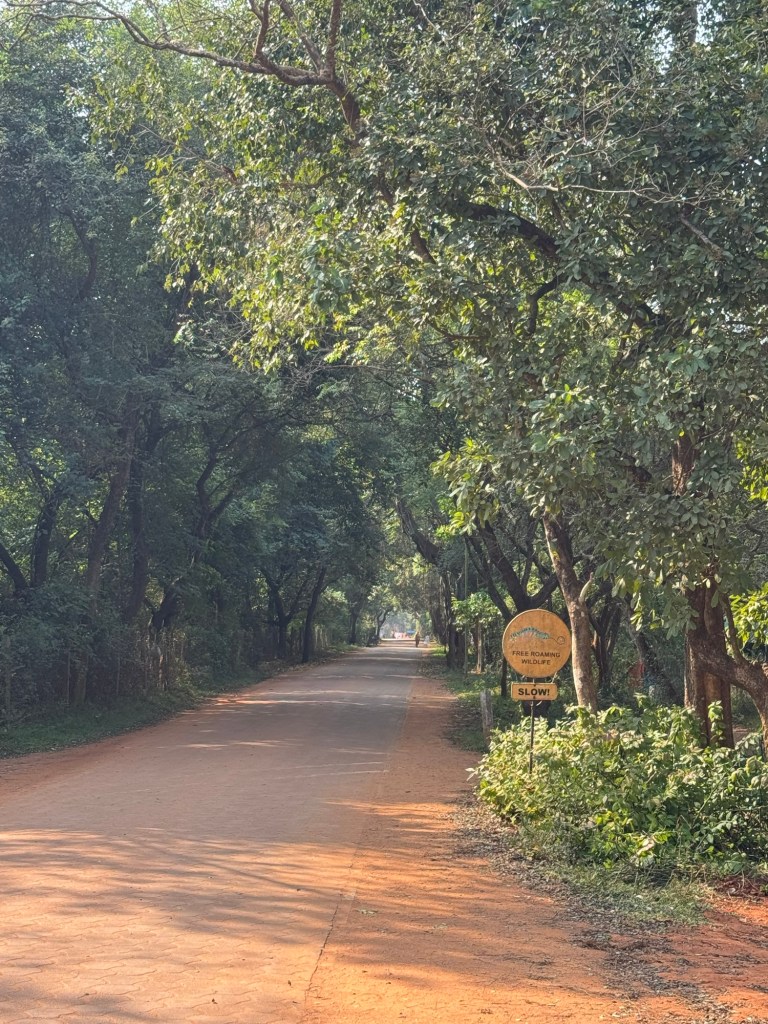

I left her—a child of Canada, a devoted classical dancer, a seeker of spirit—near Auroville, Tamil Nadu. Having quit her six-figure job against my counsel, she now lives here, works on her art, eats at the many fusion restaurants, and drives her noisy scooter along the congested roads back and forth to Auroville.

That still, green enclave tucked within Auroville is where people from every corner of the world gather to live the improbable dream of oneness and unity—a dream I once cherished in my teens and then vehemently dismissed in middle age when driven by business. Yet now, watching her there, I find myself looking at this place anew.
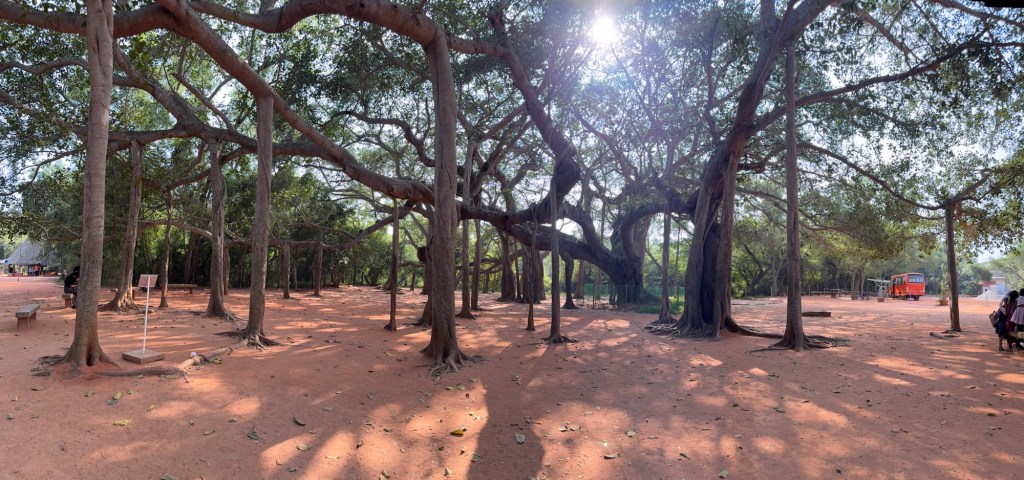
Conceived in the 1920s and sanctified by UNESCO in the 1960s as a testament to human unity, Auroville remains a rare, living experiment in harmony. Its three and a half thousand residents—half of them from India, half from the rest of the world—weave daily life into a quiet hymn of coexistence focused on human unity and sustainable living: reclaiming ecological forests, developing renewable energy, creating new green-building techniques, running schools, practicing arts, cultivating farms, and operating restaurants—in the town that “no one owns” and where no one works for salaries—all without adherence to any specific religion. In my daughter’s arrival, I witnessed both her beginning and my own long-delayed return.

Auroville was born of the vision of Sri Aurobindo (1872–1950)—philosopher, revolutionary, mystic, and poet—and brought into being by the will of Mirra Alfassa (1878–1973), the French artist later known simply as the Mother. With the Indian government’s blessing, it became a place where foreigners could live and work free from the normal constraints of nationality. The remarkably talented actress, Kalki Koechlin – fluent in English, French, Tamil, and Hindi – herself born in Pondicherry to French parents, once said, “My skin is white, but my heart is brown.” In that simple confession lies the spirit of Auroville—belonging that transcends borders.
My own search as an adolescent first brought me to Aurobindo’s ideas decades ago. His words offered a map for my young immigrant’s restlessness. At thirteen, adrift between continents and raised by a father enamoured of the West, I searched for meaning in the universal. A face brown and a heart steeped in Shakespeare, Blake, Elliot, and King James Bible.
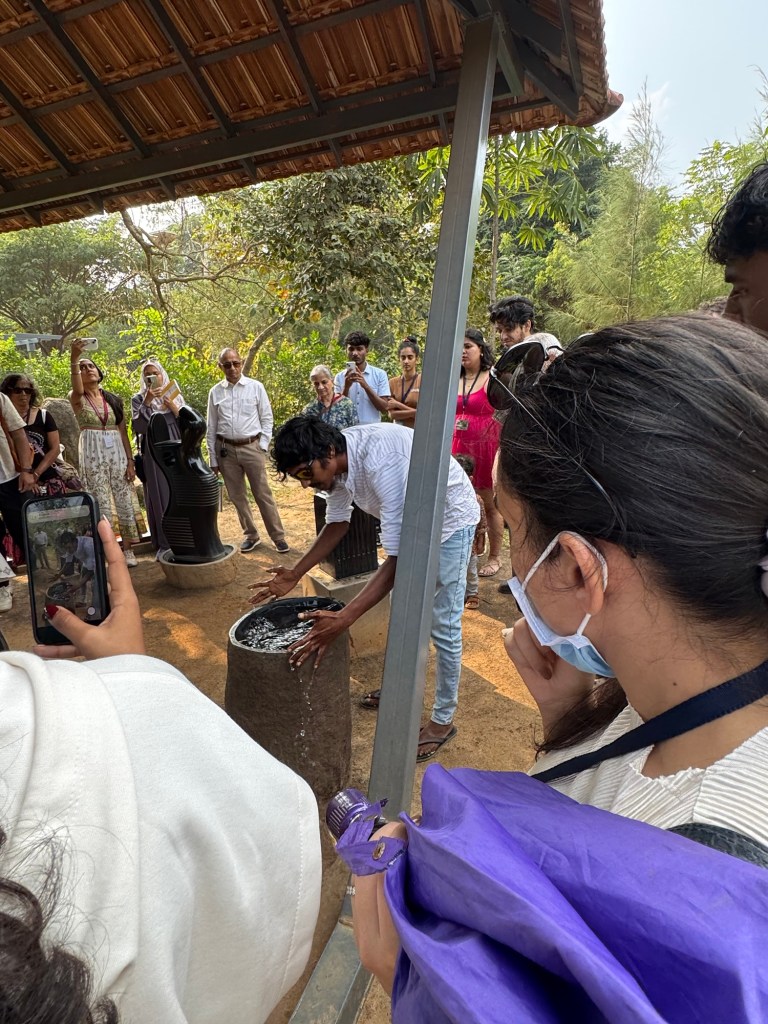
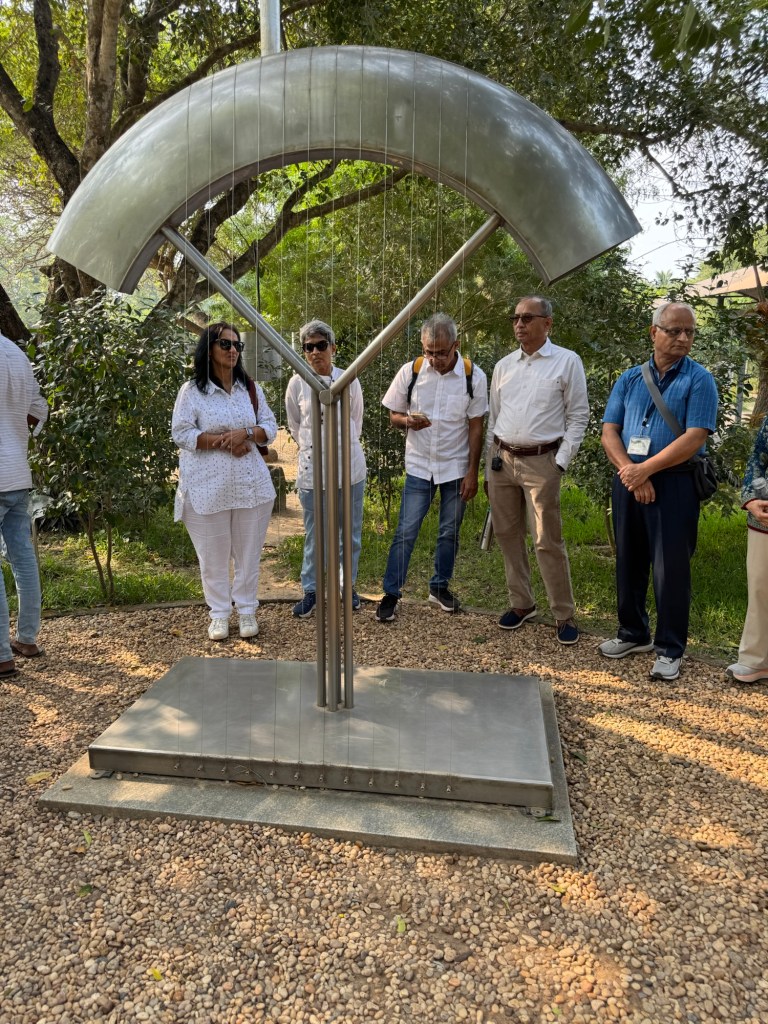
Aurobindo, too, was sent to England as a child of seven in 1879, exiled from his own culture by a father’s misguided wish to insulate him from all things Indian. Despite his deep immersion in ancient Greek and Latin at Cambridge and his prodigious poetry (his poem, ‘ Savitri: A Legend and a Symbol’ remains the longest poem in the English language), his lifelong search was for universal truths and spiritual synthesis—a bridge over the civilizational chasm between East and West, ancient and modern.
Now, as the world appears to turn away from those ideas and ideals, I find myself wondering if, through my daughter, I will find a home here.
 Vidante
The visit to Auroville sounds like an excellent use of time.
Sangeeta’s choices validating your own early explorations must add a unique flavour to parenthood. Though not as deep in it’s practice as yourself, I’ve occasionally noticed a few familial parallels in my son’s experience that stand apart from his emersion in the stream of his generation. Remarkably, some are even positive. Haven’t often spoken to other parents on the subject, but those who have marked the phenomenon also see it as a great opportunity. As we have lived some of these specific experiences we’re better off to let the good traits run on their own and offer caution only where we ourselves may have stumbled. Or so it seems sensible as the thought forms in my head. Writing it now the doubts begin, confidence wanes.
Sri Aurobindo was quite a discovery to me back in my late twenties. You probably remember Joe Wilson, that guy from Vermont, he was an admirer and evangelized a number of people around Dal about him. My contact was slight but memorable, well worth reading for all modern people, perhaps a bit like Marcus Aurelius but richer, broader and contemporary. Must have been a great experience to fully engage in such a community, possibly encountering new thought leaders from around the world.
Of all the discoveries you’ve recounted of late, this one I envy the most!
Have at it!!!
Best Regards DM
P.S. Recent malfunctioning of this laptop has included several; “Delivery Error” messages. I may have missed some of your writings.
>
LikeLike