Suresh the Barber

Suresh is barely thirty-five and considers himself fortunate despite having lost his father and his fifteen-year daughter on the same week two years ago. “My daughter was in college” he said, “she would have been the first of our family to study in college. She wanted to be a dietician.” “How did she die so young?” I asked. “Her blood pressure raced to over 240/140 after her covid vaccine.” He said, “we took her to hospitals everywhere and they couldn’t help” and he stopped before whispering, “she wanted to go to class even in those last days.” He put down his blade and showed me her picture on the phone. She was dressed formally with a bright red half sari worn by unmarried girls, a large red dot on her forehead customary amongst the labour castes, and a bright green blouse. She sat on a majestic old fashioned wooden chair like those in photography studios – the ones that were used for hundreds of years, the same ones that can be seen in photographs in every home in the village.

 He has his own barber stall at the main junction between the main road of the village and the inter-village road. His is the blue stall with the pictures of several gods – Ganesh, Shiva, and Krishna. Around him were chai shops, candy stores, and vegetable stalls, and across the road, in the shadow of the crematorium, a man muttered mechanically beneath his breath selling a half-dozen defeathered chickens that hung along the ends of the stall. The sun had not yet climbed high enough to chase away the cool breeze. Shadows lingered of the large statue of the venerated 19th. c British engineer, Sir Arthur Cotton proudly seated on his horse near the edge of the very canal he had envisioned. Women washed their clothes in the bank, beating them against the steps.
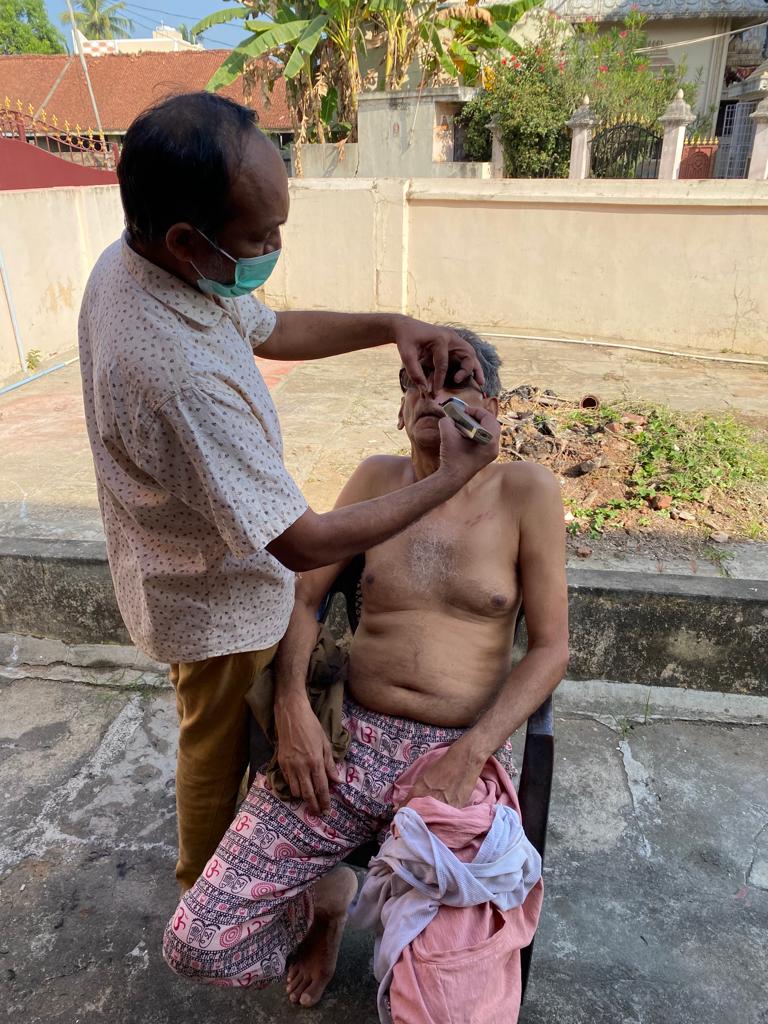
This morning, he closed his shop when my father-in-law summoned him to the mansion to give me a haircut, shave, and massage. He is adept with his blade which is adequately sharp, but I winced when he used only cold water to dip his blade in. “I prefer you use hot water,” I said and added, “perhaps you can use my shaving cream” He nodded and said, “Yes. Yes.” He said, “the foreigners use hot water and shaving cream.” He spread the cream on my face and once again began to work diligently.

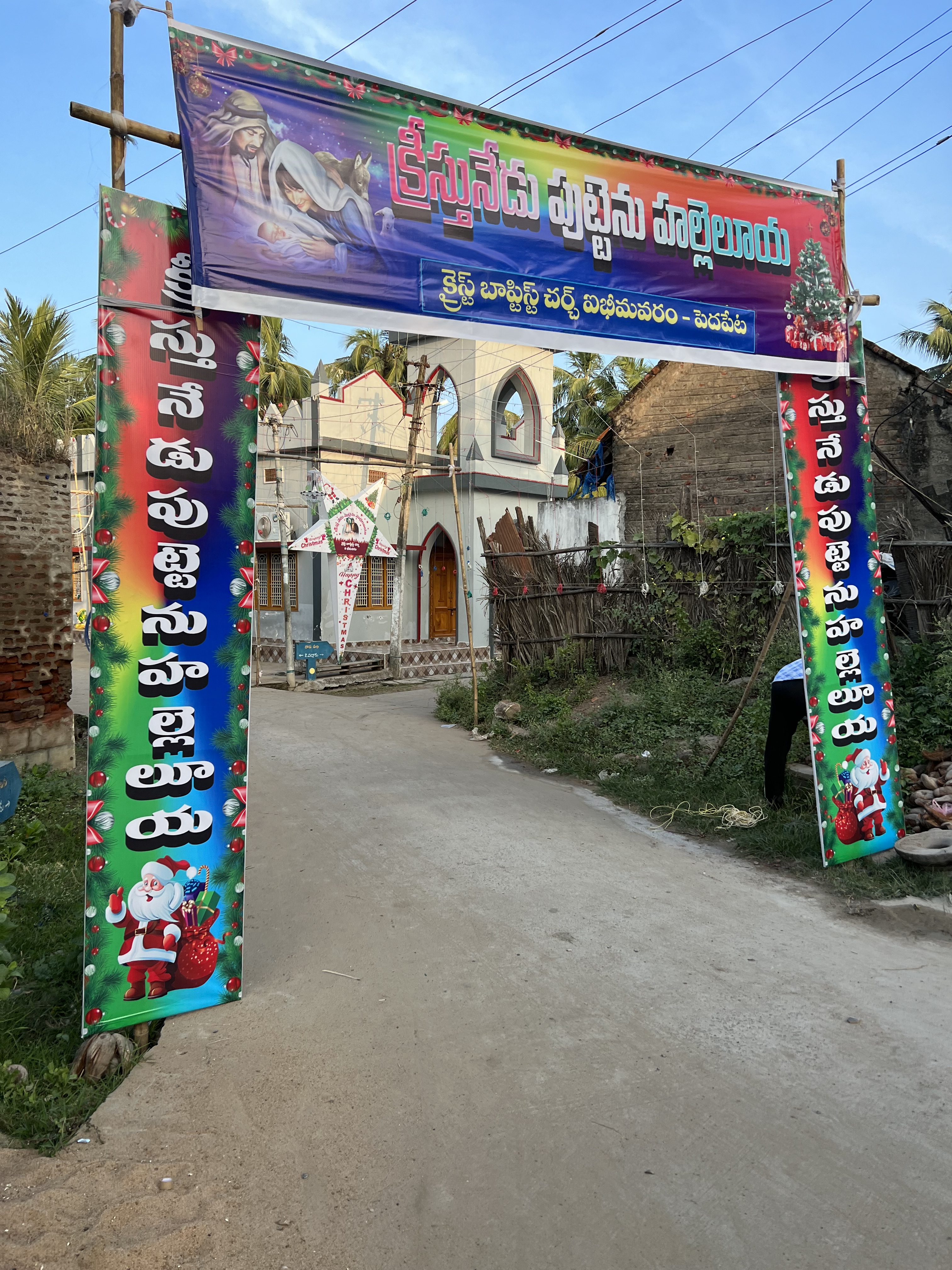
It was the day after Christmas and the loud recording of a Telugu rendition of “Silent Night” wafted from the Christian area of the village. The sun had risen enough that the parrots, and crows retreated into silence amongst the trees. There was little traffic and the few waterbuffalo that were marched down the main street to the canal and back left dung behind them on which the herdsmen threw sandy dirt from the side of the road and kicked to the side.

 A few men gathered nearby – all wealthy landowners – and one of them with a starched silk shirt said to Suresh, “You didn’t forget I have a marriage next week?” to which Suresh nodded, “How could I, Sir. You have reminded me so many times. I will come to your home and will make you all look great before the groom’s family arrives.” The village President – the head of the ancient tradition of an elected, five-person, “panchayat” – took his place proudly, holding up his first grandchild – a beautiful little baby girl in diapers who surveyed the expression in the faces of foregathered when she smiled broadly.

“How did your father die?” I asked softly when the men turned to their favourite topic – the failing state economy and condition of the roads. “He went for a routine gall bladder operation.” He said, “and he never survived. He was only sixty.” He continued to ply his trade silently. After the shave he cut my hair, took out a bottle of coconut oil and massaged my head, my arms, chest, and legs. When he finished, he whispered, this time, as if to himself, “My son was accepted to college yesterday. He will be an engineer. That is the way life is… sometimes there is pain and sometimes, joy.”
Venkat the Milkman

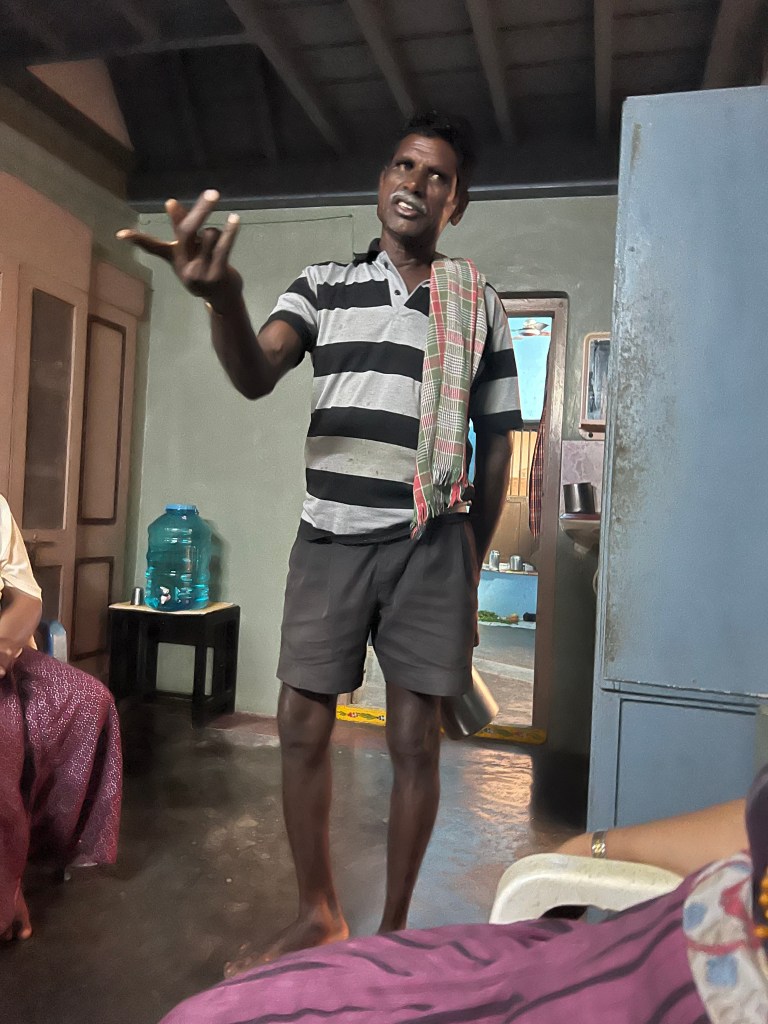
“I never forget that God does everything, not me. I am not like others. They think they are doing everything.” Venkat said when I asked him how he came to own a dozen waterbuffalo when he delivered milk to my uncle in my ancestral village – an overnight train ride from Hyderabad. Each of the waterbuffalo produce 15-18 liters per day and each liter would sell for Rs. 60 or $1. At almost $500 a month he managed to run his family of four with the help of a prudent wife. His wife wove recycled bags she bartered for vegetables and was known to add water to the milk on occasion to supplement her budget.

“One of my waterbuffalo gives weak milk” he said, when questioned about the diluted milk. The householders laughed and gently scolded him but paid him, nonetheless. “next time tell your wife to go easy on the water.”

 “Venkat,” I said to him, “how did you manage to acquire a dozen waterbuffalo?”

He related his entire story. His family had been making cheap indigenous alcohol – moonshine – from palm trees for so long that they had become a caste onto themselves. His father died when he was barely ten and he went to live with his aunt. He worked for her as a servant for years and watched as his cousins – her children – went to school. He is illiterate and unable to count. One day, when he was eighteen, he asked his aunt if she would pay him some money for the years of service so he could start his own life. She gave him nothing. “Didn’t I feed you all these years and allow you to sleep by the doorway?” she shouted indignantly as he walked away with his few belongings and wandered through the villages until he found work as a farm labourer.

 “I saved all my money” he said, “so I could buy my own hut and even a buffalo. Then I too could find a good wife.”

 Having married a clever wife his fortunes changed. He added to the herd over the years and managed to stay away from bad habits that were known to trap men in his caste: gambling and alcoholism.

“All my uncles and aunts died,” he said when I asked him if he kept in touch with the aunt that he lived with, “except her. God seems to have forgotten her.” He said without malice, “But I never went back to her house.”

“And your children,” I asked, “do they also help with the waterbuffalo?”

“No. No.” he said, his eyes opened wide, feigning shock at the suggestion, “my daughters are both bus conductors. They are 24 and 30 and earn Rs. 40k ($666.00) a month!” he said proudly, “They both finished high school” and added, “I took all their wages and bought each of them an acre of rice farm and gave them Rs. 400k each as dowry to marry good families.”

His joy was in that his daughters made more money than he. That they had more means than he. That they married boys who had better jobs than he. His pride that he had a hand in a generation turning away from wretched poverty.

The next morning as I walked through the village, I heard his voice, “Sir,” he said in vernacular Telugu, “You are going for a walk..” I stopped and waited for him to catch up. I had never walked along the secondary street of the village that ran parallel to the main road – the wide concrete road – on which the wealthy landowners had magnificent haciendas. Unlike that street, open sewers ran along this narrow dirt road and homes were made of mud walls supported by wooden frames thatched with hand made tiles just as all homes were made in my childhood. Even today they are best suited for the heat of summer, and trapping rain water in monsoon. “I live around the corner.” he said and offered hesitantly, “will you come and see my house? I built it twenty five years ago.” “Of course,” I replied as he led me through the narrow alleys, “The whole street belongs to my people,” he said. He noticed that I was unsure what he meant, “my caste” he added.

We turned the corner near a purple church which had a colourful canopy decked in Christmas ornaments. The entire building and surrounding churchyard had lights and ornaments strung along temporary posts. “This is where the Christians live.” Venkat said and waved his arm along another alley. It was the day before Christmas. There was no school. Children rode bicycles and played games in the alleys. A motorcyclist with a enormous backpack stopped in front of us and women came out of their homes to greet him – it was the Amazon delivery man loaded with Christmas gifts. We walked past two or three small stores that sold everything from candy, cigarettes, and household items and he said casually, “they are all “kounties”” referring to the shopkeeping caste.

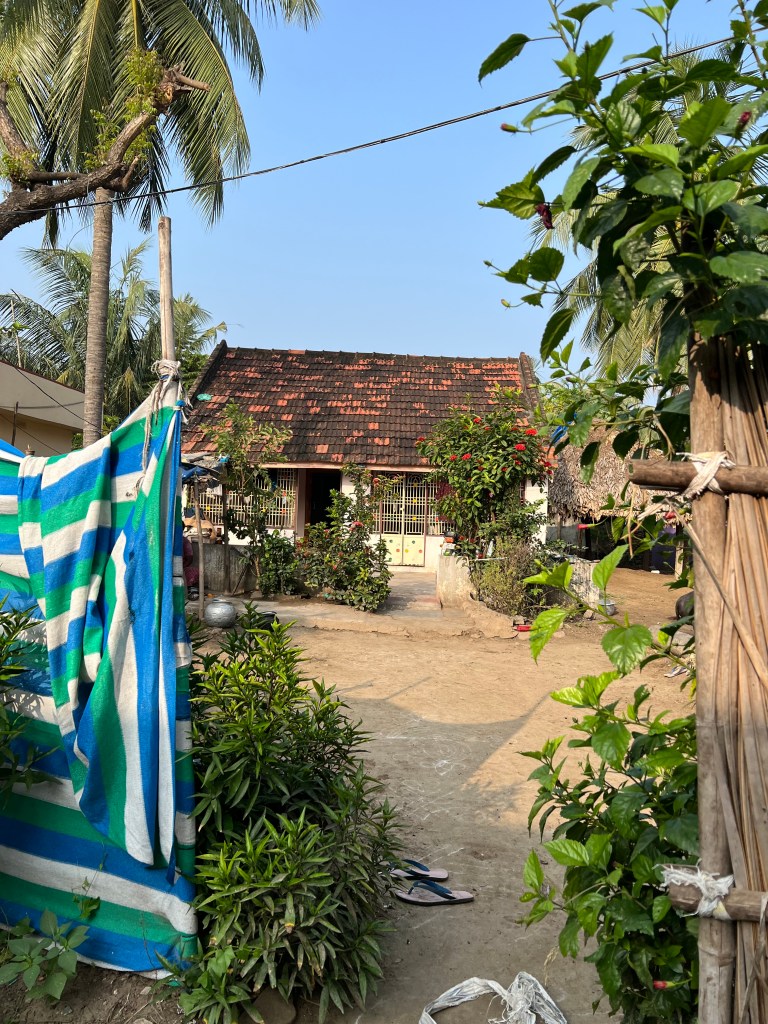
Eventually we came to his home. A traditional home with mud walls on wooden posts, painted white with a little disrepair showing along the edges of the windows. The front yard had a barren coconut tree, a mature Moringa Oliefera tree laden with long drumsticks reputed to be of great medicinal value, a fruit laden papaya tree and custard apple tree, an abundant guava tree and ever present hibiscus in full bloom – all testament to his wife’s handiwork.

Several waterbuffalo lay on the ground lazily chewing their cud while his mother in law pounded a stone mortar and pestle to grind curry powder. Two large, handsome roosters, trained to fight during the new year celebrations – as was traditional – had their powerful legs tied to the trees. Despite being illegal the law which rarely came to village would in any case turn a blind eye on the lunar New Years day that would occur in mid January.

“Please come in and have tea.” He said while looking at his mother in law. She continued pounding the mortar without turning her eyes. I thanked him and continued on the walk when his mother in law seemed disinclined to second his invitation. Suddenly I became aware of my posture and gait as eyes followed me through the alleys – in village India, caste is the determinant of every human encounter – after having spent most of my life in the West and much of my childhood in urban India, I realize now, that in my ancestral village, I would only be my caste and a foreigner in this street.

World Famous Chicken Drop

San Pedro Island, Belize

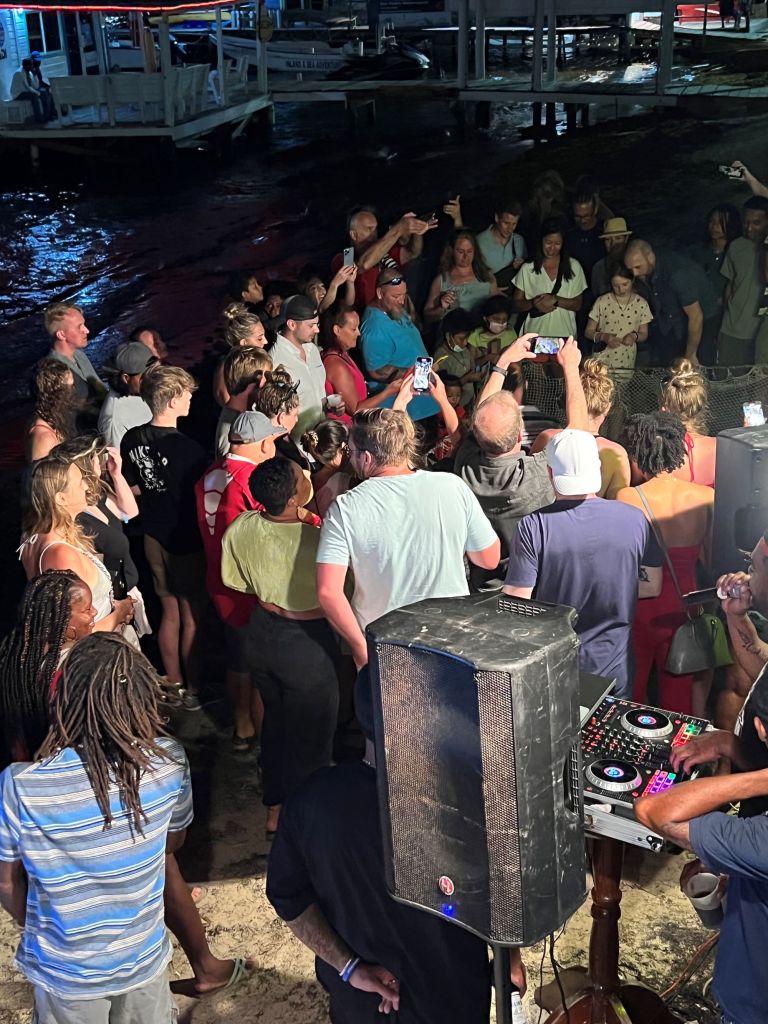
A rooster with spectacular plumage walked around a square enclosure surrounded by a two-foot-high plastic fence and a floor grided with numbers -one to ninety-nine- on the floor. The texture of rap-reggae music mixed with record scratching increased in tempo as did the volume of the crowd’s screams, cheers, fist pumping, and arm waving for the rooster to poop on one of the numbers. He strode majestically, hardly wavering, unmoved by the men and women leaning over the fencing to wave him toward their number. It seemed he had an innate account of the laws of randomness and wandered undeterred by the screams and gestures for ten minutes without even the faintest sign of excrement. This was the “Big Shit”, the winning number would claim one thousand Belizean dollars ($500 USD) but the rooster appeared fully engaged in the drama and withheld his deposition. The other rounds of the “world-famous” chicken drop held every Thursday at dusk would be worth merely 100 Belizean. In the previous round the hen had “dropped” on the line between numbers causing a “shit-split”, hence a sharing of the prize – the winners photographed together. Had the winners not been present, the monies would have gone directly into the long term well-being of that particular chicken.

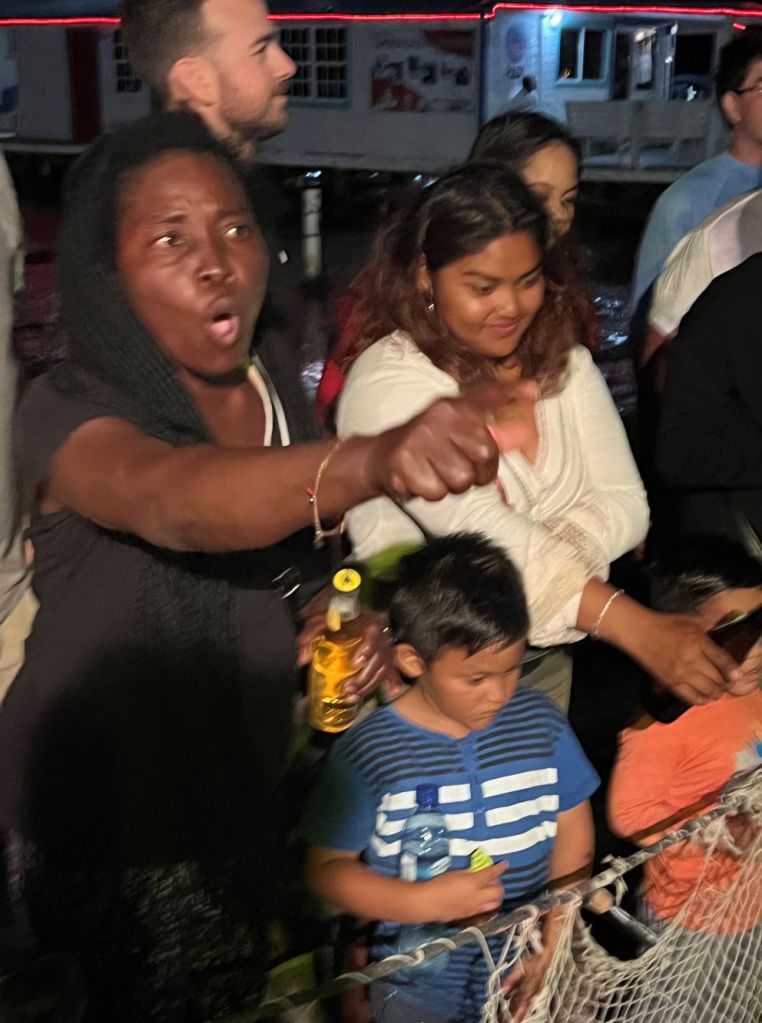
The sun had dropped into the western sky and the last of the red and purple sunset colours on the east had waned. The wind that clattered loose windows and doors all day had died down and the sea, just steps away, barely made a sound, muffled as it was, by the algae along the shore. Locals of all shades – mixtures of black, mestizos, creole, East Indian, Asian, mixed race Mennonites – and tourists – mostly American, Canadian and European – danced and screamed, having bought $10 Belizean tickets for the “Big Shit”.

The rooster seemed unmoved by their antics, choosing to stride with an air of dignity, pecking occasionally at the seeds scattered into the enclosure. “This rooster don’t poop, man!” the announcer cried out and added, “it is time to bring in another chicken!” Cheers rang out and he shouted, “Chicken Security! Bring a second chicken!!” His assistant emerged from the back of the pub with a docile black hen and held it up to the cheers of the crowd. “We need a volunteer!” he shouted, “You must hold the chicken with both hands, and you rock it back and forth three times! Only three times. Then you must rotate the chicken in three circles, precisely three circles, man.  Now you must blow into the arse of the chicken. Then drop the chicken in the ring!”

 The rooster and the hen circled around the two numbers 27 and 91 that my son and I had. They paused for several minutes on each as we held our breaths. Suddenly the rooster impulsively mounted the hen to the cheers of the crowd, and after a few moments of triumphantly ruffling his feathers on 91, he walked away, along with the hen, neither having emitted a single drop. A local woman with long dread locks who was often seen dancing wildly in front of the pub, “Rehab: for Failed Addicts” stretched out her arms to shoo them toward her own numbers but in time, to her disappointment, they returned and circled around ours. Two young, drunken male tourists with British accents leaned into the cage – almost falling over – clenching their fists and waving their phones on the eyes of the perplexed chickens until they backed away again, much to our disappointment. Finally, without fanfare, unbeknownst to anyone, in the deep shadows that fell on the enclosure from the swelling crowd the assistant shone his light close to the ground and shouted, “Number ten!”. A young American screamed with his ticket held in the air amongst the cries of disappointment, and murmurs of discontent that there was no sighting of the act. The darkened night was lit up with the many phones waving as several people danced their version of a “chicken dance” for a secondary prize. The announcer dispelled all doubt as to the winner, “It is number 10! I have been doing this for 30 years, man! We have a reputation to uphold! It is the world-famous Chicken Drop! So, if the hen shits in the shadow, it shits in the shadow!”  

Ms. Kelly for Mayor of San Pedro

San Pedro, Belize

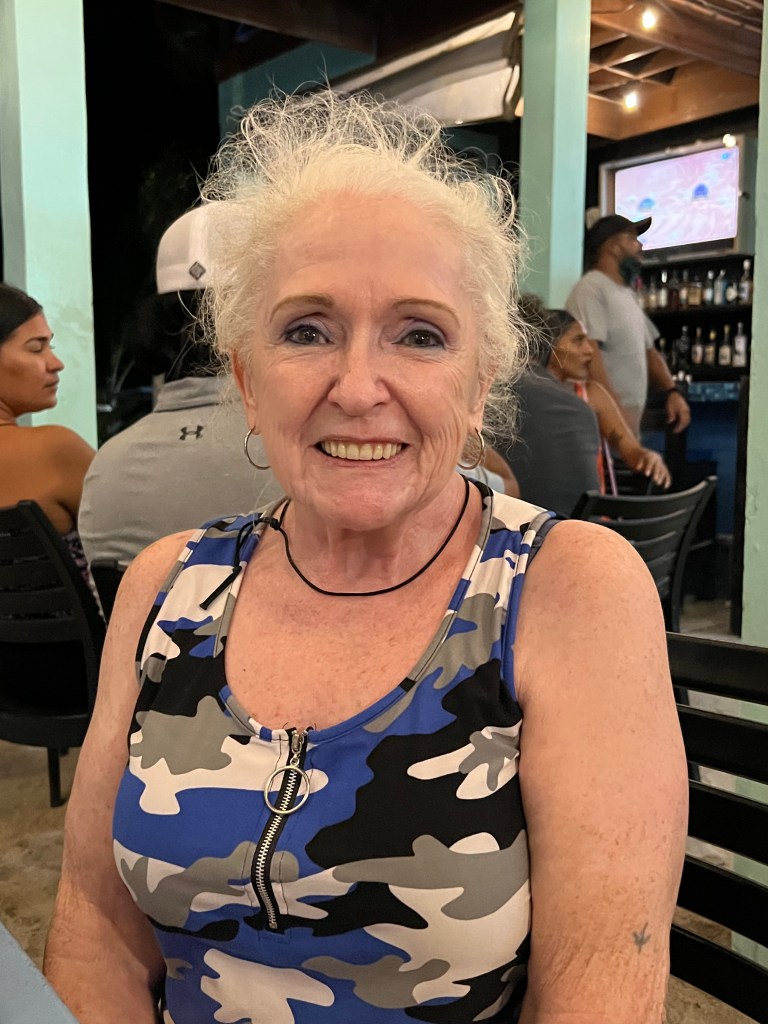
Ms. Kelly has a broad, infectious smile that radiates through a room. This is her first trip to the island of San Pedro, Belize, yet by all accounts, despite being a resident in the women’ dormitory at the hostel for barely a month, she could be the mayor of this town. Young, old, local, and foreign, gather around her almost involuntarily. Despite being twenty-four years older than my 37-year-old, digital nomad son, they are inseparable. They down fireballs – a potent drink made of rum and cinnamon – in succession and are companions in sweaty bars and evenings out in the beach at sunset smoking local products with local people – they are fast friends. Young women confide to her about all manner of things that only women can share. Local men and women have absorbed both into their circles – businessmen, musicians, pot heads, hustlers, and ne’er do wells.

They seemed warmly welcomed into the community that is somewhat opaque to the young and old American, Canadian, and European tourists who sun by the pool and stay risk-free in each others’ company.

She is an attractive woman, not by the standards of magazines that cater to white women or unrealistically shaped women bouncing along a beach with handsome square-jawed grey men in post retirement brochures, but in a manner that draws people to her spirit, specially those who had once tasted the unconventional, and free spirited 60s and 70s. She was not particularly slim or tall, but her infectious laughter, indomitable spirit, and embrace of the unconventional drew incredulous admirers- me amongst them.

San Pedro is a repository for the unconventional American of that era that can be spotted amongst the more ordinary faux-adventurous. Extroverted, rambunctious, open, non judgemental, they serve as harbingers to things to come. These are the middle aged and older Americans escaping the all-inclusive resort tourism to places like San Pedro that have yet to experience the fate of Cancun, Tulum, and Cayman Island.

Miss Kelly has powerful motherly instincts. There are signs of suffering in the corner of her eyes and in her intonations when she speaks of her husband’s untimely and unexpected passing. But her four children and twelve grand children spread across Arizona and Michigan are her source of joy and to some degree serve as restraints to her otherwise passionate and wild nature. Her life spanned the deadheads of yore, folk music, and she once even co-judged The Cannabis Cup for rap musicians with Snoop Dogg – in which, by her telling, the first three entrants typically won because the judges were too stoned for the rest.

She is Americana personified – a unique individual from a unique moment in time that could now only be found in small enclaves like Asheville, North Carolina, Woodstock, New York, Ashland, Oregon, or Madrid, N.M. She is a gift of her time, and we will form an army that will tirelessly work to have her installed as the mayor of San Pedro if she were to run so we may preserve San Pedro’s rustic, unassuming charm.

Pancho Patas and The Rehab Bar For Failing Addicts

San Pedro, Belize

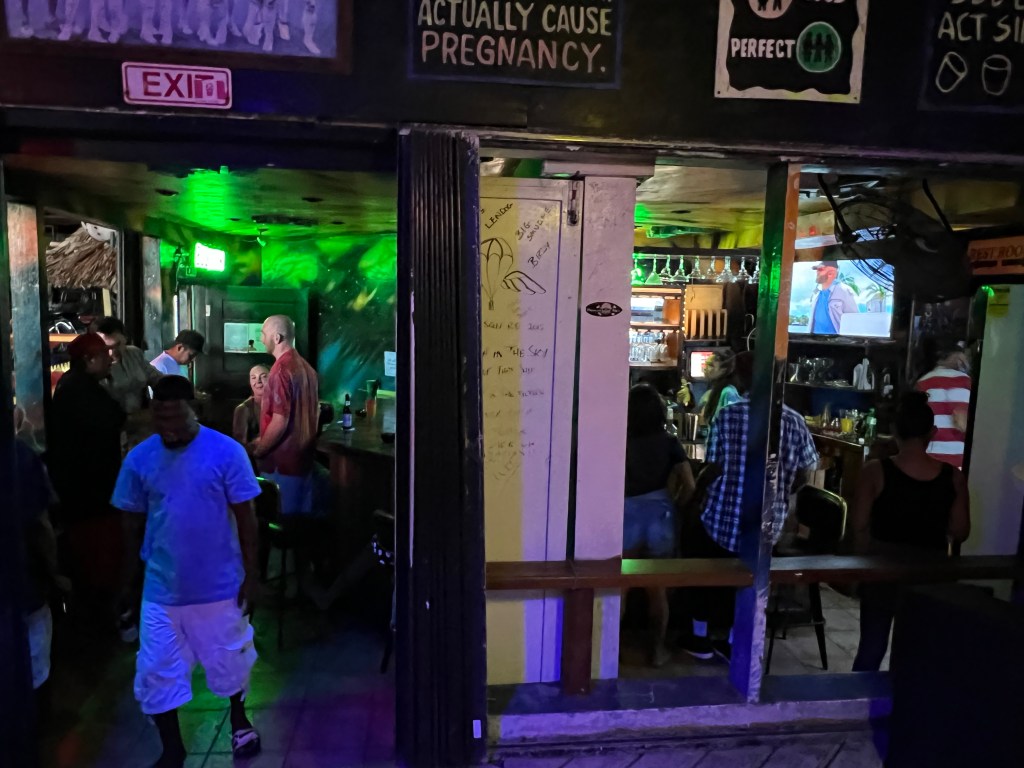
Pancho Patas has a commanding presence. He moves slowly, each step deliberate. His smile exuding warmth and his eyes the assurance of a self-actualized man radiating a paternalistic aura. The legion of young men around him was his ‘crew’ and each of them seemed congenial and light-hearted – exchanging complex handshakes, shoulder, and fist bumps. The camaraderie and joviality were shared with each new patron that walked in the tiny pub named, ‘Rehab: For Failed Addicts’’ in San Pedro, Belize. Even the three policemen on duty, while still in uniform, went through the gauntlet of greetings, ambled over to the bar, grabbed a beer each and stood outside like sentinels at ease. Perhaps more like relaxed tourists. The small playground was filled with children and mothers. Around the sidewalk, street food vendors cooked on open fires – jerk chicken, jerk fish with rice, kidney beans and coleslaw – all for five US dollars. The sea lapped at the edge of the beach, the moon shimmered on the water while in the distance white water crashed into what is the second largest barrier reef in the world.

The disk jockeys and their friends revved up the rap and reggae, swayed, rocked, threw out their arms with sharp gestures and moved their heads around their necks which seemed made of rubber. The signs on the ceiling, walls, and pillars loudly pronounced, ‘we don’t serve women here, you have to bring your own’, ‘drink triple, see double, act single’, or ‘alcohol may actually cause pregnancy’.

Before long, Pancho Patas came out to the verandah and I noticed for the first time that his t-shirt had Tupac Shakur emblazoned across the front. My son, a digital nomad, who had recently moved to Belize had once cured me of my harsh view of rap music by making me sit through a one-hour drive listening to Tupac. I had bought his collected works since. Pancho Patas walked directly to me and with a broad smile put a large cube wrapped in tin foil in my hand and said something in local Creole I couldn’t understand. I accepted gracefully and followed my thanks with a string of fist bumps, shoulder bumps, and the one complex handshake I knew since college – thumb to thumb, moving to full handshake, withdrawing into a snap of the middle finger and thumb, and ending with a fist bump. Pancho Patas added the shoulder bump while clasping my hand and pointed to my son, “He good man, Mr. Dad” he said and threw his arms in the air and gingerly, with a grace of a dancing bear, leaned into his slow stride to dance, two steps in each direction.

It was only when he turned his back that I looked at the tin foil wrapped cube and helplessly turned to my companions. “He likes you man” the American woman that I met at the hostel said and whispered, “its hash and mushrooms”. “But…” said I, “I don’t smoke this stuff.” She smiled and slipped it into her purse, “We want to take it,” she said and added, “he is a kingpin in this town.”

American in Tamarindo

Tamarindo, Costa Rica

 His face well worn, beard unkempt and his light grey and blonde hair dishevelled, he walked by with a large bag of groceries and a case of beer. His burly broad chested frame hunched to one side as he lumbered out of the supermarket in Tamarindo, Costa Rica. He had the appearance of a man who spent much time in his own company and had a long running commentary with himself. Our eyes met while I was pondering my options to return to my Airbnb several kilometers away with my groceries in a place where there was not a taxi in sight and uber wasn’t available.

“Another beautiful day.” I said as he walked by when he stopped, looked at me closely and said, “yeah. Yeah. It looks beautiful” and his voice trailed off into the mid-afternoon heat.

“You don’t think it is as beautiful as it seems” I said disinterestedly and was somewhat confounded when he stopped beside me and intensely gazed at the pavement as if he was considering my comment at great length,

“Nothing is as it seems” he said

I stopped scanning the parking lot for a taxi and looked at him directly.

“You are right.” I replied and added, “I sometimes can’t distinguish between reality and illusion.” I was filled with expectation that I may have an unusual conversation.

A long silence ensued before I said, “You must know Costa Rica well.”

He began to walk past me toward his car- a dusty forty-year-old black Nissan with a brown passenger door and a tailpipe tied to the trunk with a rope. Just as he reached the door, I said, “I’ll give you $10 bucks for a drive to Tamarindo.”

He got in his car and started it – the engine sounded like a race car – the muffler seemingly only for looks. The afternoon sun bore down on the pavement and made it shimmer. UHe was about to drive away when he stopped, opened his door, and stood for a few minutes fiddling with a door handle that appeared to have loosened. I turned away and wondered what I should do next. Suddenly, he stopped fiddling and asked,

“Did you say $10?”

“yes”

“Truth is I am broke,” he said, “I could use the money.” He crawled into his cluttered car and threw things into a corner of the back seat.

 When I got in the car, I finally got a close look of his face. The deeply etched crow’s feet along his eyes, and the wrinkles on his forehead beneath his ruffled whitish blonde hair left the impression that the man may have spent a lot of time at sea. The weather-beaten face may have once borne a smile but when one looked into his eyes, which seemed disproportionately small amongst such dramatic, Hemingway like features, it seemed absent of joy.

“You know last year they rounded up all the top bankers in the world like Rothschilds and Rockefellers –hundreds of them – and assassinated them. People don’t know. They keep paying their mortgages, but they don’t know that they don’t have to pay them. One day, they’ll find out and they’ll be free.”

 “Wow.” I said, “I never heard that. How did they keep it away from the news?”

“Hah,” he replied, “The news” and fell silent.

“How did you find out?” I asked.

“I know. My dad taught me to look for signs. He was one of the greatest economists in America in the 60s and 70s. He was the guy that predicted that silver prices would go to a thousand bucks and he made a killing. He was consultant for those bankers.”

“I see,” I said, “was he from the Chicago school?”

He slowed the car down and looked directly at me, “You know the Chicago School?”

“He must have been a free trader, was he?” I asked.

“He was a free trader,” he said. “But he hated America.” And added, “When he made his killing he moved here.”

“So, you grew up here,” I asked.

“Yeah, I grew up here. I partied. I surfed and sailed and drank. He was a great man” he said, and his voice trailed off as if the memory of his father flooded him with sentiment. “He hated America,” and added again, “why wouldn’t he. How can you love a country that took his only son to Vietnam?”

I fell silent. We drove the rest of the trip without a word. Finally, when we arrived at my destination, I paid him and was about to leave when he got out of the car and walked toward me and asked, “What’s your name?”

I looked closely into his eyes which seemed to have softened under the shade of the guava tree. “Ram” I said.

He pointed to my face, broke out into a brief smile, and said, “You are a typical Indian.” and he nodded his head, “a typical Indian. You studied everything. I know people like you.”

The Stoned Barber

Jaco, Costa Rica

Jaco is what I was told it would be – somewhat “risqué” and seedy. There are women of the night out in mid day and I am told you only have to stop a local and say the words, “I would like to see pink elephants” and a drug dealer appears in minutes. By the looks of the town it doesn’t seem a mere legend. Even the bathroom at a relatively upscale restaurant had a notice that read, “no sex workers aloud (sic)”.

Despite the local grit, I spent a lovely day today. I wandered into a barber shop. A young black man was sitting alone and when I asked if he would cut my hair, he nodded and looked at his feet. I believe he didn’t speak English. I sat for some time on the barber chair while he occasionally raised his eyes and smiled. Following an awkward silence, a white Costa Rican came in and gently led me out of the barber chair and adjusted it for my height, before reaching for a “pipe” that smelled both sweet and pungent. I smiled and told him it smelled lovely and when he passed it to me, I declined, telling him that I hadn’t smoked for years. He seemed at ease reached for his phone and played Bob Marley while sharing the smoke with the young black man. “I shot the Sherriff…” rang out and the barber stood back and looked at my hair from several angles before launching into a high speed hair cut with a machine, hand scissors, and even a fine blade. All the while, dancing, rocking and singing.

I have never had such a skilled barber and although he didn’t really do an excellent job, it was by no means his fault. I so marveled at a stoned barber plying his trade so efficiently that I had little interest in the style he cut. “the secret is to be stoned and still be good at your job” he said, when I mentioned that he seemed an artist with his tools – swapping various sizes of attachments on his machine like an artist switching paint brushes. Now I will live (as you can see) with a haircut that resembles the work of a stoned barber – somewhat uneven and a unkempt. He spoke at length about the state of the world and how it seemed to be going mad. Finally, after the last finishing touches he stood back and admired his work and muttered, almost as if to himself, “luckily all the things that happen in the world don’t come to Costa Rica for twenty years.”

The Hand Writes. The Finger Moves: Costa Rica

At the Foot of Volcano

The hand that silently paints this world.. the hand that wordlessly wrote the Poetry of each sunrise and sunset seizes the pen that writes… and gently demands we put it away. What She writes.. we can only observe on bended knee.

When his finger moves.. the body stirs with aching need of his touch… knowing the heart only exists in the touching. Stirred into awakening.. the cavernous walls shake… rattling bones and sinew to the terrifying cry of love.

Seeing my Children with Grandfather’s Eyes

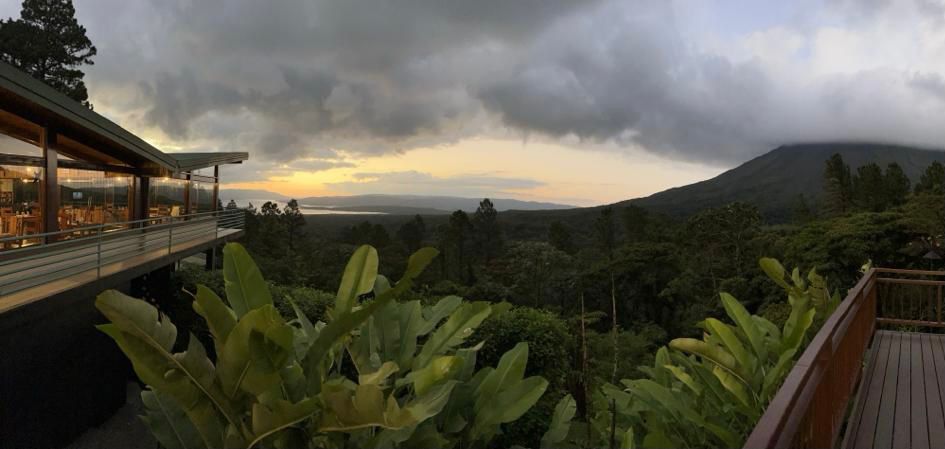
I victimize you with my melancholy for passing time, but I offer no apology. I see you now with the wizened eyes of my grandfather as he stood by the train that would take us from the village for the last time. Did they not reflect the soul stirring acceptance of the fickle nature of time ­ at once the acceptance of movement and arresting mortality. It was not a train he watched as it tugged each car from the station, but time itself, epochs and eras that carried his grandchildren wistfully away, while his feet remained rooted in the holy dirt on rice paddies and long pregnant moments in being. If melancholy exists where the past and future can be seen in the present, had he seen that each passing train would carry all his children, grandchildren, and great grandchildren away along digital tracks into the silicon cities of Palo Alto, and Bangalore? Had he seen that we who left the village that day would be high tech entrepreneurs who would build those very tracks. It is with those eyes I see you now, as I long for a draft of the pines, mountains, and glaciers of Patagonia, the rain soaked forest of Monteverde, and the Arenal’s Volcano. To see freshly I place myself among unfamiliar grandeur but the media I am rooted in is of my own making ­ a blog, a cell phone, and you.