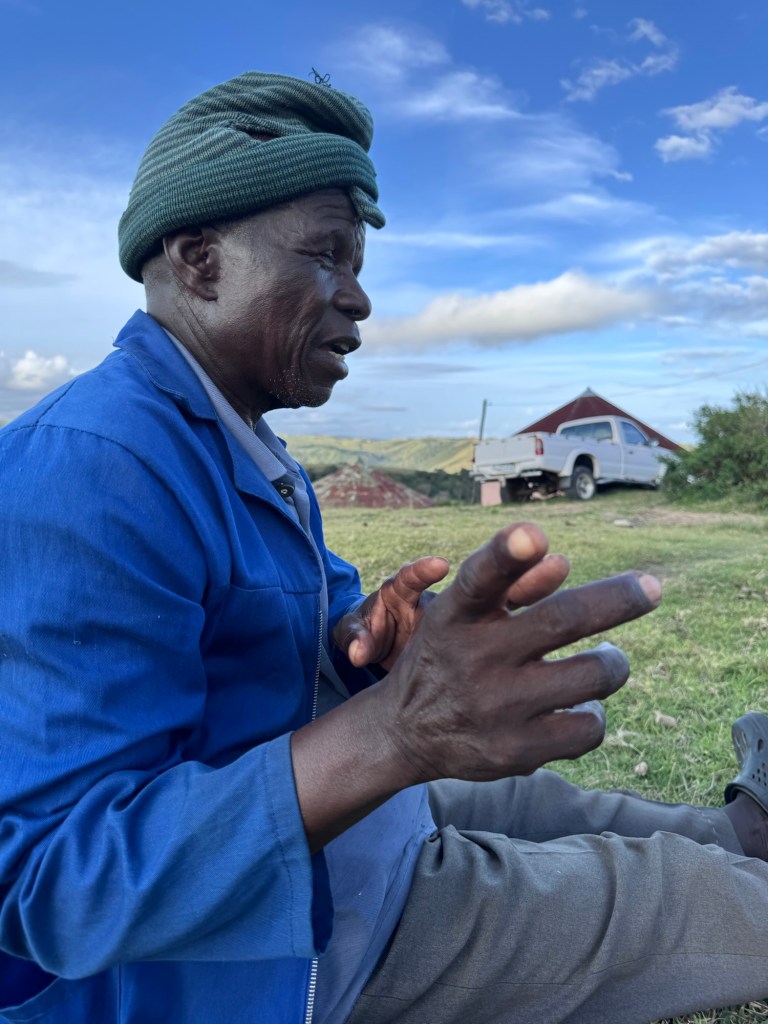
It was better for us then,” he said when I asked him about life during apartheid. The afternoon heat drifted into dusk as Team, the seventy-four-year-old man sat uphill from his mud-and-clay house, gazing toward the Indian Ocean. In these hills of the former Transkei—once a homeland carved by South Africa’s apartheid planners for Xhosa-speaking people—Team is known as the village’s oldest man, a keeper of stories that straddle two eras.
“Back then,” he continues, his hands tracing invisible circles in the air, “white people didn’t come here. We had no money, so we made everything ourselves. We grew food, built our homes, traded with our neighbours. Now things come from everywhere, and we have money—but it’s worth nothing because everything is so expensive. We’ve forgotten how to make our own things.”
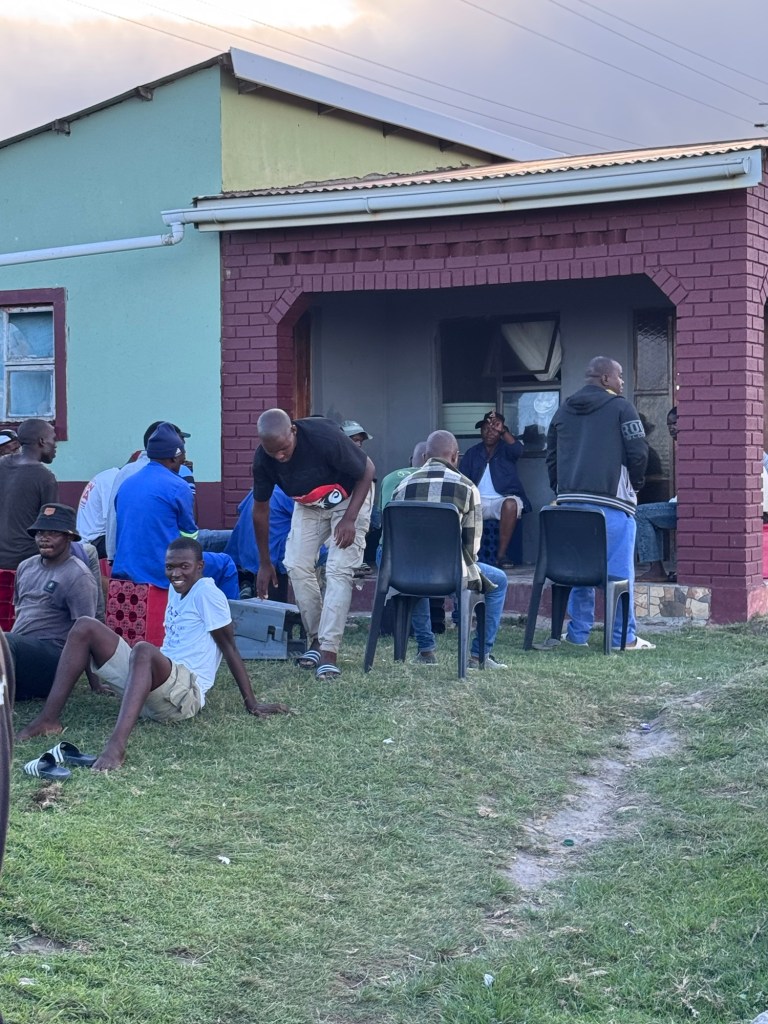
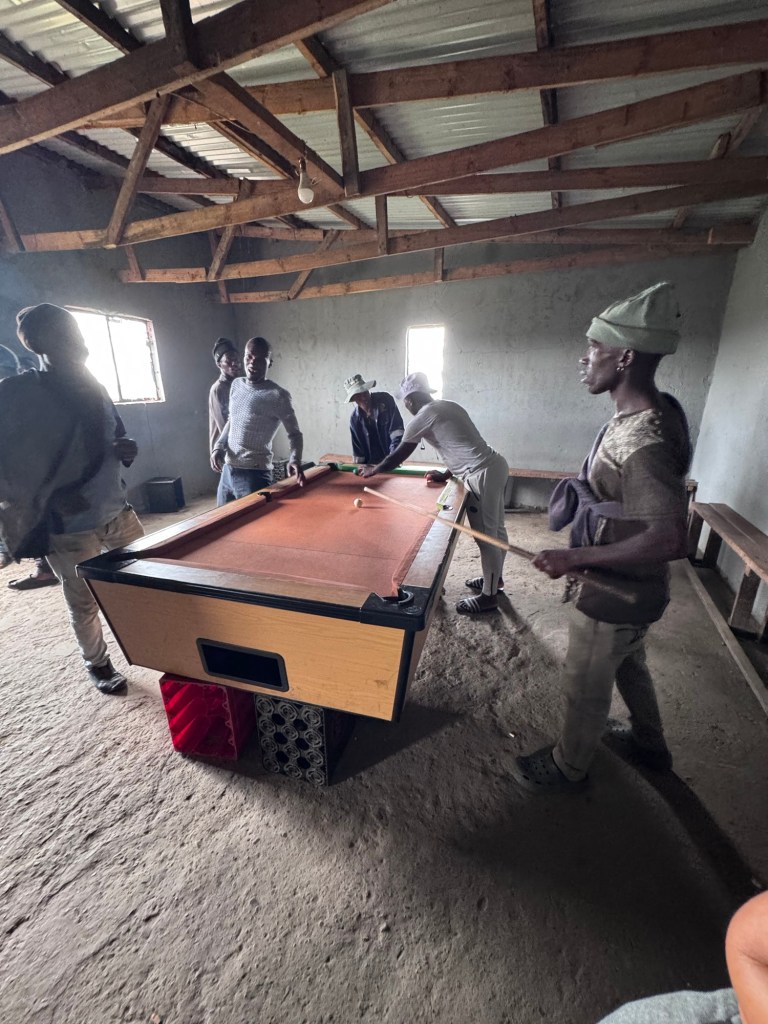
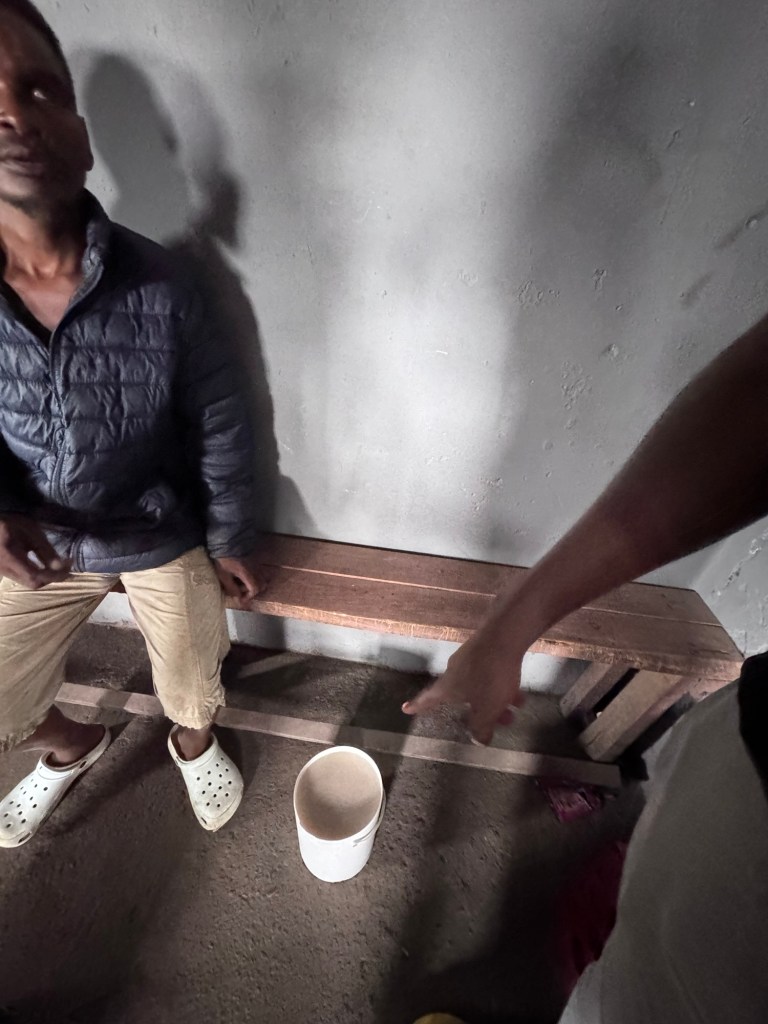
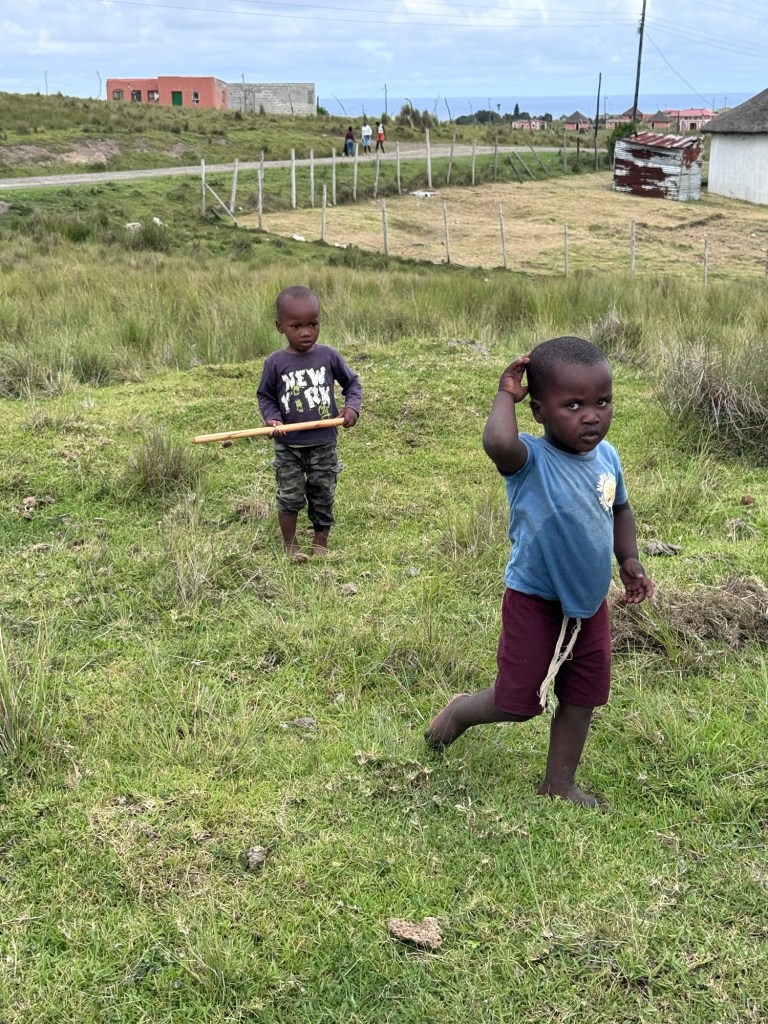
Below the ridge, a knot of men debate animatedly, voices rising and falling over a dispute between two villagers. The traditional council mediates quarrels here, calling the police only when talk fails. Around them, the rhythm of village life continues: cattle move lazily through the grass, sheep float like clouds in the expansive landscape, chickens dart between stones, children chase a tattered, deflated soccer ball. On top of the hill, a group of young men laugh aloud at the bar while playing on a dilapidated pool table, dipping their mugs into a bucket of home-made beer. Far off, the waves fall silently toward an empty beach.
“At least now we can go anywhere,” Team said, his eyes brightening. “The young can travel for work and send money home.” He speaks in Xhosa, each sentence adorned with the unique, crisp clicks of the tongue. When I asked if they truly lived without money, he stops and grimaces. “No. When we needed it, I went to the mines.” He gestures northward. “I took the bus to Mthatha. There they gave me an identity card, then sent us by train to the coal mines. I worked six, seven months at a time. Then I came back and bought some cows.
As my guide, S’Bo, translates, Team’s hand sweeps across the distant horizon beyond the Mngazi River—ten miles away—then his arm plunged straight down to the earth. “The mines were that deep,” he says. “No protection. No masks. Many men died of tuberculosis. If you were hurt or sick, they sent you home with a little money. There were no doctors.”
His words hang heavy in the air. My mind raced to find language for this strange feeling: a kind of affection for a harsh regime. I’ve read memoirs of prisoners who recall confinement with strange tenderness, of hostages who sympathize with their captors—but nostalgia for apartheid feels like something else entirely: an ache for the small tenderness of a simple life now transformed into the chaos of freedom and choice.
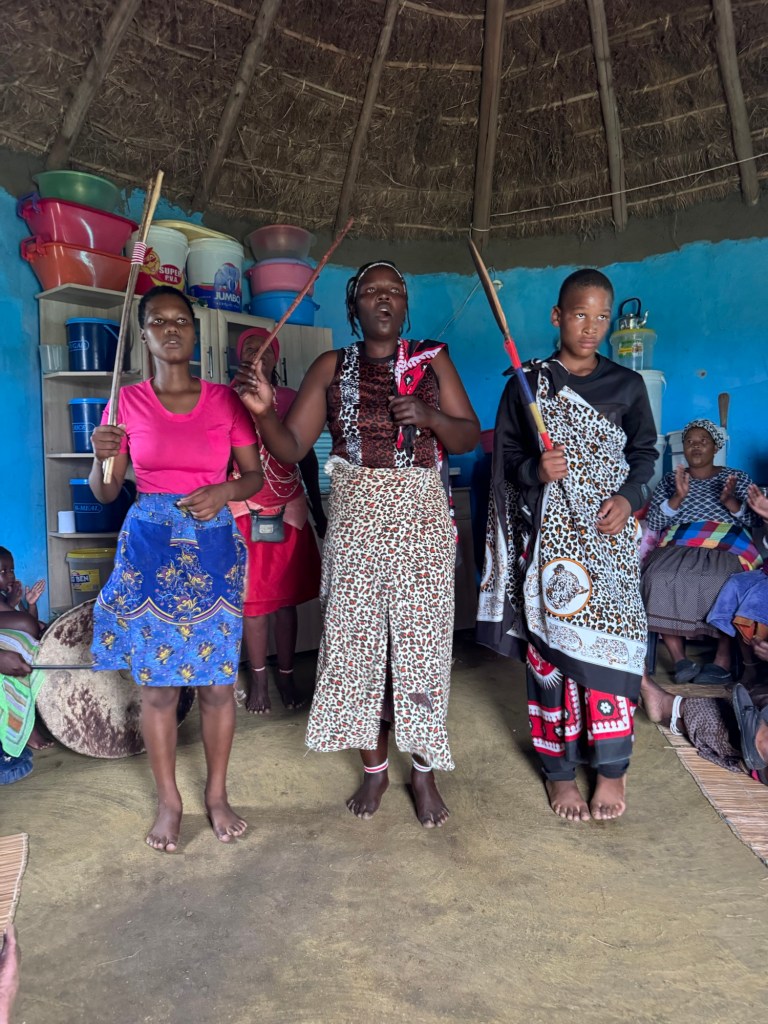
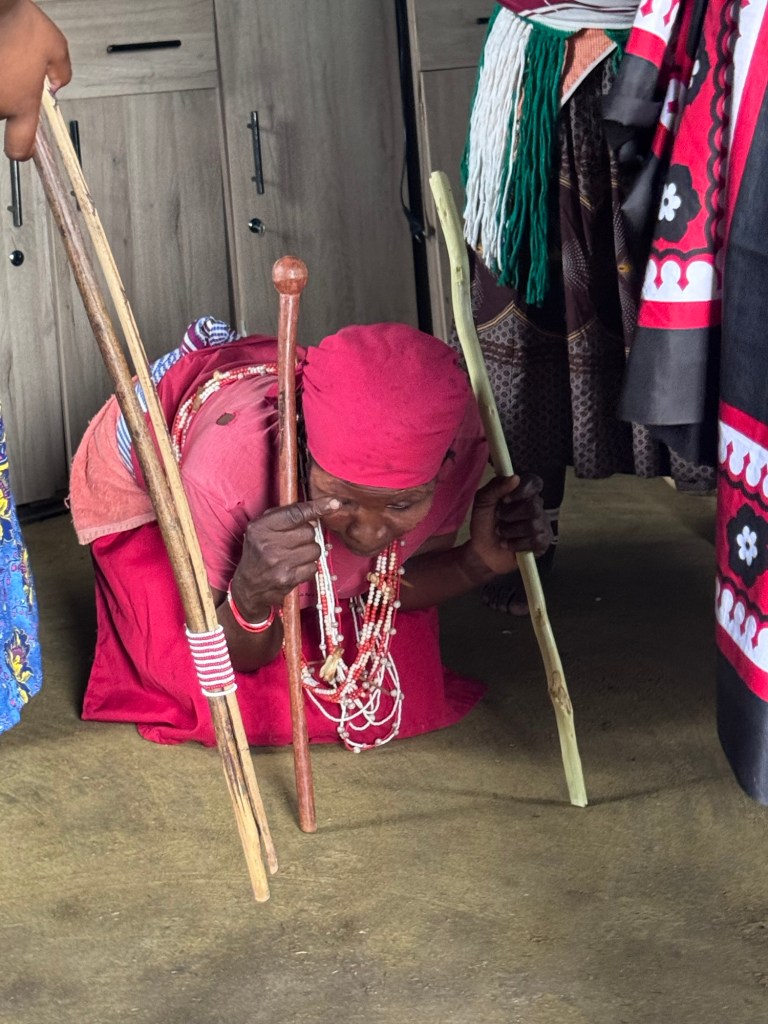
Earlier that day, S’Bo had taken us to a healing ceremony in a traditional circular rondavel home. Women and children crowded the earthen floor, clapping in rhythm as three dancers—bodies upright, feet stamping with fierce grace—circled a small fire kindled with sage. When the drumming ceased, two healers knelt, whispering prayers through a haze of aromatic smoke, careful not to sever the fragile link to the ancestors.
Outside, the Transkei hills burned gold in the last light, and the voices from the bar up the slope drifted down—laughter, the clack of pool balls, music rising and falling on a popular Zulu pop song. Somewhere between old constraints and new freedoms, the spirit of this land endures, wrapped in both sorrow and resilience.
The mountains of the Transkei darkened under a swift-moving mist, swallowing horizon and hill with unnerving speed. This was once a semi-autonomous homeland—an apartheid creation roughly the size of Denmark—where Xhosa-speaking people were exiled in 1959 – many stripped of their South African citizenship anywhere in the country. It is the longest and most thorough suppression of human spirit which finally ended with Nelson Mandela’s release in 1990.
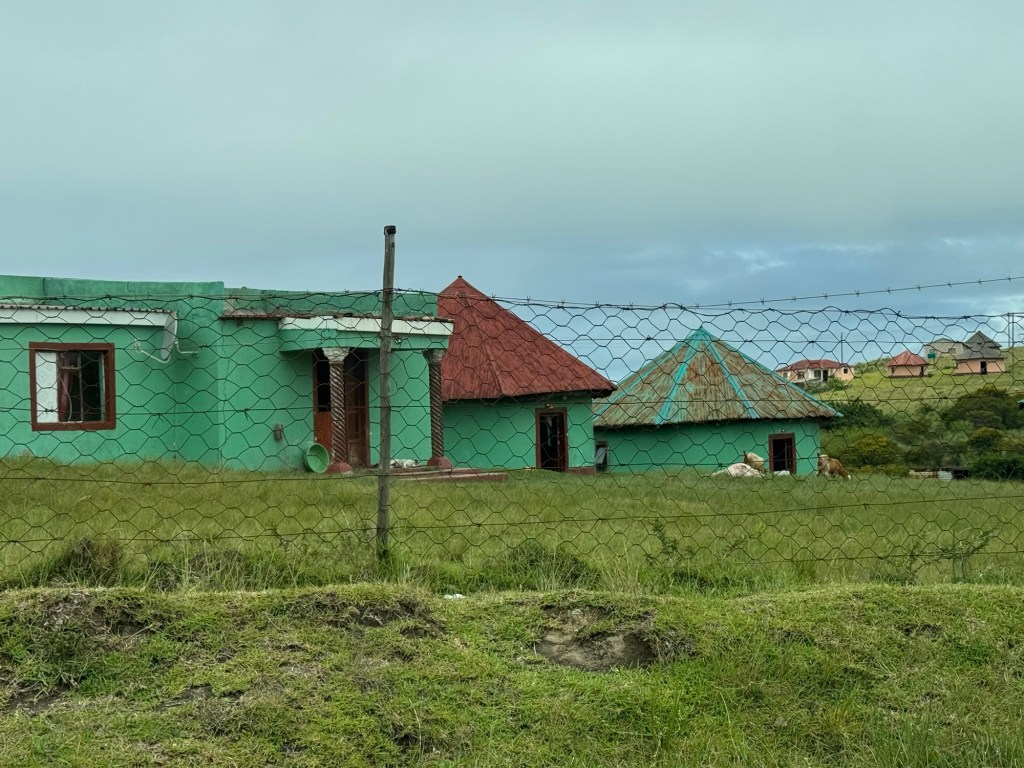
Traditional Rondavel style homes
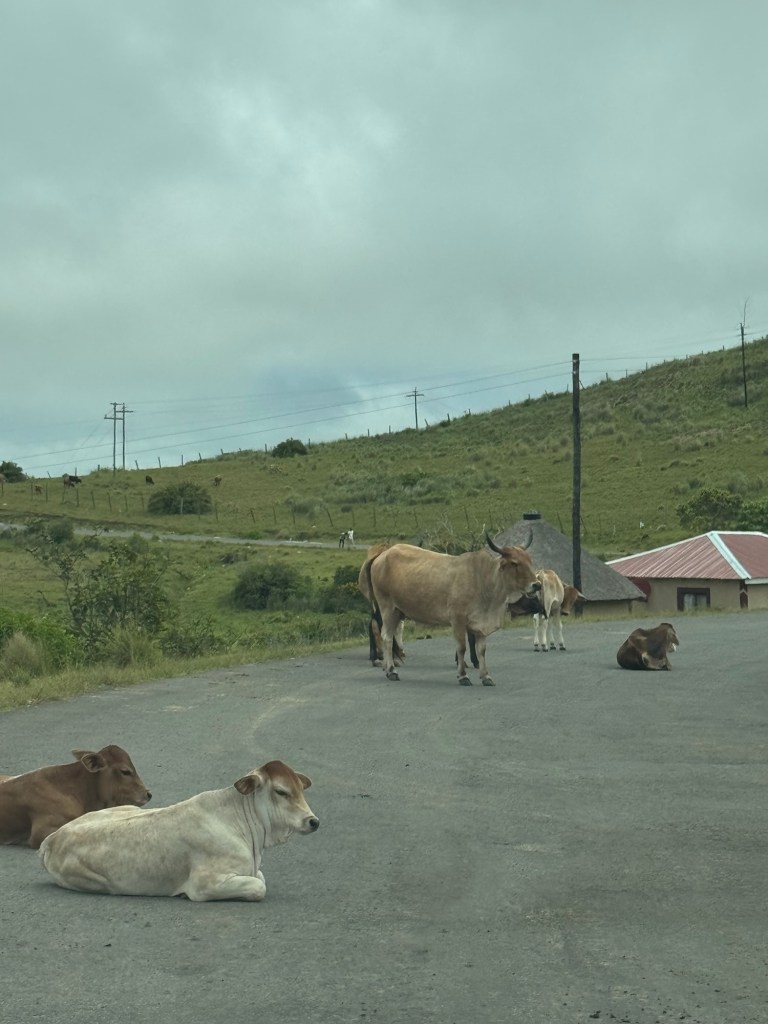
By half past five, the narrow, potholed road merged into the evening sky, dissolving the line between earth and cloud. Shapes emerged like ghosts through vapour—children on their way home, goats, cattle, dogs, horses. Animals stood adrift in the grey, drawn to the tarmac as the rain softened and cooled the porous soil on the sides of the road. The drive to the village of Coffee Bay is worse than I had been forewarned. The village is so remote that reputable travel guides don’t even mention it. Yet, it is the home of the crown jewel of the Wild Coast: Hole in the Wall.
Cows idling on the road the day after the rain and fog
Villages pressed close to the road. What little traffic there was had disappeared, leaving us the lone car for miles at a time. Speed bumps erupted from the surface without warning—some marked by reflectors, some not. In many stretches, the white lines simply vanished, and the only guide was the faint grass edging the road.
By seven-thirty, the fog had devoured the landscape entirely. All past cautions—friends, guidebooks, roadside warnings—echoed through my mind: Never drive through the Transkei after dark. Yet here I was, pulse quickening, breath deepening in a vain attempt to be calm.
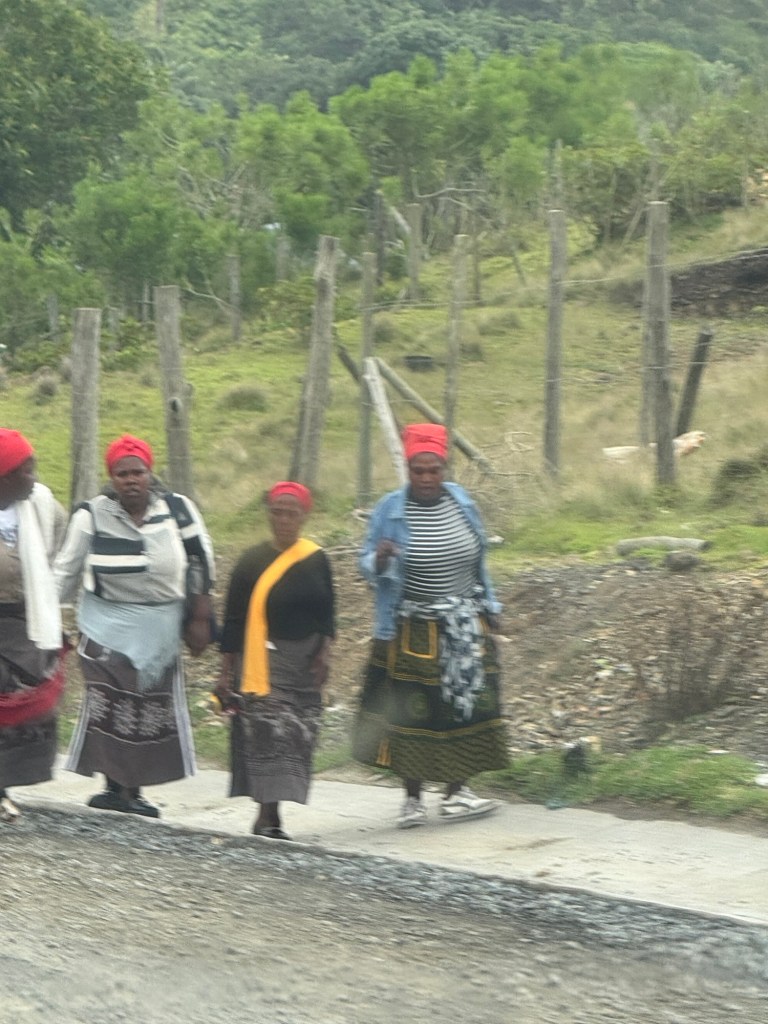
Pedestrians on the road in Coffee Bay on a clear day
The Transkei remains one of South Africa’s poorest regions. Decades of dispossession, unemployment, and marginal development have left deep wounds—addiction to welfare funds, alcohol abuse, narcotics made from crude meth precursors, petty crime and violence. The convenience stores are run by Somalis, Ethiopians and South African Indians charging high prices for tiny increments of goods, and the few rudimentary ‘resorts’ catering to backpackers and surfers are largely run by whites. Scattered among the impoverished valley is a minority of a white underclass from East London—the beginning of the Wild Coast—people who, as locals wryly note, “never prospered even in the days of white privilege.”
The fog grew thicker as the night turned black when Melanie, the proprietor of the self serve rental called and said emphatically, “Send me your location so I can track you. Don’t stop anywhere.” We inched forward at less than ten kilometres an hour till we arrived at her door, where her neighbour, Lindie – who owned a nearby restaurant- let us in. “I’ll have dinner in a few minutes. Melanie told me you haven’t eaten.” and disappeared into the row of hedges.
Lindie’s restaurant
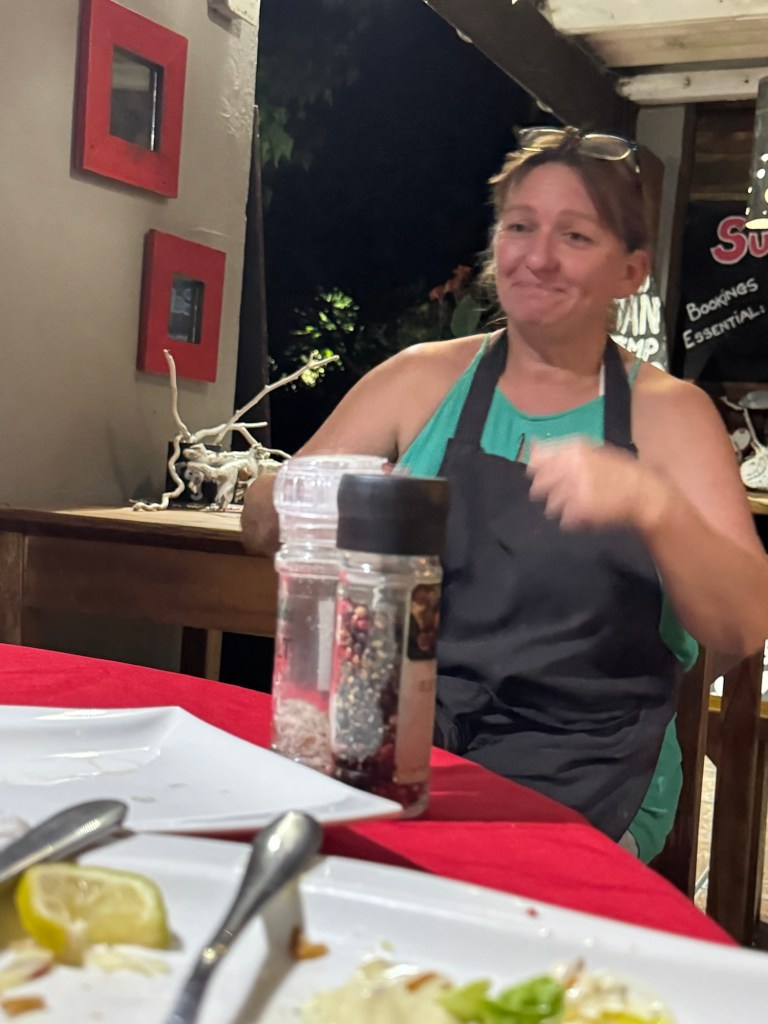
Lindie runs the restaurant almost entirely on her own; her last partner, she notes with a wry half-smile, absconded with a local, black prostitute. She presides over an improbably extensive menu—sushi to hamburgers, curries to grilled fish—all made painstakingly by hand. Her companions are a tail-less parrot that occasionally offers a “hello” and mimics an alarm, five dogs (only one of them friendly), four cats, a 130-kilogram pig called Pipsqueak that she raised from a runt, and a shy son who lives nearby. Her warmth and delight in cooking are matched only by her passion to tell her story: a childhood sketched in dysfunction, steadied by a stern grandfather who drilled survival into her bones, softened by remarkable moments of grace.
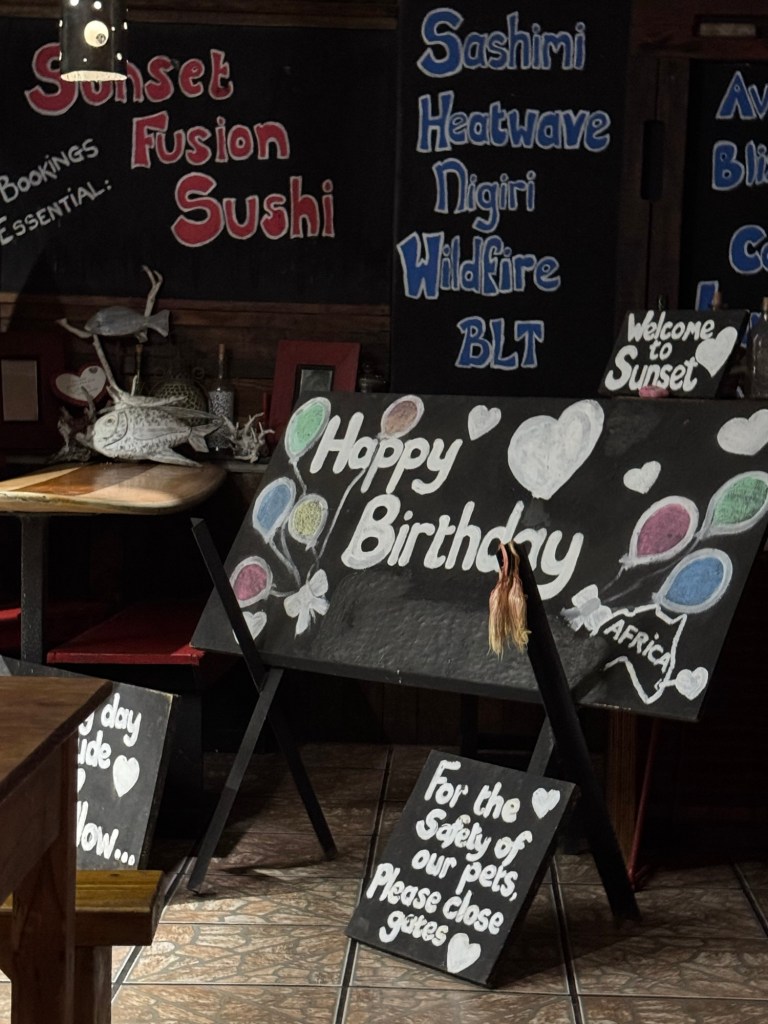
Lindie’s menu
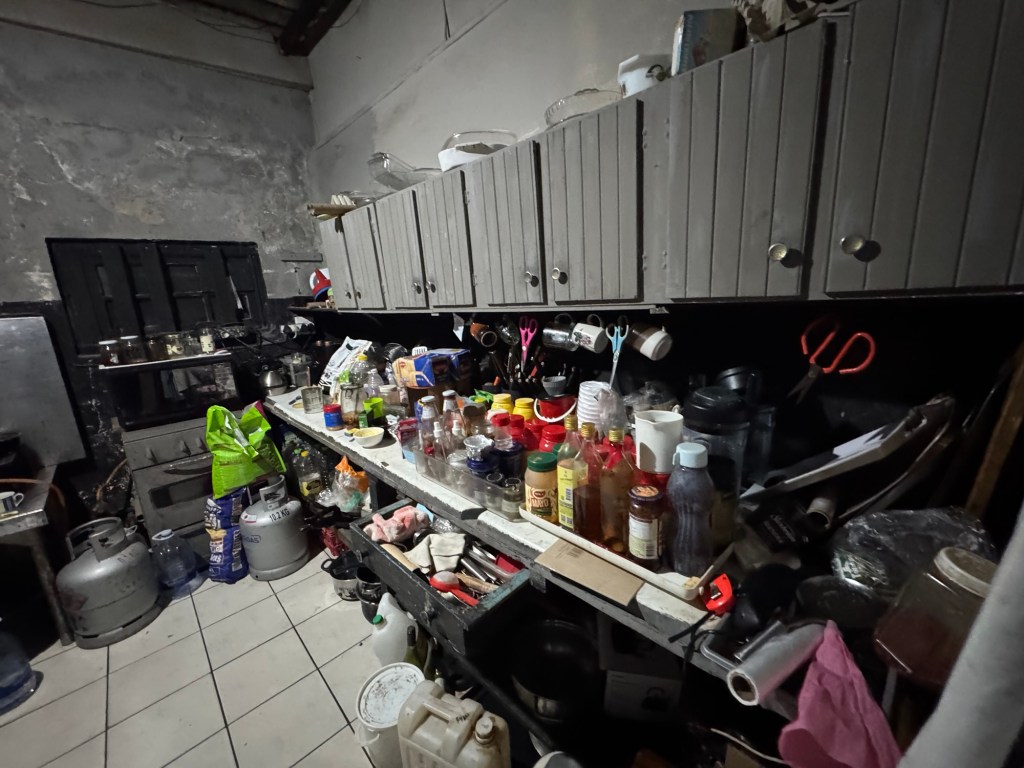
It would be easy, at first glance, to dismiss the menu after a look at her chaotic kitchen. Yet the few clients who find their way here are rewarded with food of startling finesse: chicken seared in a wok with garlic and fresh curry leaves, rice lightly fried with mushrooms, lentils and vegetables, fish dusted in maize meal and fried just to the point of crispness without a trace of oil.
Lindie’s kitchen
Outside, Coffee Bay sleeps, save for the closed-door bars and the darker rooms where meth, cheap spirits and cash still move. Traditional rondavels, their round forms capped with tin or thatch, stud the steep hillsides, amidst small brick houses fronted by grandiose Roman columns. Free-ranging dogs, cattle, donkeys, goats, and pigs largely quiet. The roads are a patchwork—here gravel, there a sudden slice of concrete. The lodges catering to the youthful backpack and surfer mimic the rondavel cabins in form only.
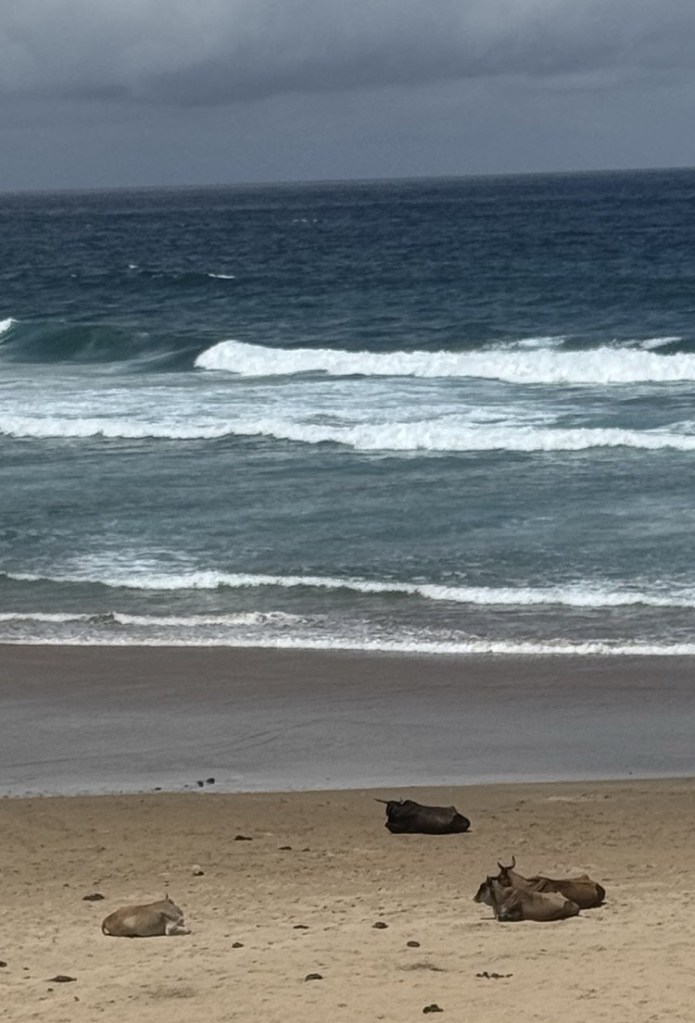
Cows sunning on the beach
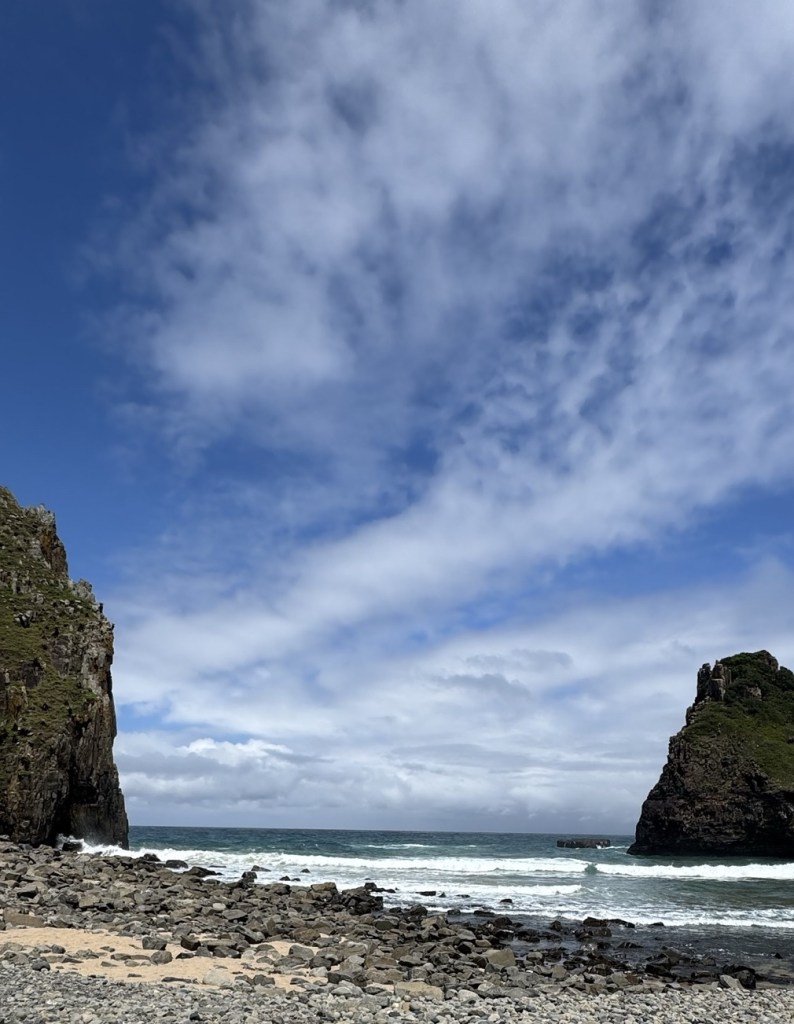
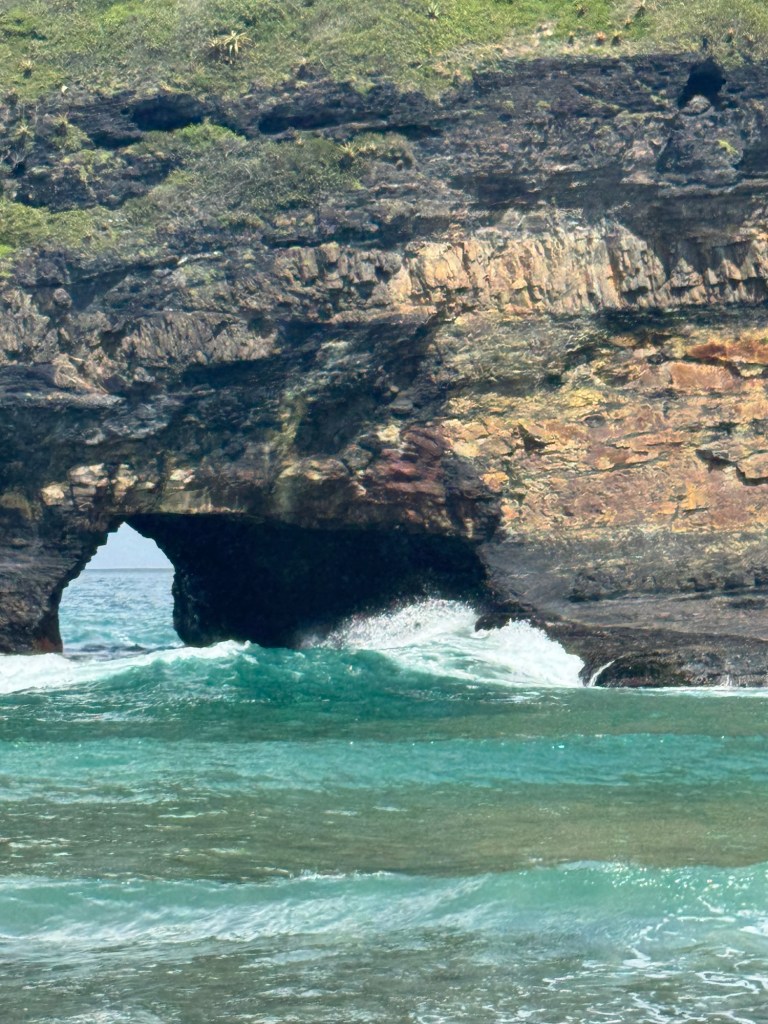
In the morning, idle young men gather near the fence to offer unsolicited guiding services for the one-kilometre walk to Hole in the Wall. If you decline the tour, oysters, crayfish and beadwork are on offer; if those fail to tempt, requests for a few coins follow. The path itself threads into a small, mythic world: a Milkwood forest of twisted trunks and low, listening branches, hills rolling away in layers, and the steady, hollow thump of surf blasting through the ‘Hole in the Wall’ arch. At the Boiling Point, opposing waves collide and rear up in a foaming, shuddering crescendo.
Boiling Point next to Hole In The Wall
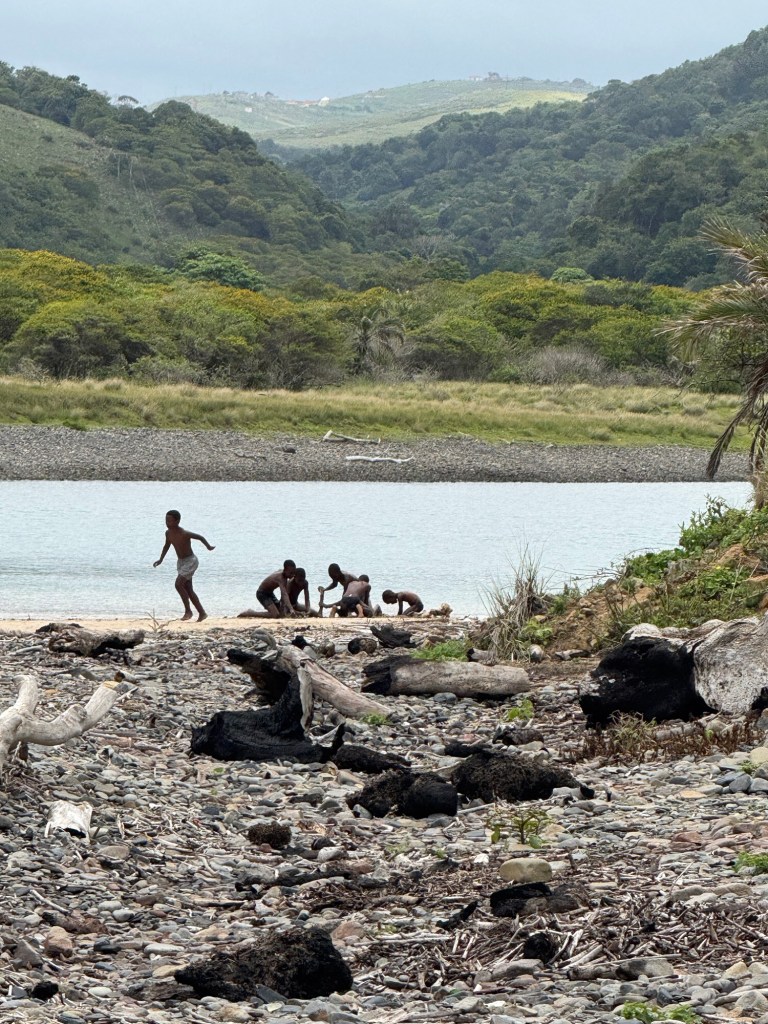
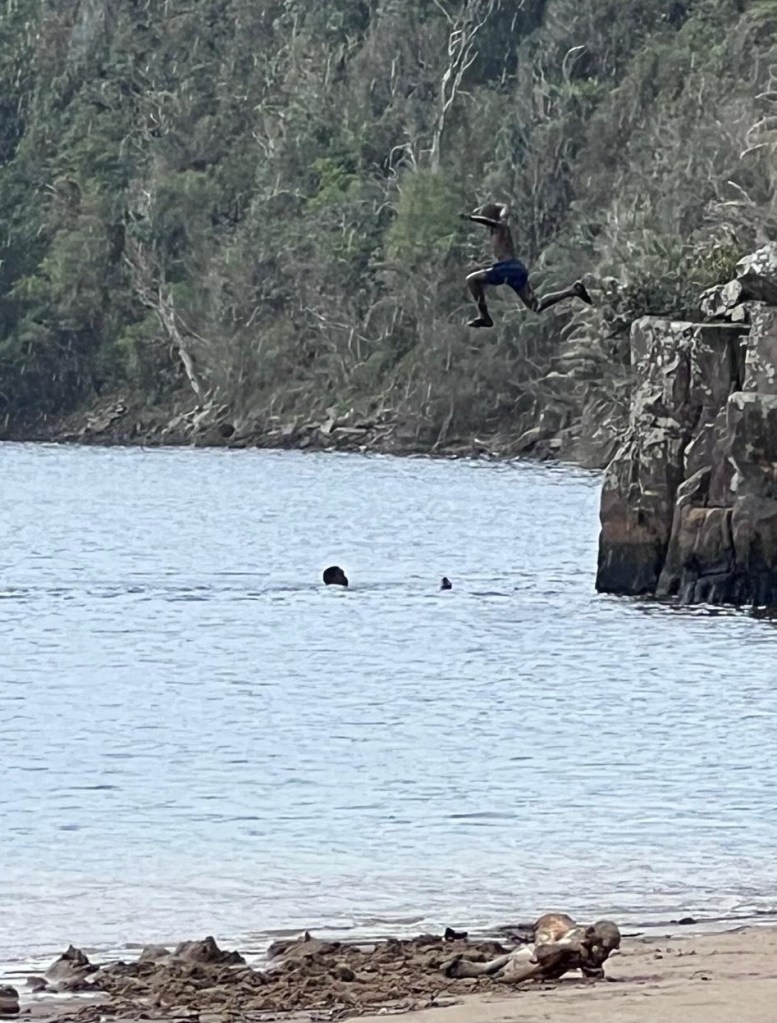
Yet for all the drama of sea and stone, it is the laughter of children that endures, their bodies flying from the banks into the Mpako River as it laps quietly into the sea. Indifferent, two tourists in the distance pause to take photographs of the Hole In The Wall for a moment and leave, sadly oblivious to the greatest gift of nature – the laughter and unbridled joy downriver behind their backs.
Famous Hole In The Wall
In a region still marked by the most ruthless social engineering of the twentieth century, Transkei’s black citizens live with barriers to economic success that remain almost impossible to scale. Yet the unselfconscious joy of children in a clean river, unbothered by markets, forecasts or strategic plans, complicates the usual calculus of wealth and progress. As powerful nations sketch new blueprints for the movement of capital, manpower, and markets, the sound of those peals of laughter over clear water will unlikely enter into anyone’s analysis—yet it may be the one thing here that is wealth beyond measure.
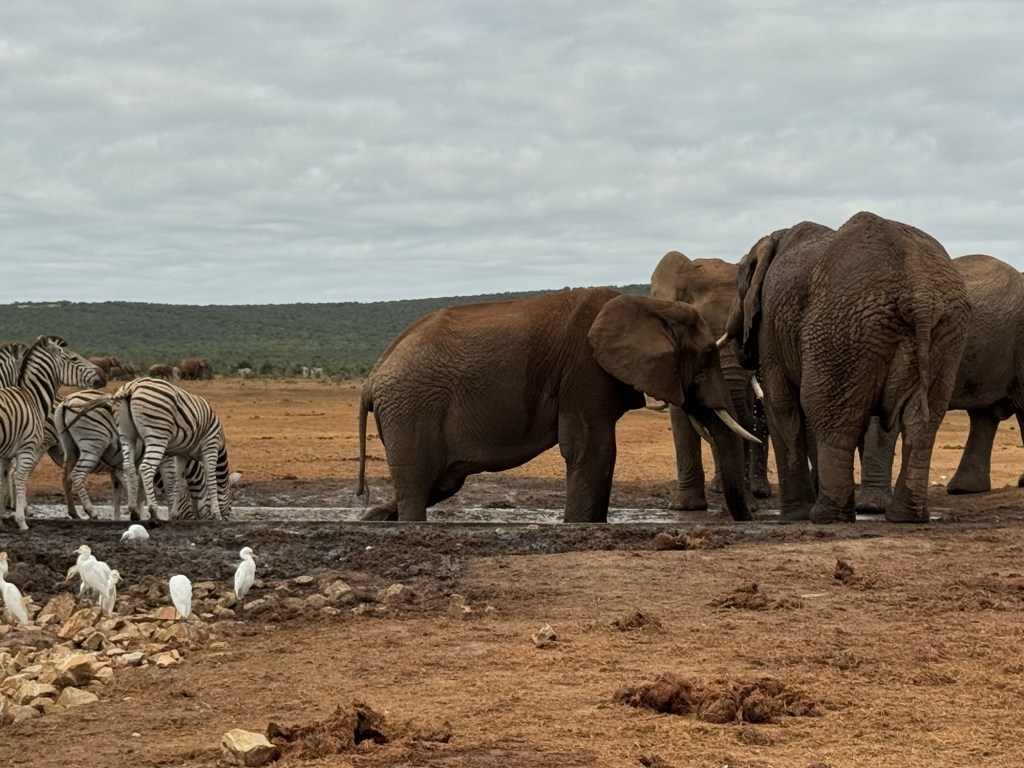
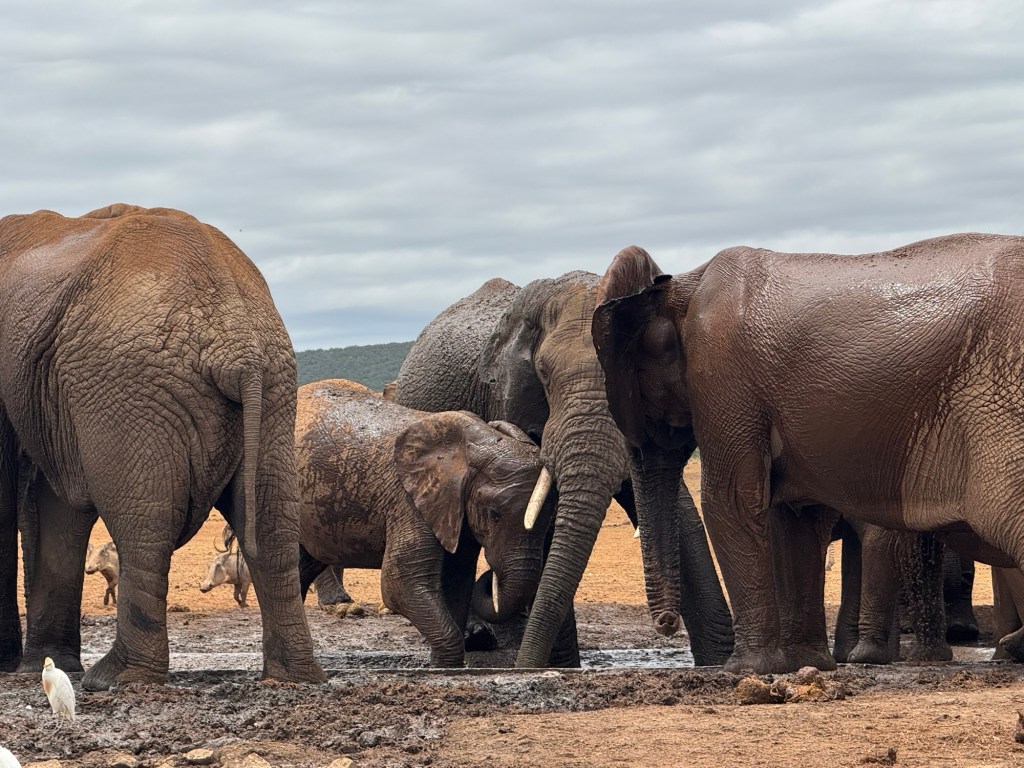
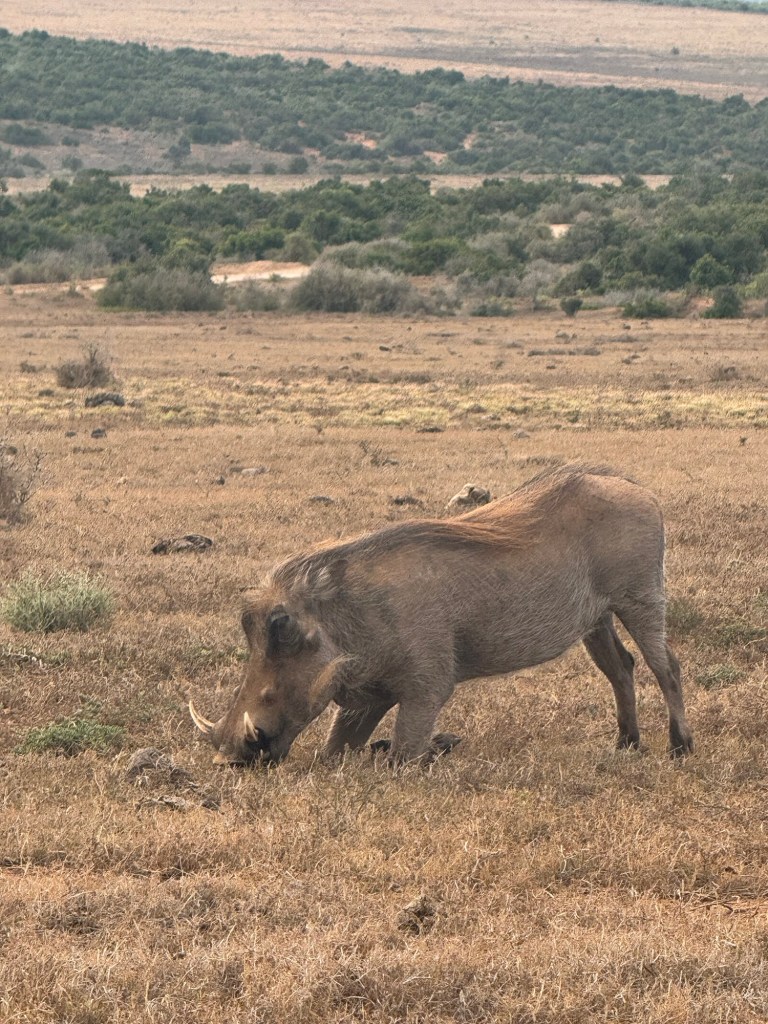
The silence of the savanna is deep. It is not the absence of sound, but a presence—something that thickens the air and slows the breath. The elephants move through it like keepers of the stillness itself, their padded feet pressing into the earth without a whisper. The herd advances as if in quiet conspiracy with the land, preserving the sanctity of morning. Then, a low rumble trembles through the herd—part command, part reassurance—and the tension fractures. Zebras wheel away from the water’s edge, warthogs back into the scrub, and white egrets scatter upward like drifting ash, their wings ghosting above the mirrored pool.
Addo Elephant National Park spreads over four hundred thousand acres across a mosaic of green-dry earth—dense coastal thicket tangled with coarse grass, fynbos clinging to wind-bitten slopes that lean toward the Karoo – a indigenous word for, ‘land of thirst’. This is elephant country: immense, yet starkly intimate. Along its ochre roads travellers trace the outlines of herds as they emerge from the bush—sometimes thirty strong, sometimes one great bull alone, immense in its quiet presence. Their only enemy is now their saviour- the one that drove them to near extinction.
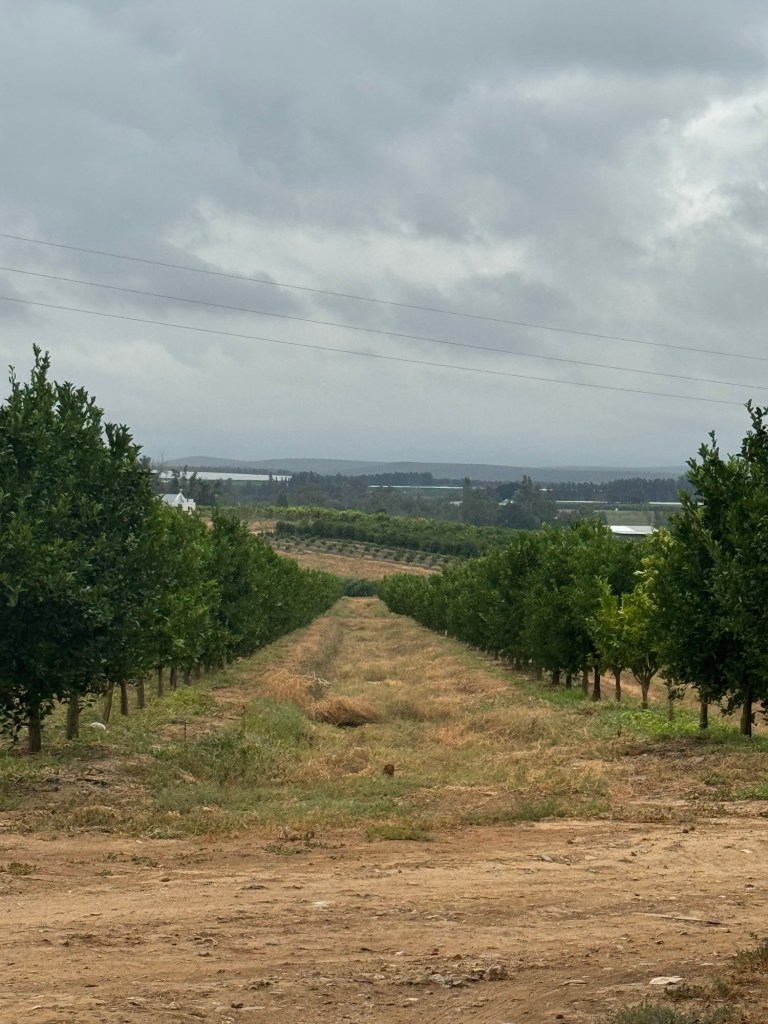
A century ago, these plains—now serene—were their abattoir when European settlers discovered the fertile Sundays River Valley and the elephants became obstacles to progress. Citrus—lemons, oranges, grapefruit, clementines—rewrote the landscape and by 1920 only eleven elephants survived, the last of a persecuted lineage.
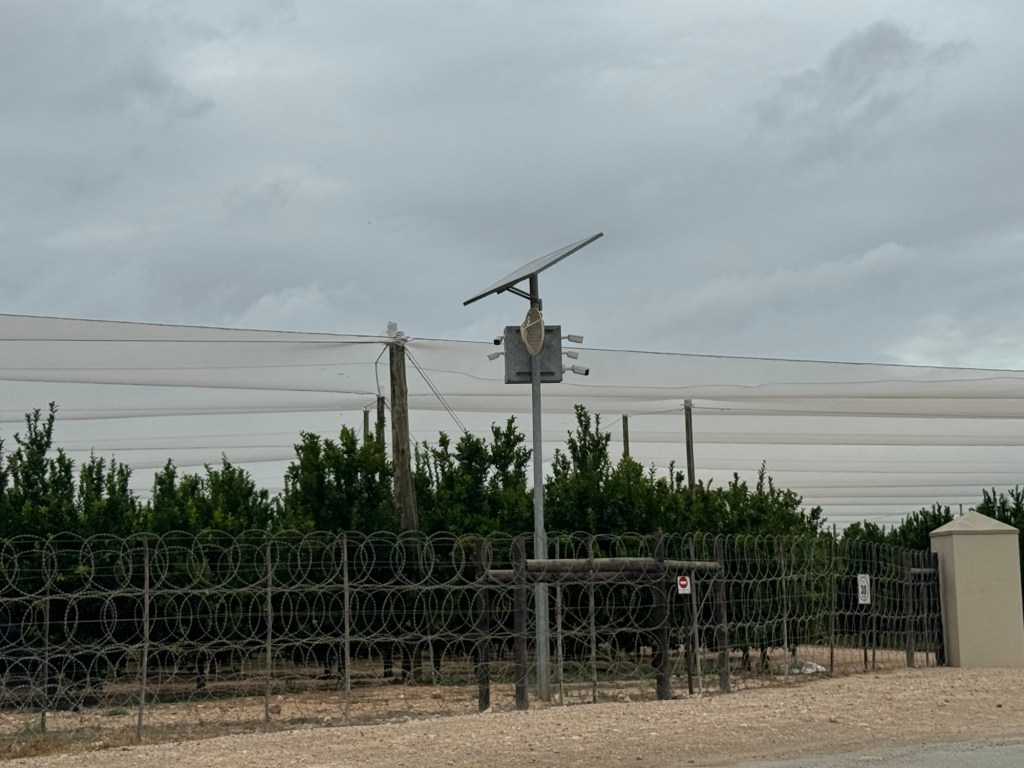
Today, their descendants roam again—joined by Kruger bulls to enrich the bloodline—while, beyond the park’s fences, citrus estates stretch to the horizon. Rows of white shade screens shimmer in the heat, guarding delicate fruit from the fierce Eastern Cape sun. The district retains its pastoral
poise: wide verandas, quiet guest houses, social clubs. Yet beneath the calm runs a more uneasy current. Many of the younger generation of ‘whites’ have drifted abroad, unwilling to compete in a government framework built to correct past wrongs. Those who remain—grey-haired stewards of family farms—live behind electrified fences and cameras.
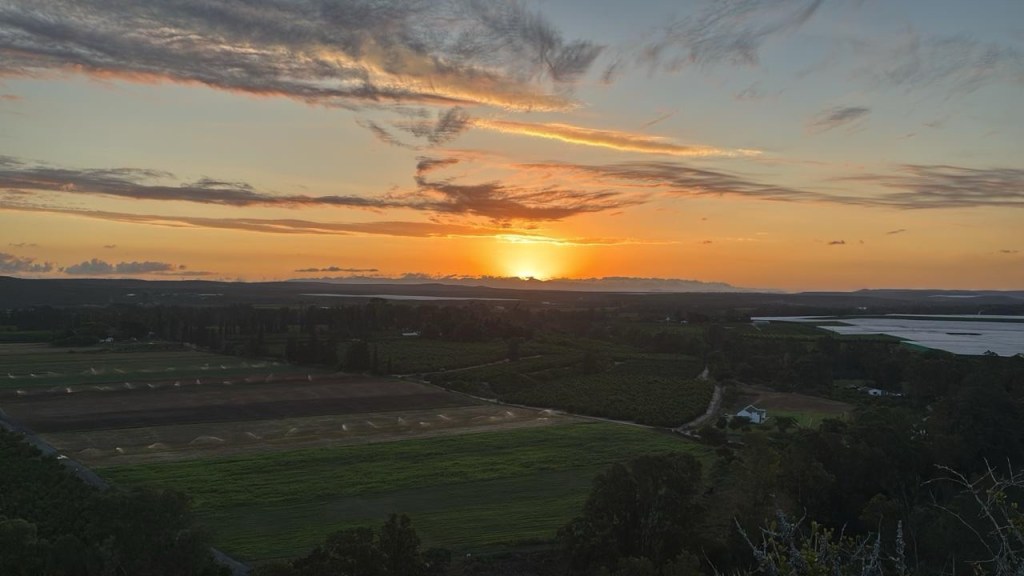
“It’s not easy,” Gregg tells me one evening. A citrus farmer, “the white population is the same but our percentage is shrinking from ten percent of the nation to six since apartheid.” In the nearby townships the population and unemployment amongst the youth accelerates. “We do what we can for security,” he adds quietly, recalling a home invasion in 2021 when one of his relatives was shot but lived. Yet his tone carries more resolve than resignation and resonates a deep love for the land, the country and the stunning sunsets.
“I’m optimistic,” he says, “Some of the new right-wing groups are trying to work with the ANC—bring back some discipline to reduce the corruption.” He said when I asked him for a ten year forecast for South Africa. His words dissolved into the dark night. I find myself wondering what history pages will say about the fiercely proud white enclave that loves this land or will it leave blank pages for its extinction.
The man stood tall, shoulders squared, his presence cut sharp against the midday light. His gaze at first held both suspicion and restraint, the look of someone guarding old ground. But slowly it gave way to his loud and jolly disposition as if he had longed to talk to someone, anyone.
“I’m not a racist,” Kobus said flatly. The vowels flattened and curled in his thick Afrikaans accent rolling each ‘R’. Then, almost as if reminding himself rather than convincing me, he added, “You’re foreigners, yah? You live somewhere else—only visit.”
“Yes,” I said.
He nodded, the gesture small but certain. “This country’s being destroyed,” he went on. “Now only blacks get jobs—some empowerment thing.” As he spoke, his hands carved restless shapes in the air, physicalizing the unease. “Think about it,” he said, spreading his arms wide behind him, “how can a black policewoman, with hips like inner tubes and breasts like melons, chase a criminal?” He laughed—a raw, unguarded sound that startled the still afternoon.
To prove something invisible, he rolled up his pant leg and pointed to a pale scar that crossed his knee like a fault line. “Thirty-five stitches,” he said. “When I worked in Emergency response, Cape Town, fifteen years ago. Still waiting for the police to call.” Pride and grievance seemed woven together, indistinguishable. When he looked back at me, almost searching my eyes for judgment; finding none, he mistook politeness for kinship.
“I am not a racist,” he said again, quieter now. “We treated the blacks badly. The English treated us badly—concentration camps, women and children dying by the thousands. But we can’t hold on to such things forever. We must move ahead.”
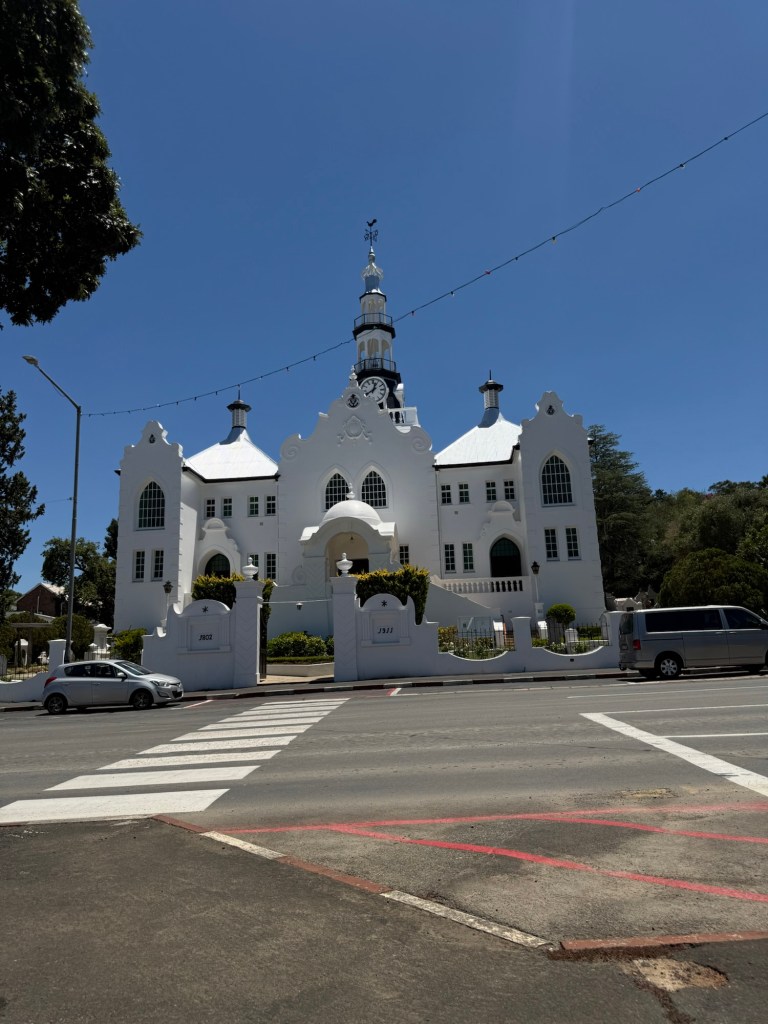
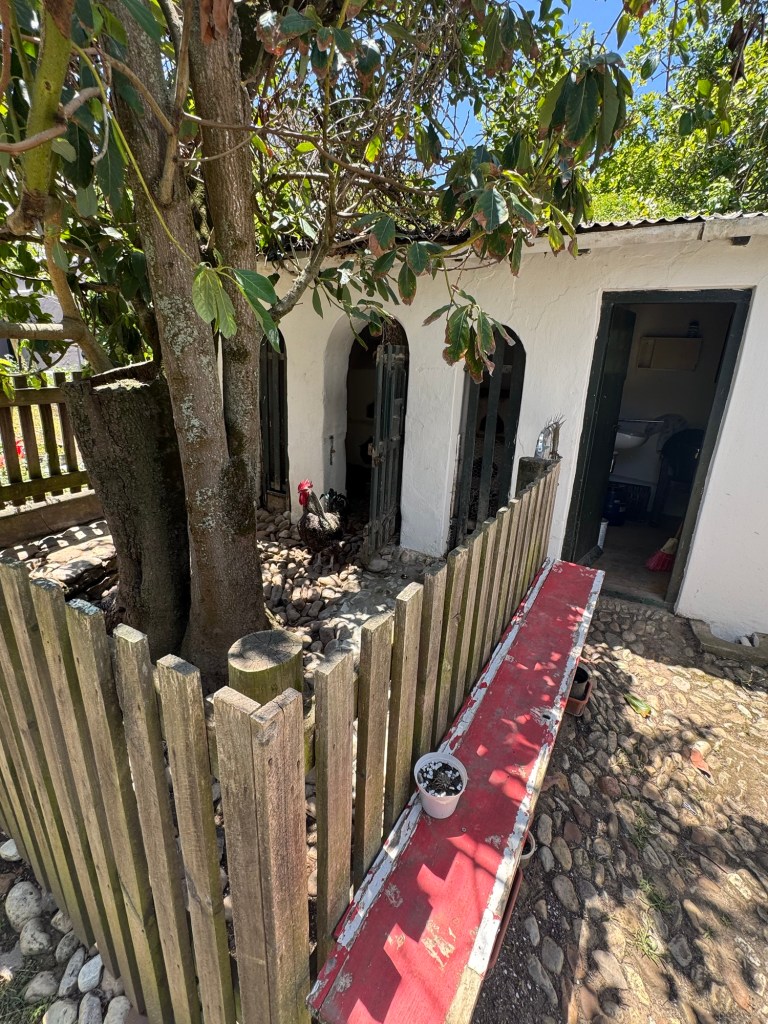
Swellendam rests in a basin beneath the Langeberg Mountains—a town of whitewashed walls and thatched roofs. Once a frontier post to the east, it still harbours an echo of settler enterprise, the architecture preserved as though time itself paused.
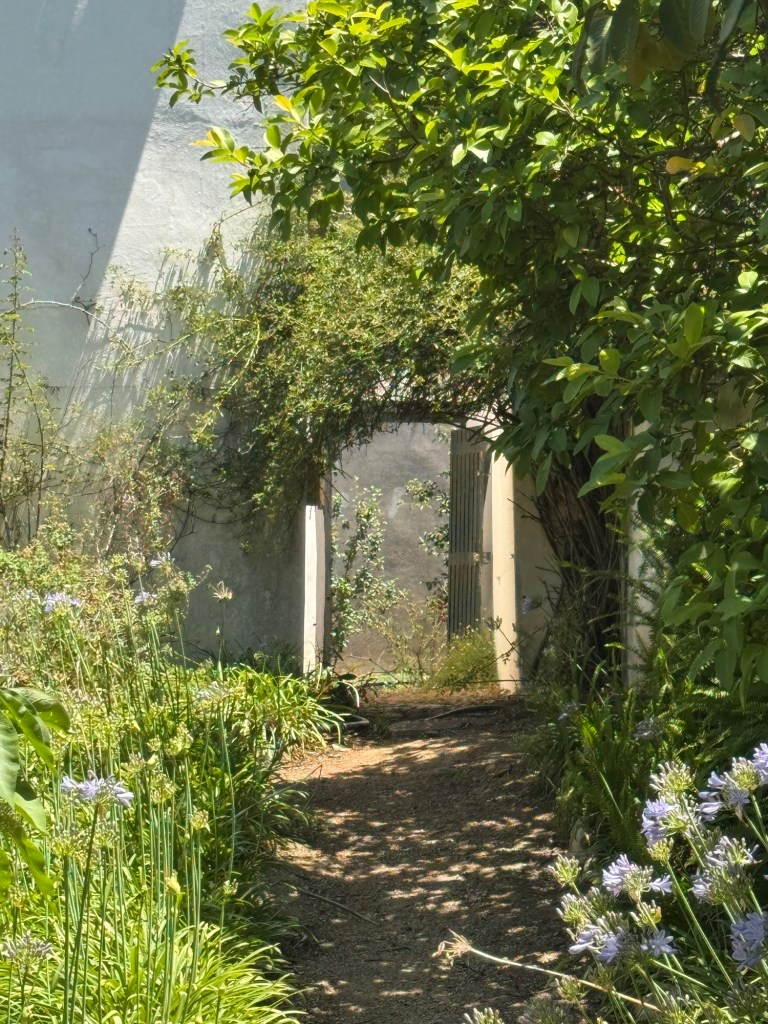
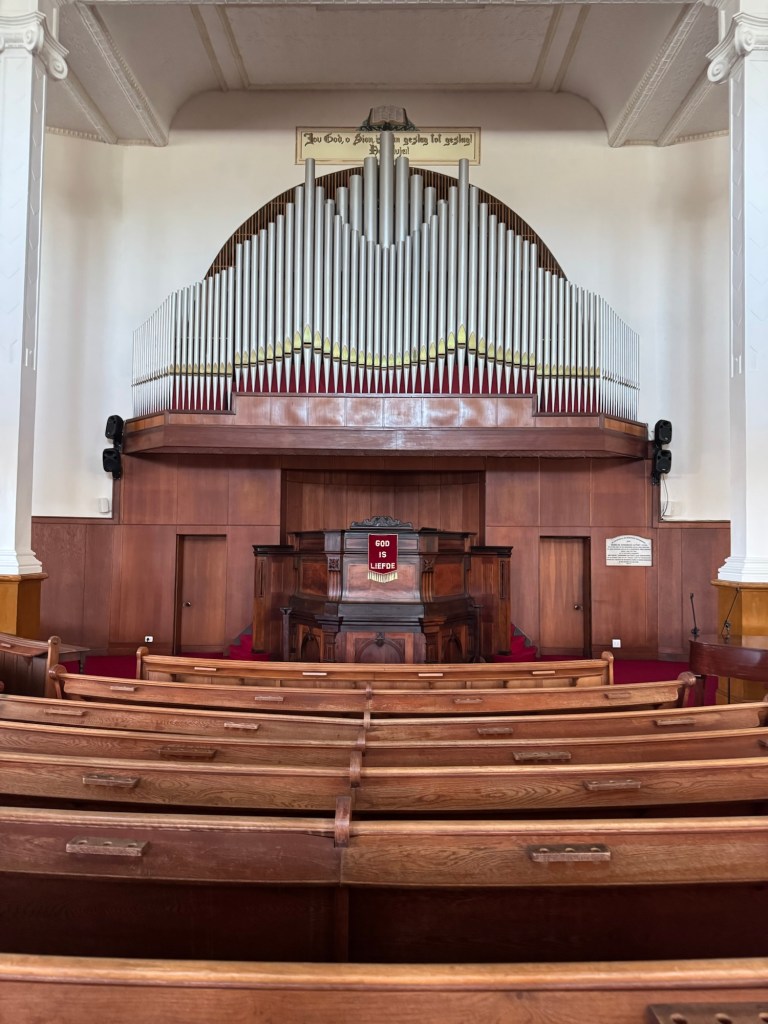
At its center, the Dutch Reformed Church rises, its white plaster blazing in the Overberg sun. Across the square, a tiny hand-painted sign—Anglo-Boer War Museum—leans at the edge of a narrow lane lined with 18th‑century cottages. Following it, I found not a museum, but a large angry rooster, its call splitting the silence. Beyond the low gate stretched a hidden garden—lush, unexpected. Persimmons bowed under their own weight, marigolds burned orange beneath the noon light, and the air pulsed with the scents of damp soil, Jasmin and lavender.
Three coloured gardeners rested on a shaded stoop, speaking softly in the heat, ringed by potted geraniums and poppies. It was from behind a clipped hedge that Kobus had emerged—ruddy, broad, eyes narrowed by the sun yet watchful with cautious pride.
“I am admiring your beautiful garden,” I said.
He nodded once.
“I saw the sign for an Anglo-Boer museum.” Almost apologetically.
“I am the gardener,” he replied. “The museum opens on Saturdays—but I can show you.”
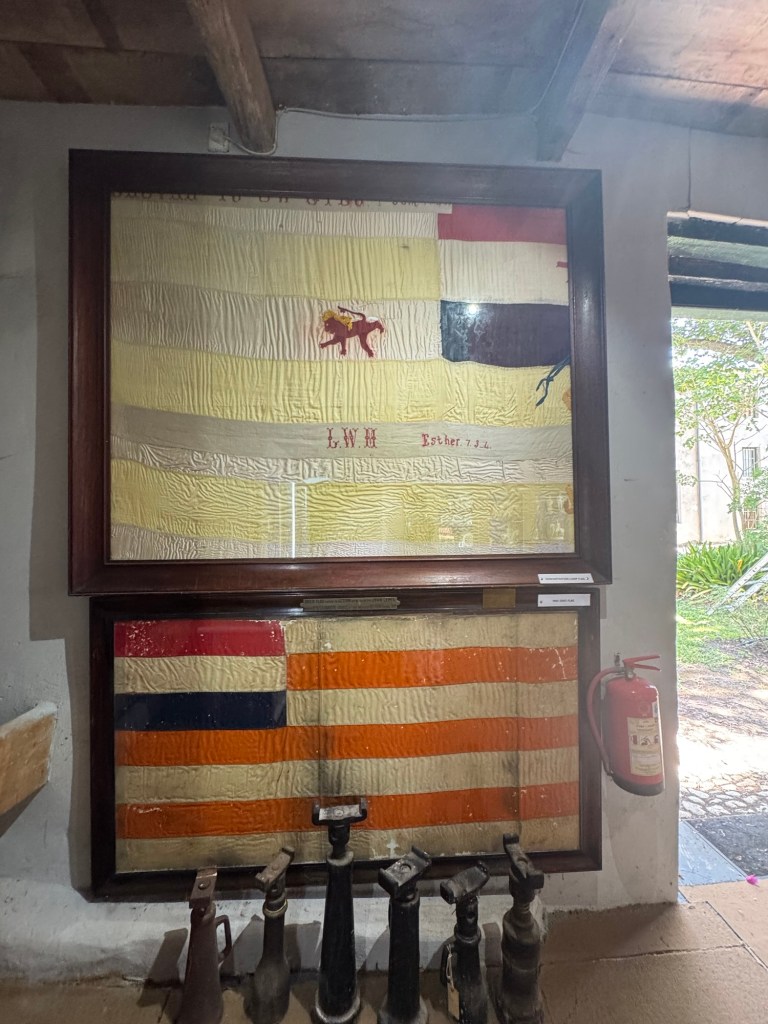
He led me into a small outbuilding, scarcely larger than a garage. Inside, the air was dim and cool. Flags hung from the rafters—the orange-white-blue of the old Transvaal, the golden Free State banner, a weathered emblem from the brief Republic of Swellendam, a rebellion that flickered and died in six months in 1795. On a shelves that lined the walls lay intimate remains of history: a chipped child’s cup, imperial British commanders itched into china, a rusted bayonet, a camp lantern dulled by time.
When I told him Cape Town seemed peaceful, he frowned slightly. “You were in the tourist areas, in daylight,” he said. “I know every inch of that city. In Nyanga, in Philippi East neighbourhood —they slaughter each other like sheep. I worked emergency for thirty years. I have seen everything.” And he says with undisguised contempt, ‘now the ANC wants to make them our bosses.”
Outside, the afternoon was still. The rooster called again, the sound echoing off old lime-washed walls and was answered immediately by a rooster far away. The streets of Swellendam shimmered in the heat. Beauty persisted at each step through the garden despite the scars men carry.
The mountains on the northwest horizon step back in shadowed tiers, their slopes dissolving into a soft, blue-grey haze that blurs the edges.. To the south, sun-struck hills rise in sharp relief, bright and insistent, vineyards combed in clean, deliberate lines into the foothills of Franschoek, the preeminent wine valley of South Africa. It was the work of enterprising French Huguenots – Calvinist refugees who fled France in the 1600s.
Large oaks, eucalyptus, and wild plume trees stand in ordered rows along improbably neat roads, as if the landscape has been brushed and straightened for visitors. As the day wears on and the sun begins its retreat, whatever little moisture the hills have gathered feels ready to slip down into the valley to kiss the grapes.
Rows of oaks and eucalyptus form a green canopy, interrupted now and then by pockets of the ancient fynbos, low and stubborn. The light that filters through these leaves settles on faces, and the calm it creates is something visitors carry with them for the day. Past the cusp of noon, the haze closes in like silk curtains drawn without a sound, hot wind easing into a gentle breeze.
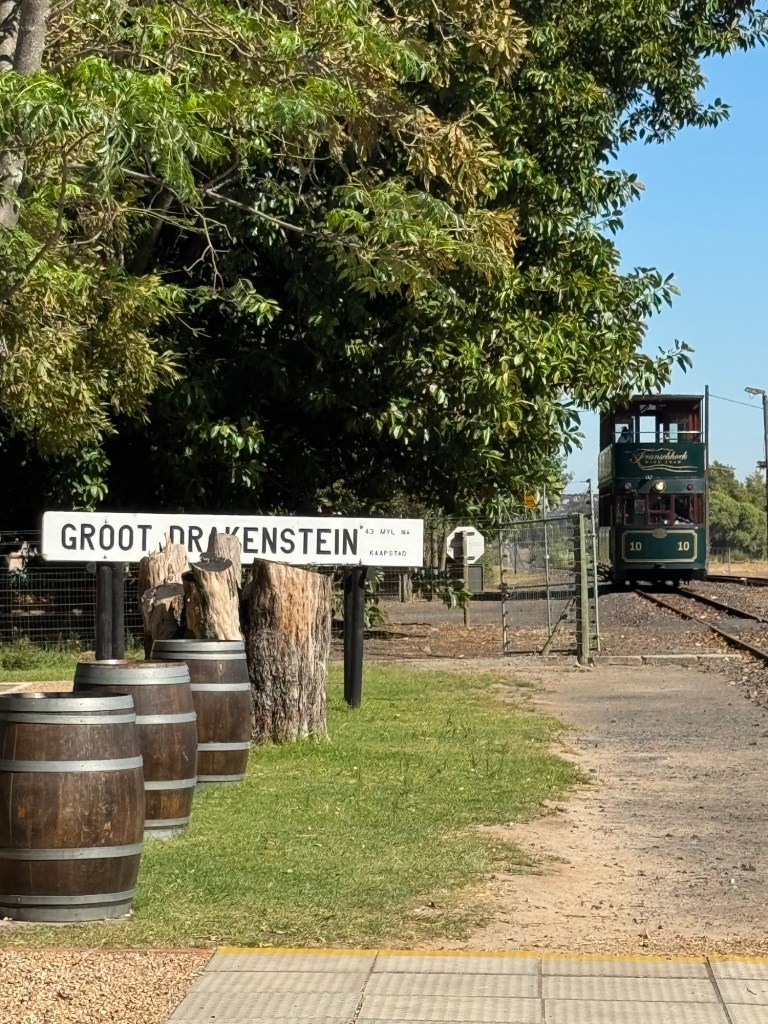
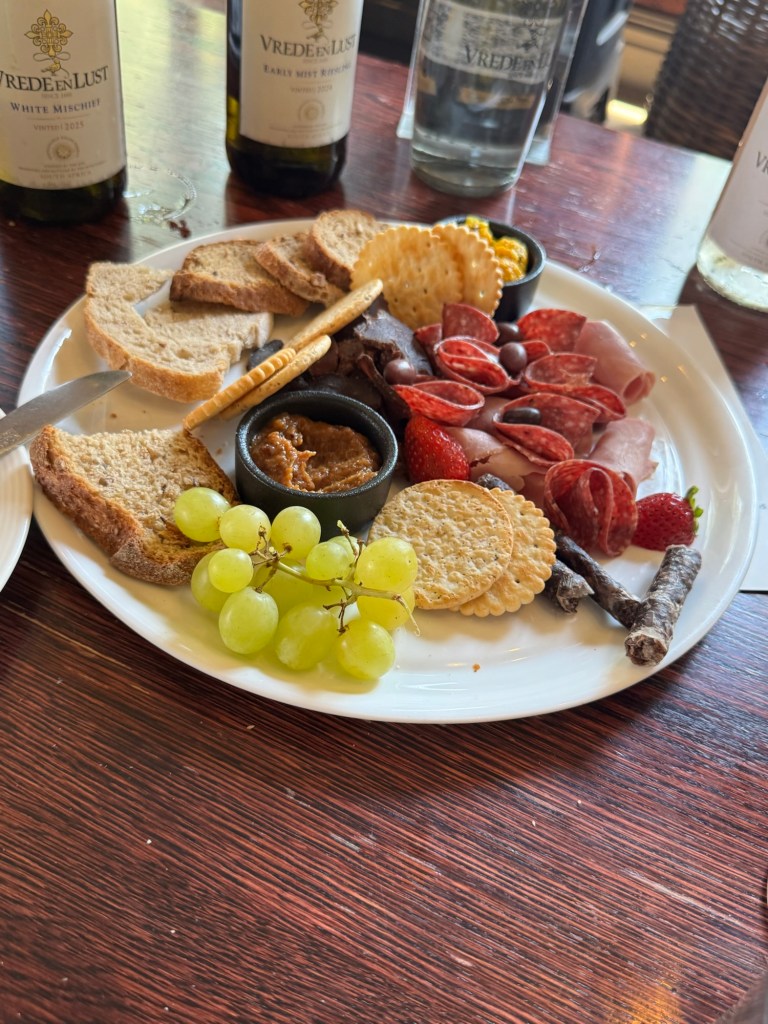
I am on the third vineyard of the Orange line of the Franschhoek tram wine tour – one of five lines. Vrede en Lust (pronounced “Frede and Lust”) – Peace and Passion – has been a farm since 1688, and it wears its age lightly: white gables, disciplined vines. A late-afternoon charcuterie board of dried meats and bread lands on the table just as the reds arrive – some soft-spoken like a Pinot Noir, others full-bodied and unapologetic like South Africa’s own Pinotage. It is a welcome shift after the mid-afternoon whites at the Italian-styled Bacco, where the wines were paired with savoury Cannoli: artichoke, smoked salmon, tuna with capers. Bacco practiced their craft around the Fermintini grape, and even for an inexperienced palate (I am hardly a connoisseur), the order of things felt right – to follow Peace and Passion with Plaisir, the fourth winery, where the wines met chocolate laced with pepper, coffee, and raspberry.
When boarding the tram after the fourth stop, the large contingent of Germans who had been restrained until now suddenly cracked open – howls of laughter, arms flung around strangers, each passenger being hugged as if we had all been traveling together for years, not hours.
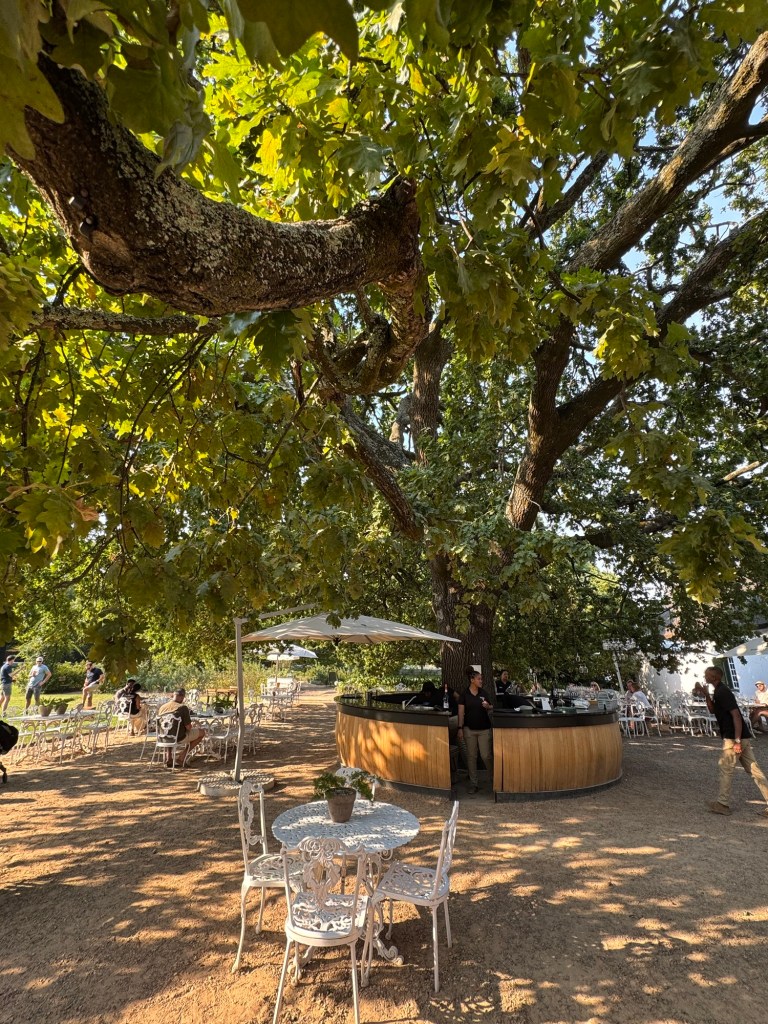
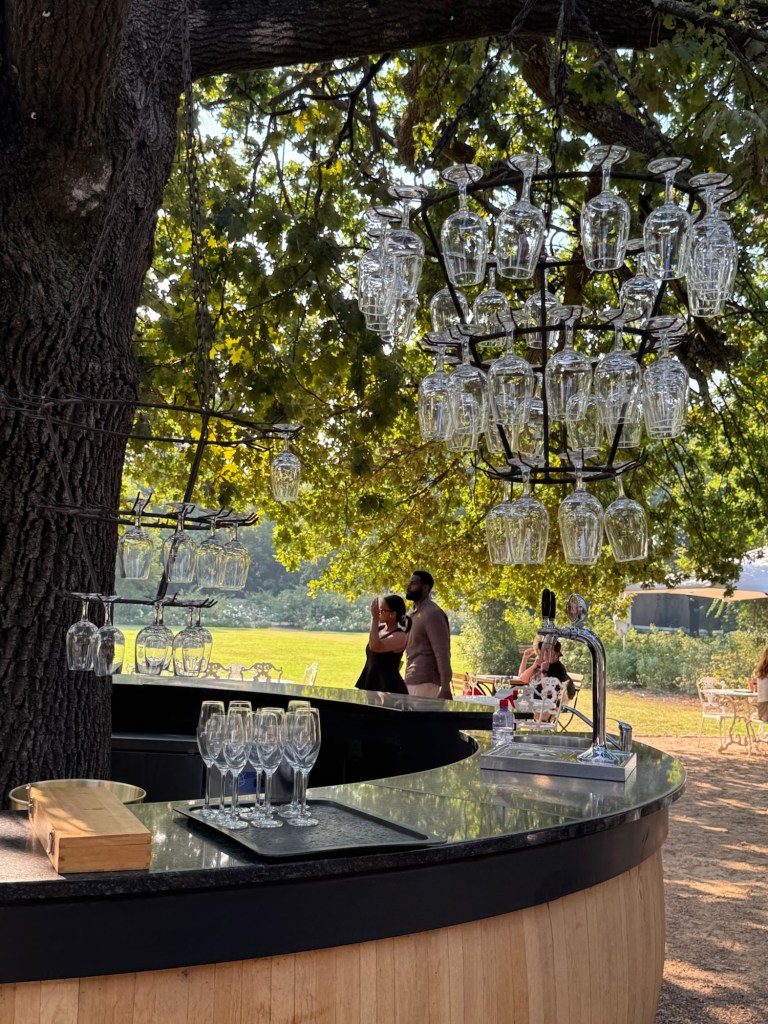
By the time the last stop of the Orange line appeared – the 340-year-old Boschendal – the camaraderie on board had become infectious. Boschendal’s sparkling wines, taken under the spread of a 335-year-old oak tree, gave way to its soulful brandy, the world tilting slightly on unsteady legs as if to underline the point that this, here, was the perfect finishing touch.
And yet, when it was all done and we stood waiting for our Uber driver, Givemore, the spell began to thin. Boschendal’s vast grounds stretched out in the failing light, the winery slowly emptying of visitors. The barks of guard dogs started to carry across the fields, sharp against the quiet. A security guard drove past with his caged dogs. We were about to flag him down when Givemore finally appeared in the parking lot, slightly out of breath, a little apologetic, entirely warm.
The dreamlike state that had carried us through the day – through wines and plates and orchards of apple, plum, guava, pomegranate, past olive bushes and flower gardens, with the ever-present scents of herbs and truffle at the feet of assertive mountains – gave way to an older, less curated story. Givemore is a Zimbabwean economic migrant with a warm smile and lively eyes with dreams of starting a business one day. His mother called to help him keep track of his responsibilities. Some of the workers in these vineyards have been here for generations, held in place by history as much as by employment – descendants of a dark colonial legacy in which slaves and later workers were kept close with cheap wine, tethered to their employers by dependence rather than choice. Gangs roam the townships nearby and security is extremely high. Townships to which blacks and coloureds were banished to from their homes in desirable areas under the apartheid Group Areas Act which was not repealed till 1991. Despite its reversal, the deep division lingers.
In the half-light, the valley showed both faces at once: the beauty that draws visitors in and the turbulence of a social structure that never really went away.
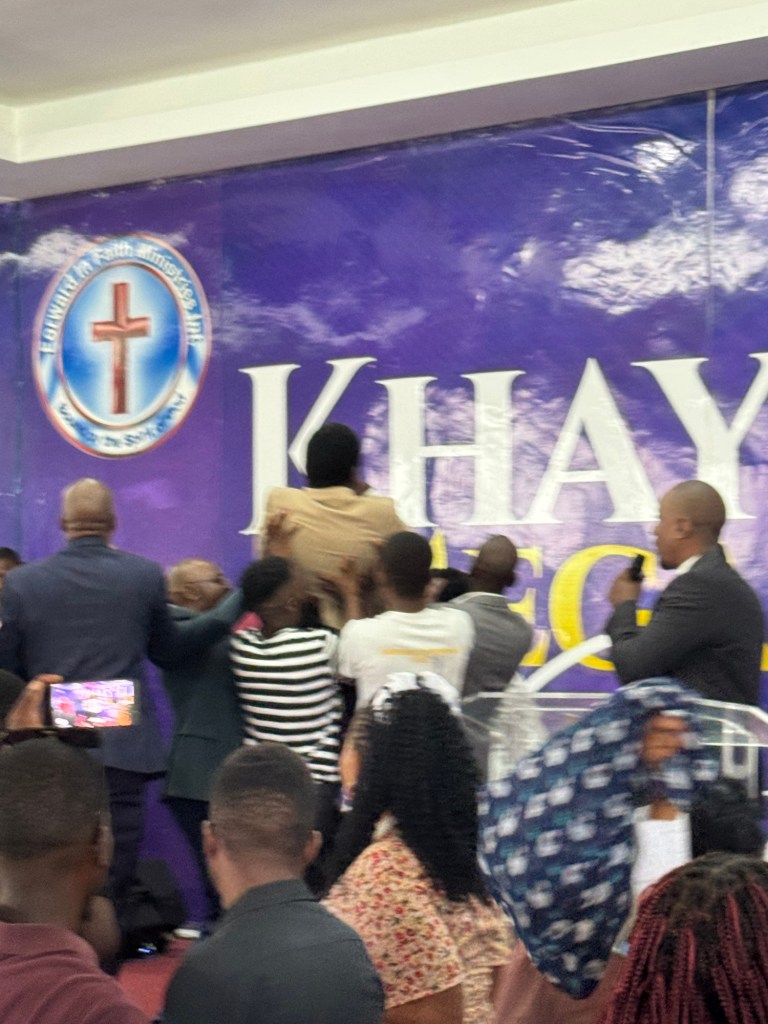
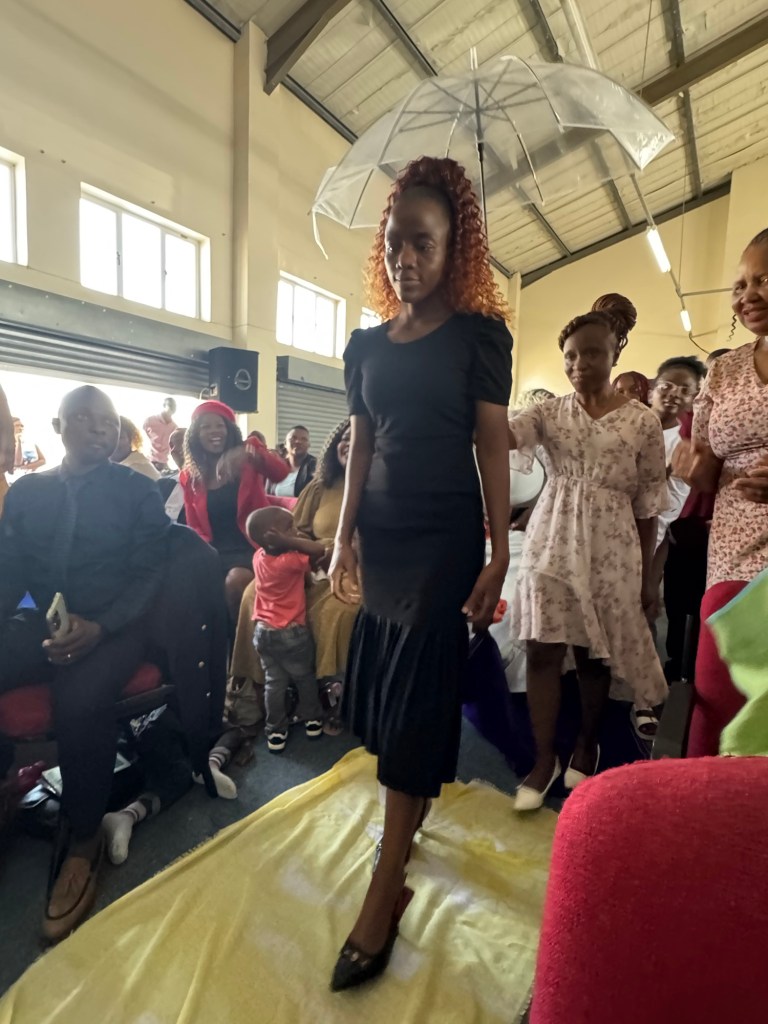
The young men surged around the groom, their laughter rising above the beats of the Pentecostal band. They tossed him into the air, and caught him – Rand notes fluttering like paper moths—slipped behind his ear, pressed into the gleaming line of his hair, tucked into his pockets. Moments before, the bride had appeared. An entourage of young women led her along the aisle: some laid sheets of cloth in front of her so her feet would not touch the floor, others trailed behind, holding a plastic umbrella over her head. Her eyes were lowered in ritual humility, her embroidered dress catching the light each time she moved.
Bridegroom carried on stageClothes and body covered with Rand notesBride walking with her entourage
Inside the church, more than a thousand worshippers swayed and danced, the sound thick and electric in the air. All of them were refugees from Zimbabwe – almost all without legal status and most worked in menial jobs despite being educated. For all the joy and laughter, beyond the sheet-metal walls and barbed wire, violence brooded. Fire licked in the township’s densely packed, poorly built homes —a reminder that joy existed in defiance, of lurking danger. The tiny corner shops are run by enterprising Somalis and Ethiopians, well organized, they dominate the retail economy selling items in such small quantities as the market could bear: sugar by the spoonful, cell access for an hour – further perpetuating poverty.
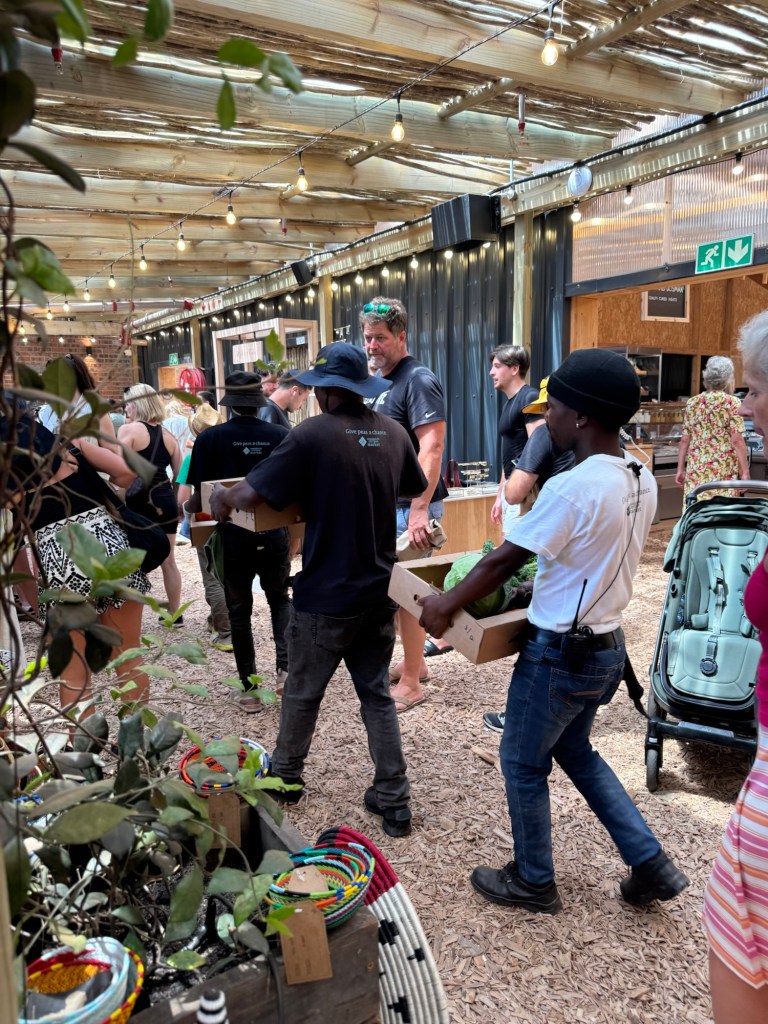
Saturday market at V&A waterfront districtPatrons on Saturday market
I had already been bored of Cape Town’s pristine tourist face – the V&A Waterfront – polished glass, fine wine, curated beauty, and spotless pavements. In relief, below the majestic Table Mountain, the city’s postcard Sunday market gleamed with designer boutiques, pastel textiles, artisanal cheeses, and perfectly arranged pastries. Of course as a constant reminder of the traumatic history of this country, the shoppers were white and the servers mostly township blacks and coloureds (racial terms are not derogatory here). It could well have been Manhattan’s Chelsea market on High Line park, minus the frayed edges that lend their uneasy authenticity. Unlike in the V&A district where everything shines, but nothing feels real.
‘Where do you live?’ I asked the waiter after my second glass of wine which accompanied a rich, well prepared, generous seafood platter.
He hesitated at first, wary of his supervisor who entered the room .
When his supervisor turned away, he whispered, ‘in the township by the airport’.
I asked softly, “Will you take me to your township?”
“No, no, no,” he said and after a pause added. “I could not protect you.”
The word ‘township’ carries the lingering weight of the past—its syllables still holding the geometry of apartheid: separation, distance, survival. Yet what he said next erased abstraction.
“There is no value in human life there,” he murmured. “Your colour will kill you. Holding an iPhone will kill you. Nice shoes will…”
The sentence dissolved as quickly as it came, as his supervisor re-emerged. The silence that followed said more than words could.
I shifted the conversation when the supervisor moved to another area. “Is there a church in your township?” I asked, grasping for common ground.
He nodded. “Many churches. My Uncle, Uncle Joe. His wife leads the choir.”
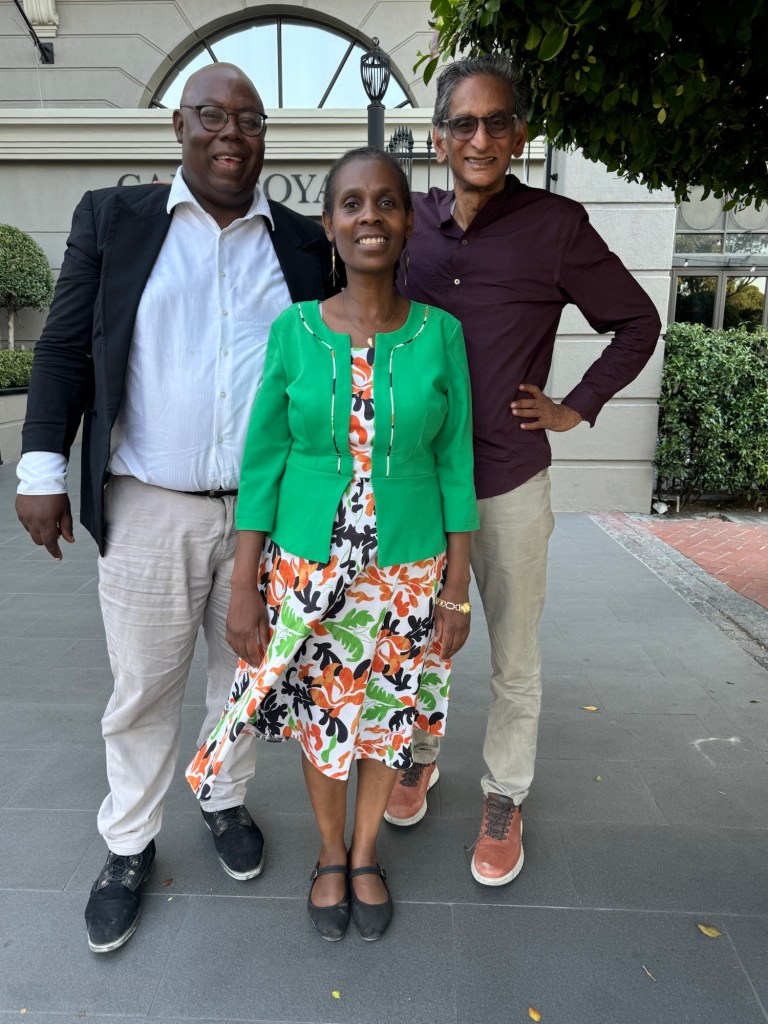
The next morning, Uncle Joe arrived at my hotel—tall, rotund, composed, eyes alive with chatter. We greeted each other with a sequence of handshakes and smiles,
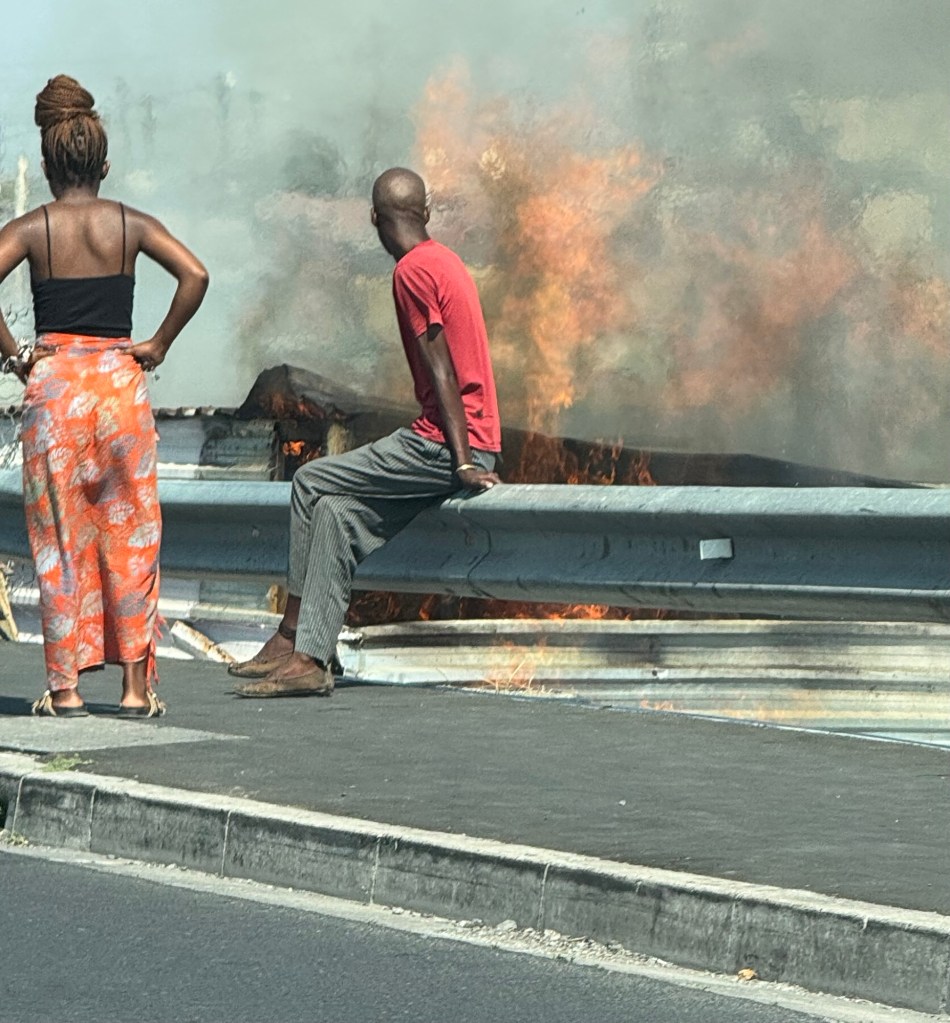
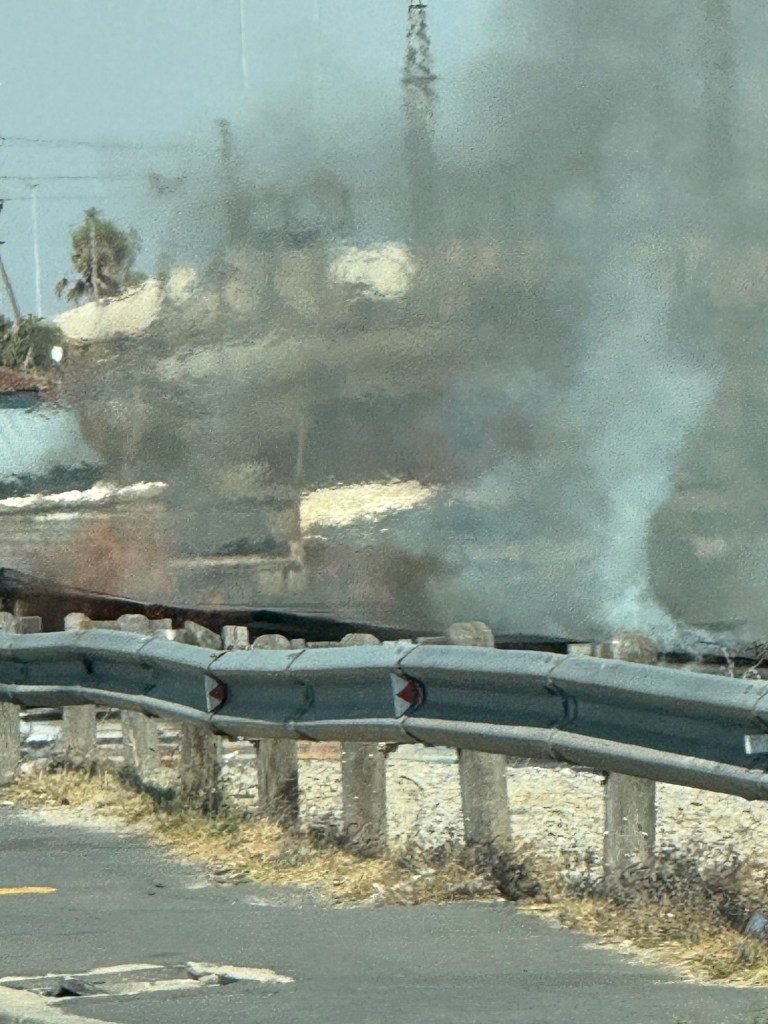
‘I have arranged everything. The whole congregation is excited. The pastors are expecting you.’ We drove on the pristine N2 highway past well ordered power stations – a legacy of the apartheid regime. But as we turned into the township we were greeted by a raging fire.
Fire raging in townshipFire spreading over townshipUncle Joe and his wife, Tambo
My arrival days earlier had carried its own cargo of warnings. From Dubai’s departure gate to the airplane’s descent over the Atlantic rim, strangers repeated a single refrain: ‘Don’t go out at night’. Their words carrying a note of conspiracy. “I was born in a township,” one man told me, his vowels shaped by the polyphony of South Africa’s history—Indian, Black, coloured, white. His wife drew a small invisible circle with her finger. “Always keep your eyes moving,” she said.
By the time the plane dipped toward Cape Town, unease had calcified from curiosity to fear. I was arriving from a cathartic trip to India, where poverty evokes pity rather than menace. Yet here, on the threshold of another postcolonial democracy, a different truth waited—one that lived in contrasts too sharp for comfort.
On the map, South Africa is a nation poised at the continent’s edge, where the Atlantic and Indian oceans meet in a turbulent seam. In its political imagination, it remains a place of unfinished reckonings—a country that dismantled apartheid’s architecture yet still bears its shadows in land, wealth, and everyday gaze. Modern democracy here was grafted onto the bones of empire, and those bones still show.
For months before arriving, I had studied its stories from afar—films dense with violence, novels weighed with moral ambiguity, the voices of Coetzee and Gordimer dissecting conscience with surgical precision. Yet nothing in print or image could prepare me for the human landscape that awaited, where faith, fear, hope, and survival intertwined like the harmonies of a township choir.
All I learned crumbled in the face of the stark truths of the nation: low economic growth, growth without employment, dramatic population growth in the townships where youth unemployment is said to be eighty percent. Now I wonder, when I witness the deep divisions between its citizens and remarkable disparity of wealth, what Nelson Mandela would say: his ANC’s socialist and communist patrons abandoned for the capitalism of the minuscule minority – the bridge between citizens too wide a chasm to breach.
Life, in its cunning, delivers grace at moments least expected. It moves in spirals—returning, revisiting, revealing fragments of ourselves we thought lost, yet each time casting new light upon them. In these helical turns, we glimpse our becoming reflected in those we love most. A son or daughter often carries forward the echoes of our counsel, our cautions, our restless hopes, and all our lived experience. The age-old admonition, “Don’t do what I did, but do what I say,” is never convincing. And so my daughter, passionate in her search, holds up a mirror to the very things I once turned away from.
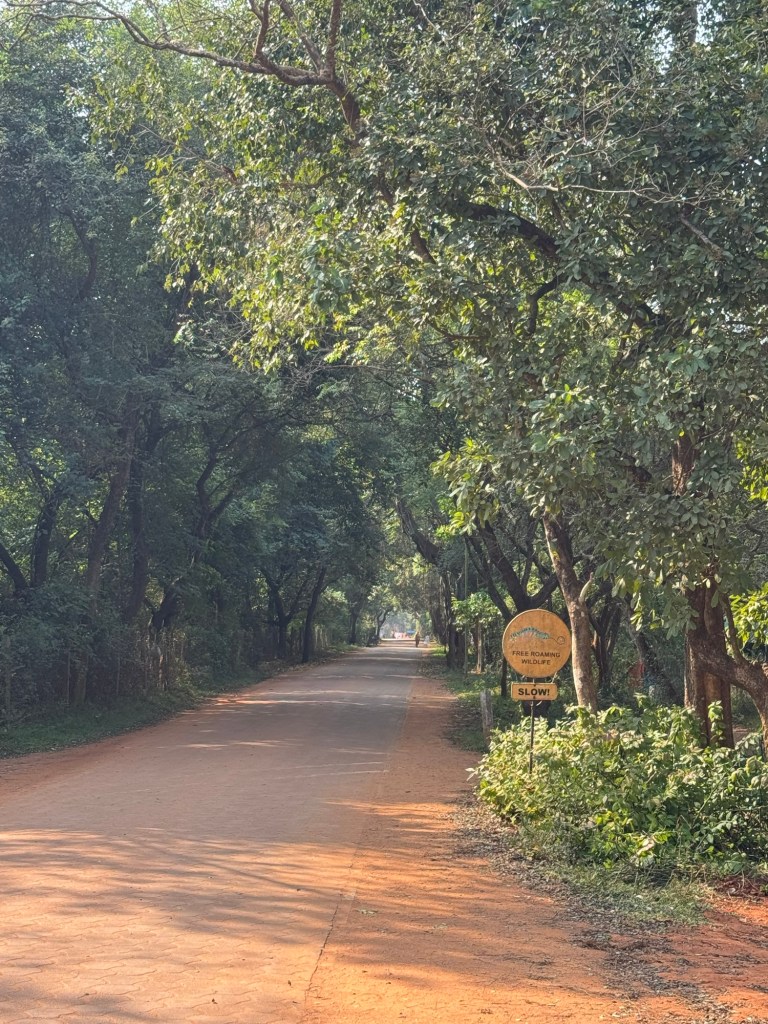
I left her—a child of Canada, a devoted classical dancer, a seeker of spirit—near Auroville, Tamil Nadu. Having quit her six-figure job against my counsel, she now lives here, works on her art, eats at the many fusion restaurants, and drives her noisy scooter along the congested roads back and forth to Auroville.
French restaurant in the leafy French town of nearby Pondicherry.
That still, green enclave tucked within Auroville is where people from every corner of the world gather to live the improbable dream of oneness and unity—a dream I once cherished in my teens and then vehemently dismissed in middle age when driven by business. Yet now, watching her there, I find myself looking at this place anew.
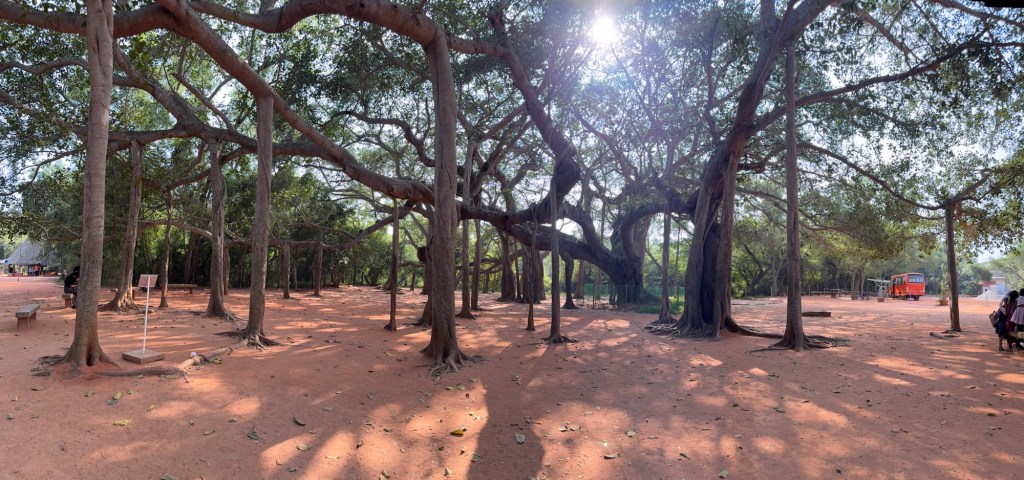
One banyan tree spreads magnificently over fifty meters.
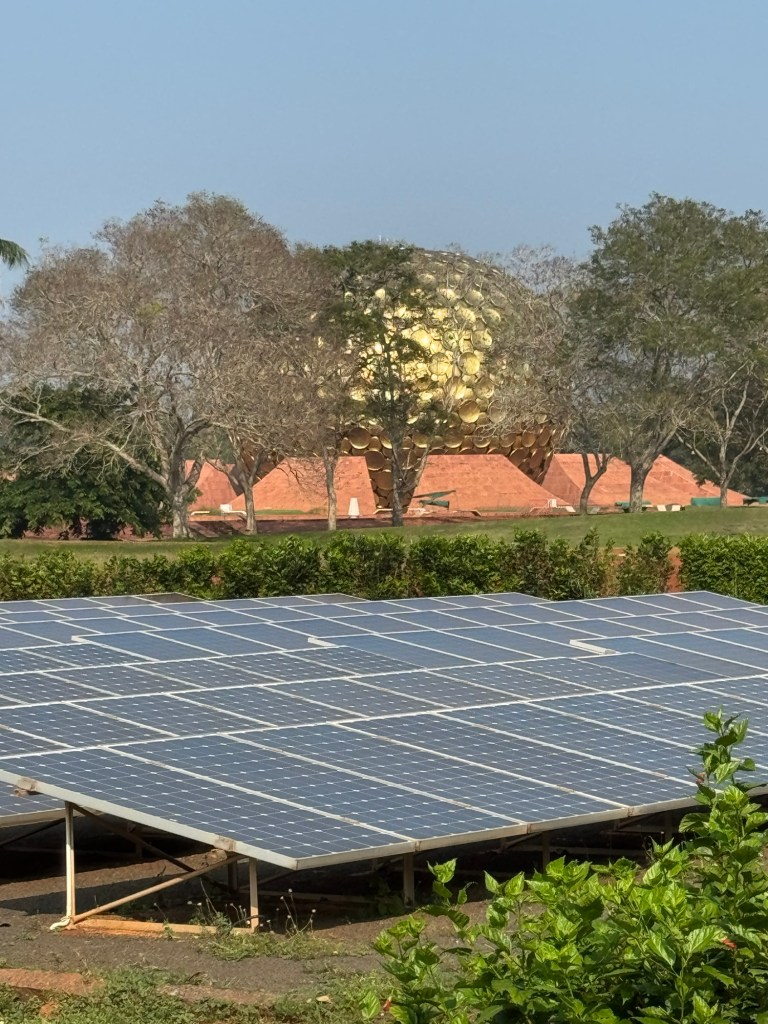
Conceived in the 1920s and sanctified by UNESCO in the 1960s as a testament to human unity, Auroville remains a rare, living experiment in harmony. Its three and a half thousand residents—half of them from India, half from the rest of the world—weave daily life into a quiet hymn of coexistence focused on human unity and sustainable living: reclaiming ecological forests, developing renewable energy, creating new green-building techniques, running schools, practicing arts, cultivating farms, and operating restaurants—in the town that “no one owns” and where no one works for salaries—all without adherence to any specific religion. In my daughter’s arrival, I witnessed both her beginning and my own long-delayed return.
Auroville was born of the vision of Sri Aurobindo (1872–1950)—philosopher, revolutionary, mystic, and poet—and brought into being by the will of Mirra Alfassa (1878–1973), the French artist later known simply as the Mother. With the Indian government’s blessing, it became a place where foreigners could live and work free from the normal constraints of nationality. The remarkably talented actress, Kalki Koechlin – fluent in English, French, Tamil, and Hindi – herself born in Pondicherry to French parents, once said, “My skin is white, but my heart is brown.” In that simple confession lies the spirit of Auroville—belonging that transcends borders.
My own search as an adolescent first brought me to Aurobindo’s ideas decades ago. His words offered a map for my young immigrant’s restlessness. At thirteen, adrift between continents and raised by a father enamoured of the West, I searched for meaning in the universal. A face brown and a heart steeped in Shakespeare, Blake, Elliot, and King James Bible.
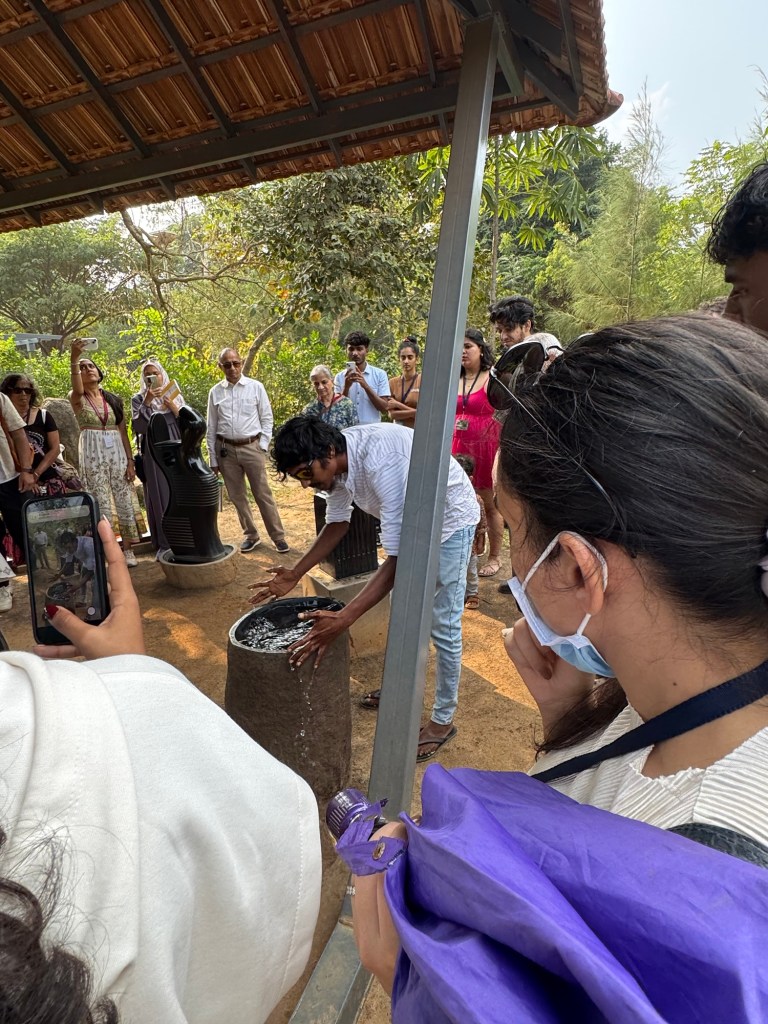
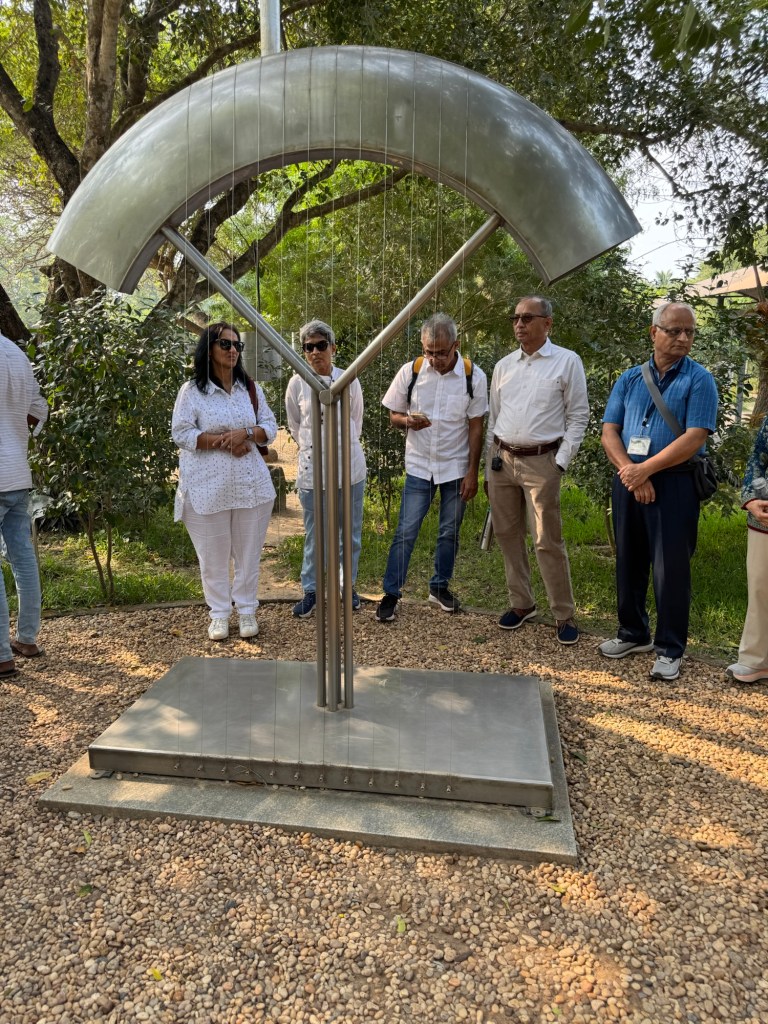
Sound garden in AurovilleSound garden in Auroville
Aurobindo, too, was sent to England as a child of seven in 1879, exiled from his own culture by a father’s misguided wish to insulate him from all things Indian. Despite his deep immersion in ancient Greek and Latin at Cambridge and his prodigious poetry (his poem, ‘ Savitri: A Legend and a Symbol’ remains the longest poem in the English language), his lifelong search was for universal truths and spiritual synthesis—a bridge over the civilizational chasm between East and West, ancient and modern.
Now, as the world appears to turn away from those ideas and ideals, I find myself wondering if, through my daughter, I will find a home here.
Late in the afternoon, the road approaching Chennai’s airport had settled into its usual state of anarchy. What should have been three lanes behaved more like a migrating herd, forever splitting and merging, vehicles nosing into any open space with the persistence of thirsty animals at a shrinking waterhole. The tuk-tuks pierced the din with nervous, high-pitched beeps; scooters whined in protest; and trucks thundered in deep bellows. Some two-wheelers, equipped with truck horns, seemed more able to clear the way in front of them.
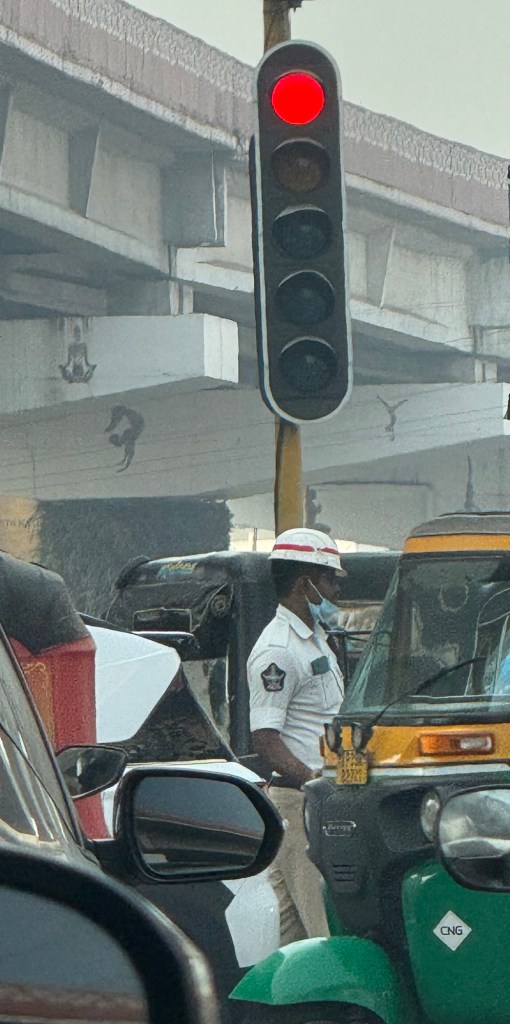
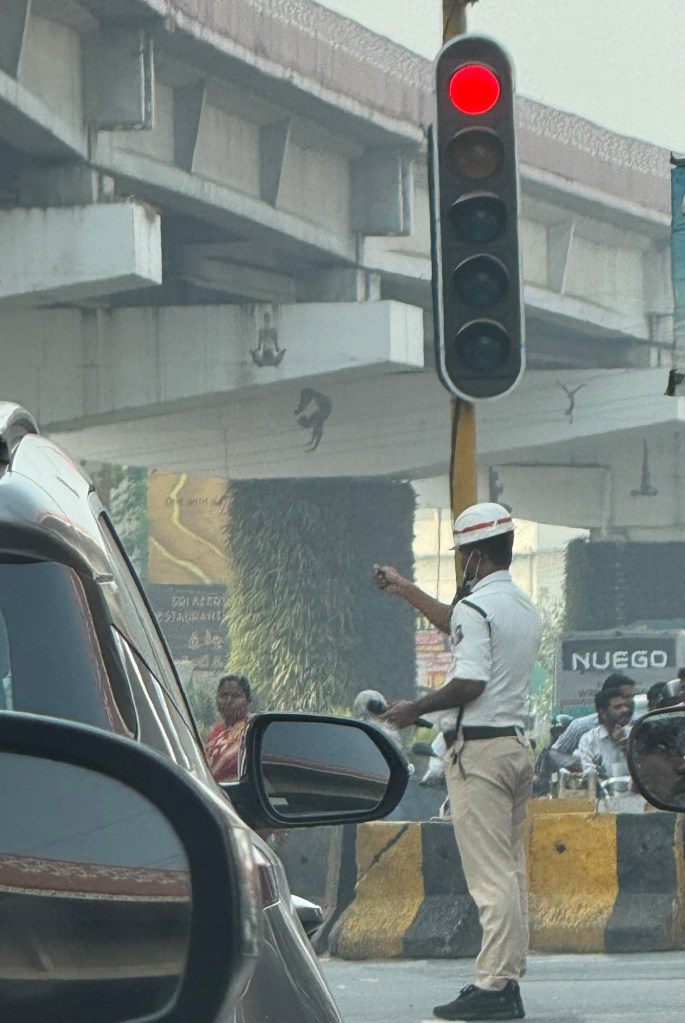
Just as the traffic light ahead turned orange, our car slipped through. A few metres on, two khaki-clad policemen ushered several cars to the curb – ours among them. We joined a silent procession of vehicles: a line of drivers standing by their cars, staring ahead with calm, distant, somewhat resigned looks.
Our driver walked over to a policeman, exchanged a few quiet words, and then returned, shoulders slightly lower. “Saar,” he said, leaning in through the window, “one thousand rupees.”
“For what?” “For a bribe, Saar.”
There are moments in travel when a place introduces itself not with a monument or a meal, but with a single, perfectly honest sentence. This was one of them.
“What did we do wrong?” “He says we crossed on red,” the driver replied. “But you didn’t,” I said. “It was yellow. Does he have a photo?”
The driver’s eyes did a brief tour of the heavens, then returned to mine. “Saar, it is not worth arguing. He asked for two thousand. I agreed for one thousand. It is better this way.”
Somewhere behind us, a horn performed a long, operatic solo, perhaps in sympathy. “Why not pay him with Google Pay?” I muttered, ‘like you pay for everything else.’
He turned, scandalized by my naïveté. “This is why they are going cashless, Saar. These people do not take Google Pay. You cannot bribe in e-comm.” He shook his head slowly, as though disappointed by my fundamental misunderstanding of it. Money changed hands with quiet efficiency. A nod from the policeman, and we were released back into the stream, the traffic folding around us as if we had never left.
“So how much is the actual fine for going through a red light?” I asked. “Two hundred and fifty rupees,” he said. “And he asked for two thousand?” “Yes. I settled for one thousand.”
Outside, the vehicles resumed their restless ballet, slipping across lanes.
“What would he have done if you refused?” The driver did not hesitate. “They only stop cars from outside Chennai. Those with Out-of-state, out-of-town license plates. They know which ones are going to the airport. They can keep you here six, seven hours, slowly raising the price.”
He nodded towards the lorries thundering past. “Those trucks are not going to the airport. Local cars, maybe. Auto-rickshaws, no money. You, Saar…” He tilted his head at me with a faint smile, “…you are airport.”
He let that sink in for a moment, then added, almost kindly, “Think of it as airport tax.” He laughed then, a short, helpless laugh before I laughed with him — at the system, at the day, at the way a simple traffic stop could lay bare an entire ecosystem of opportunism and adaptation. All the while, I silently admired the business acumen and teamwork of the policemen – where to operate, how to target your customer, and how to price appropriately. The cacophony of dissonant horns rose again around us. It seems Old India is still lurking, albeit in its last throes.
At the southernmost tip of India, where the land narrows to a fingertip and touches three vast waters—the Bay of Bengal, the Indian Ocean, and the Arabian Sea—lies Tamil Nadu, a state that holds both the weight of history and the pulse of tomorrow. With a population nearly as large as Germany’s, this is a place where religion, myth, and modernity coexist in breathtaking symmetry.
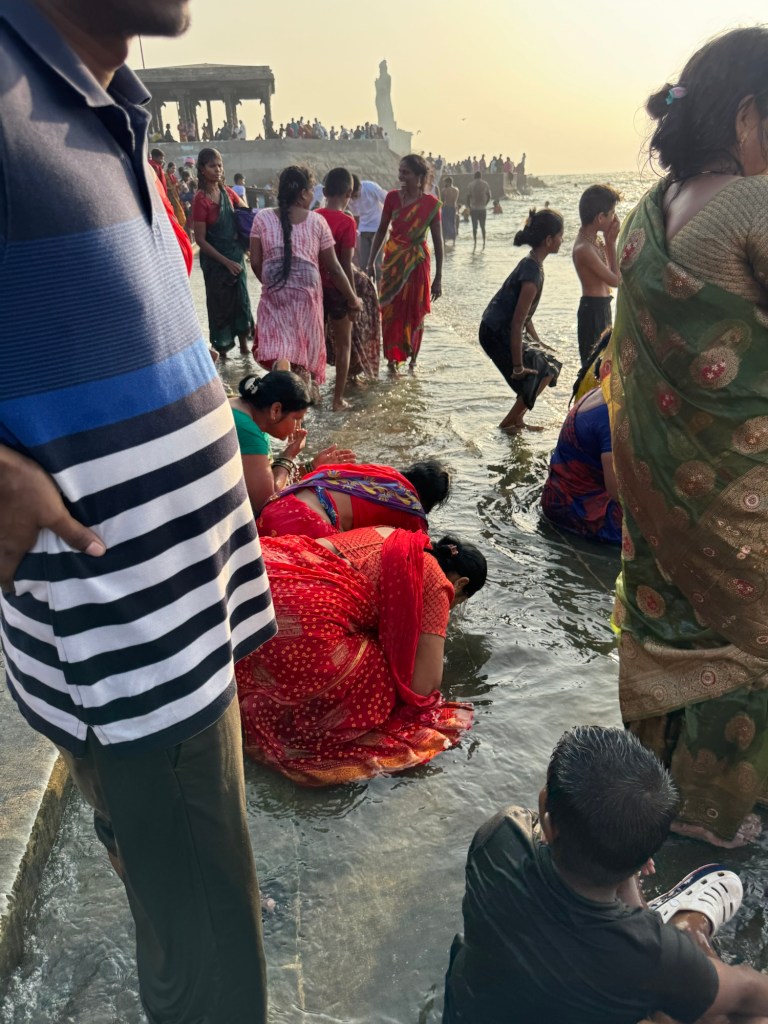
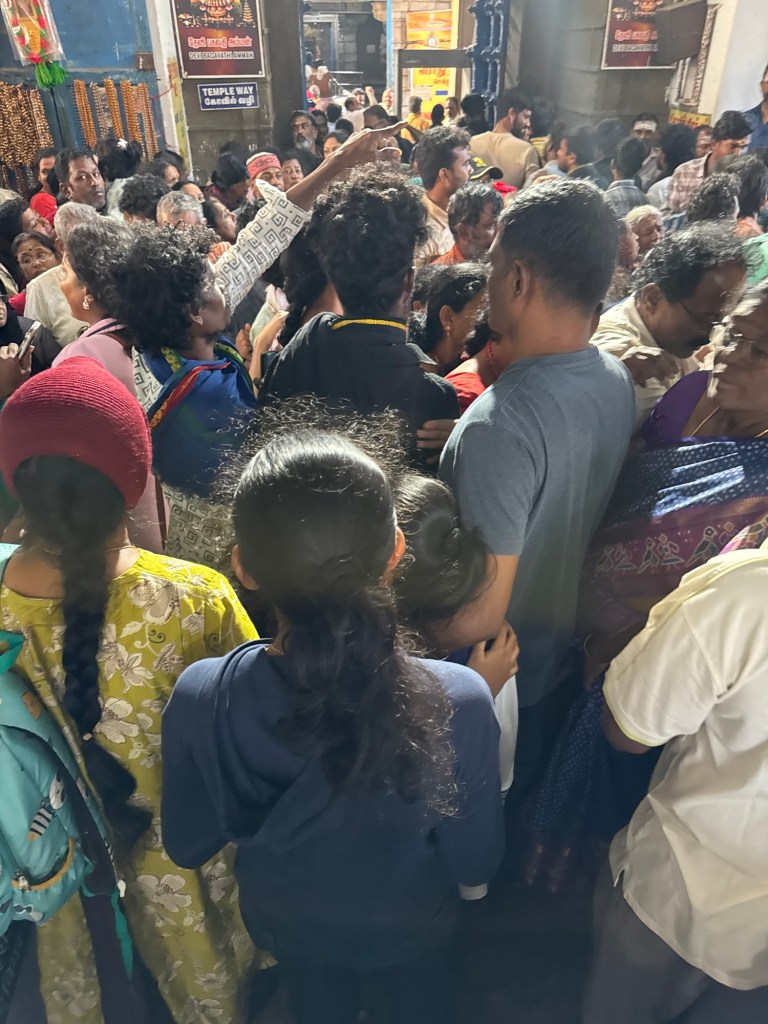
At dawn in Kanyakumari, thousands of pilgrims gleefully descend the stone steps toward the sea, clutching children and elderly as the waves crashed on the ancient stone steps. Beyond them rises the temple of the virgin goddess, Kanya Kumari – said to have forsaken marriage to Lord Shiva to save the world from a demon’s wrath. Inside, the crowd pushed against each other and the sanctum walls with a frightening sense of urgency.
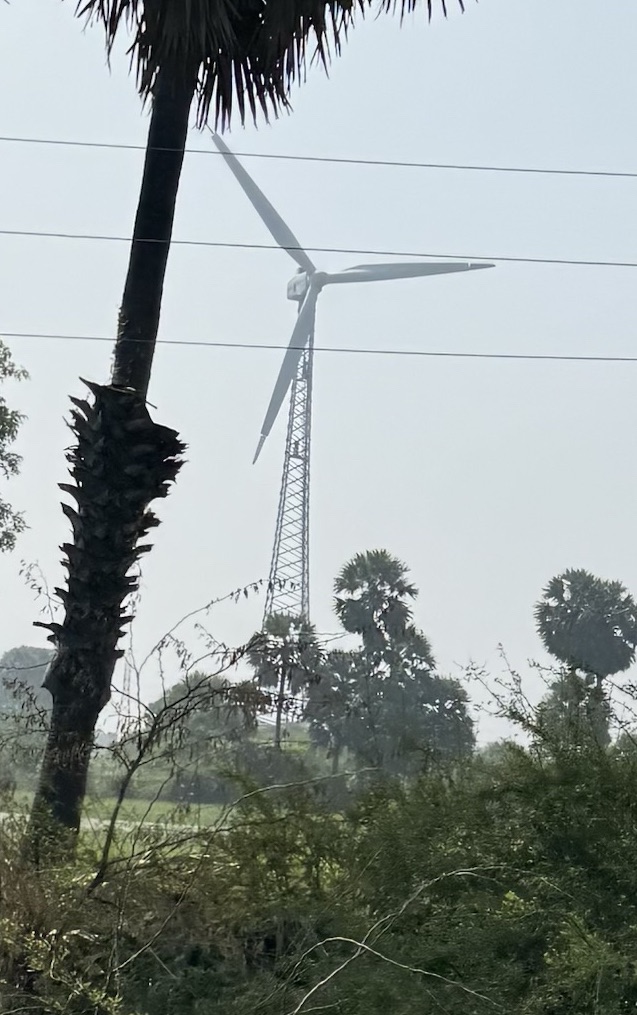
Traveling northeast along the wind-swept coast, the symbols of modern Tamil Nadu turn with quiet precision—over twenty thousand wind turbines slice the horizon above palm groves along with ubiquitous power lines and cell towers.
They provide a tenth of the state’s electricity. Solar farms, stretching across the sunbaked plains, contribute another ten percent. The goal: complete reliance on renewable energy by 2050 – a target that now feels less like ambition and more like destiny.
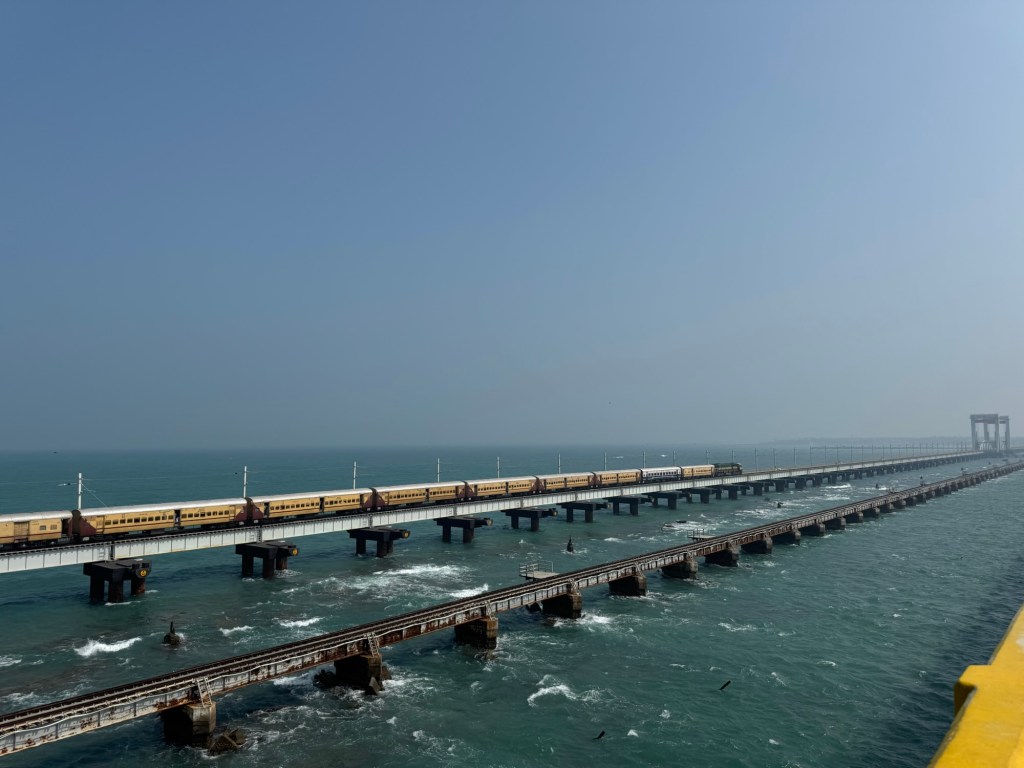
Train speeding over to Pandam Island to the holy temple of Rameswaram.
Yet this land has always drawn its energy as much from thought and myth as from the elements. Tamil Nadu has given the world some of its most luminous minds: Nobel laureates C.V. Raman (Raman effect), Subrahmanyan Chandrasekhar (Chandrasekhar limit), and Venkatraman Ramakrishnan (Chemistry) and even CEOs like Sunder Pachai of Google. Tamil Nadu’s most famous son is Ramanujan, one of world’s greatest mathematicians. Raised in a temple amongst myth and religion he famously remarked “An equation has no meaning for me unless it expresses a thought of God,” Tamil Nadu will forever be a land where logic and the divine deeply inform each other.
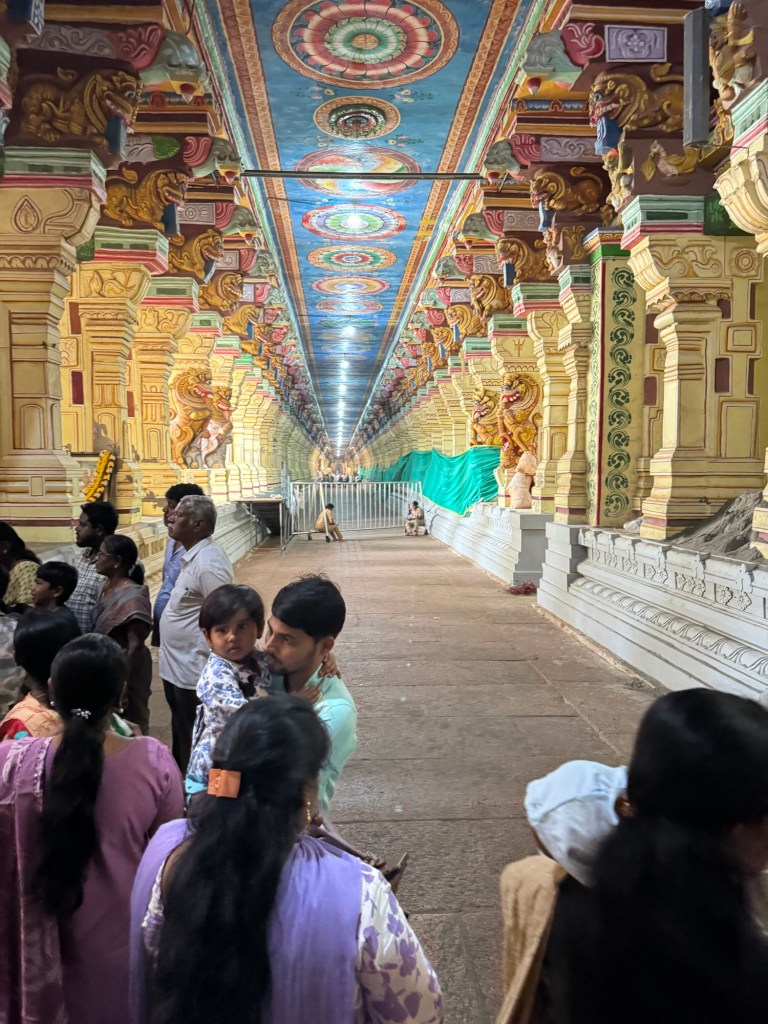
12th.c Dravidian temple with over a thousand pillars.
The state’s universities hum with young engineers and physicists, heirs to a legacy of learning that stretches back to ancient literature and exact mathematics of temple architecture with thousands of pillars.
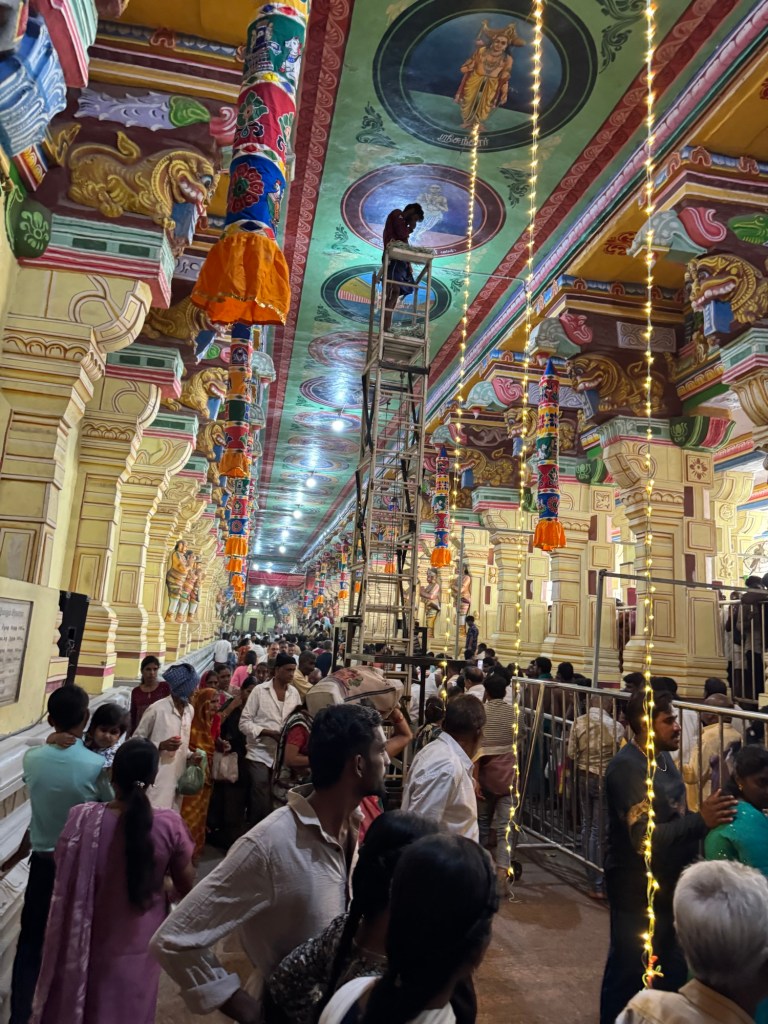
Farther east, the myths of Rameswaram unfold like an epic written in stone, coral and sand. Here, Lord Rama faithful companion, Hanuman is said to have built a bridge of stones to Shri Lanka. Pilgrims in red and saffron crowd the Ramanathaswamy Temple, its corridors cool and dim, echoing with chants of living and dead over the ages.
Yet, for all the prayers that millions pour into the temple nave, none will have even a second to reflect on the idol as priests marshal them through the line. The wealthy apparently have the privilege of paying thousands of rupees to go to the front of the line only to be hurried through as ignominiously. As one of four temples in the four corners of India that make up the required pilgrimage for Hindus in a lifetime, it is particularly busy in holiday season, with lines several hours long.
The sacred here is to be attained not granted. It is earned by being rooted in attention in the midst of chaos, not unlike the images of Hindu gods sitting on lotus leafs over troubled waters. Numerous pilgrims proclaim they sensed ‘a sacred vibration’ even in those split seconds. The sacred here cannot be approached in a blissful state from yoga and meditation, rather by sheer will to edge along narrow lanes and thousands of pilgrims, and crowding into tiny hallways with hands folded – some are blissful in this chaos, others weep from having arrived at the end of their arduous journeys.
Buses, minibuses and cars which carried the pilgrims crowd the sides of each road. A twenty minute walk in any town in the world, is a 2.5 hour drive here. What appears as roads in google map are in truth tiny lanes – some of which may be blocked by construction. Most are effectively one way since the stream of cars and buses that fill the entire width of the street is never ending. The congestion and chaos of the road is remarkable.
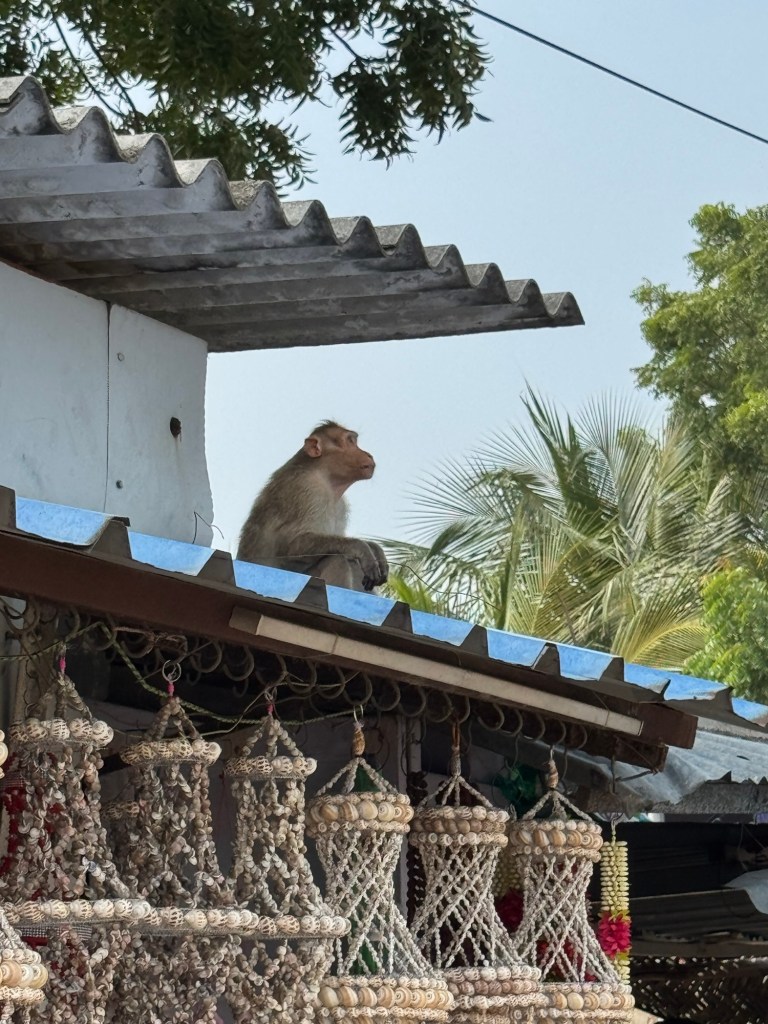
Incoming cars from side streets gridlocked on the main street, neither side giving way even as several passersby spontaneously direct traffic while the policeman stands lost on his phone. Horns blaring, dogs barking and placid cows gracefully and nonchalantly weaving past man and machine, turning doleful eyes to shopkeepers for bananas and mango peels.
Rama’s Arrow across from Shri Lankan island
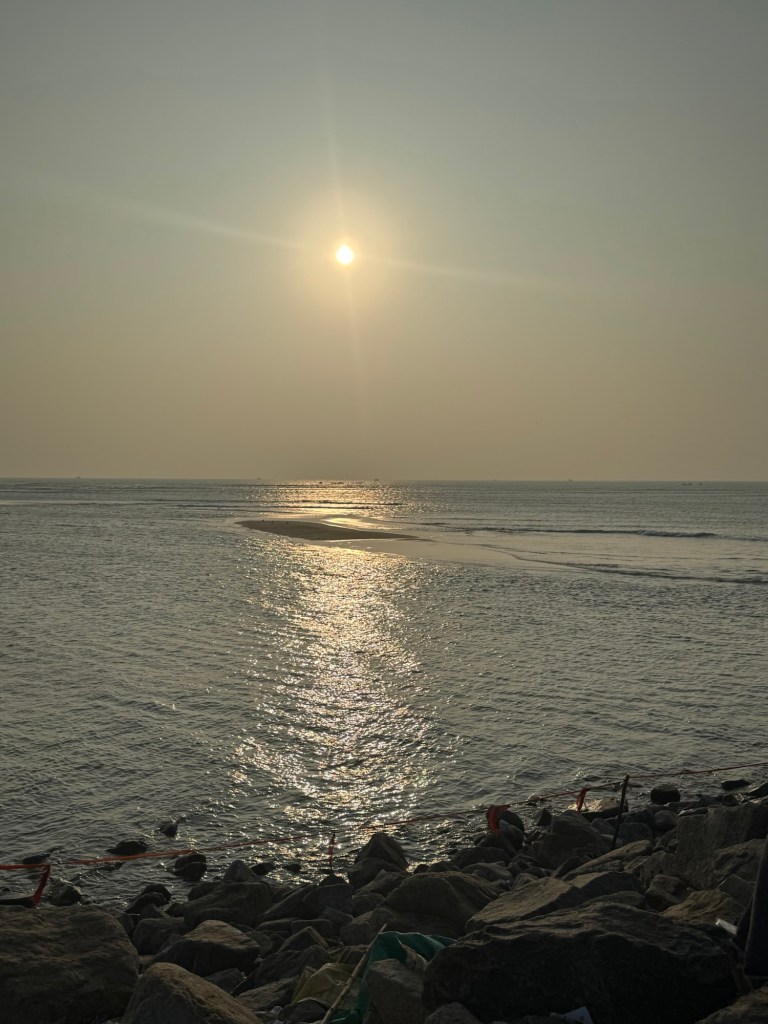
At the shore of Dhanushkodi – “Rama’s arrow”—the land ends abruptly. Only a few meters of foamy water separate India from Sri Lanka. As twilight deepens, thousands of visitors gather to watch the sun dissolve into the horizon, where legend and geography blur into one shimmering truth: Tamil Nadu is a place where the physical and the spiritual not only coexist, but depend on each other.





 Vidante