It was better for us then,” he said when I asked him about life during apartheid. The afternoon heat drifted into dusk as Team, the seventy-four-year-old man sat uphill from his mud-and-clay house, gazing toward the Indian Ocean. In these hills of the former Transkei—once a homeland carved by South Africa’s apartheid planners for Xhosa-speaking people—Team is known as the village’s oldest man, a keeper of stories that straddle two eras.
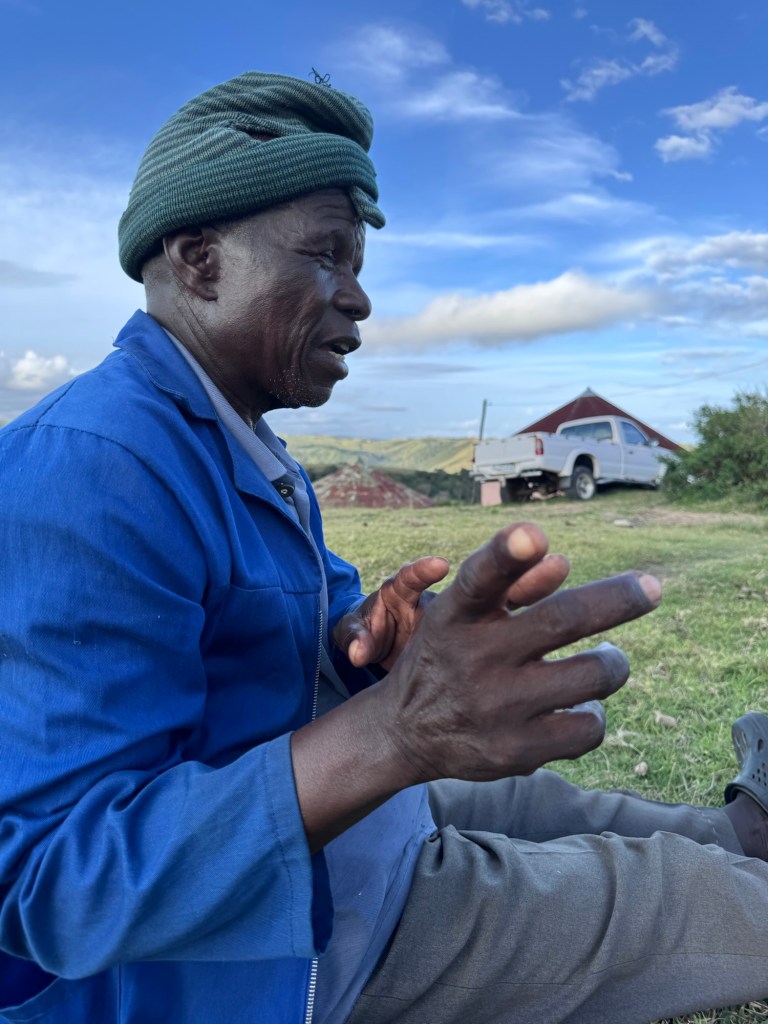
“Back then,” he continues, his hands tracing invisible circles in the air, “white people didn’t come here. We had no money, so we made everything ourselves. We grew food, built our homes, traded with our neighbours. Now things come from everywhere, and we have money—but it’s worth nothing because everything is so expensive. We’ve forgotten how to make our own things.”
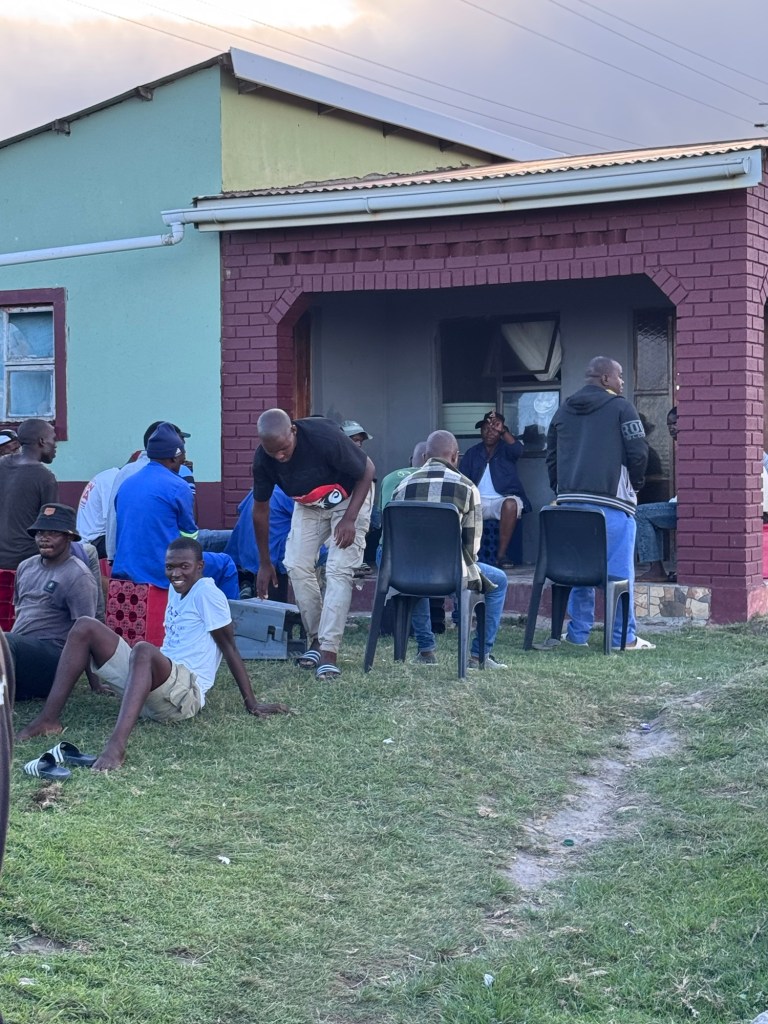
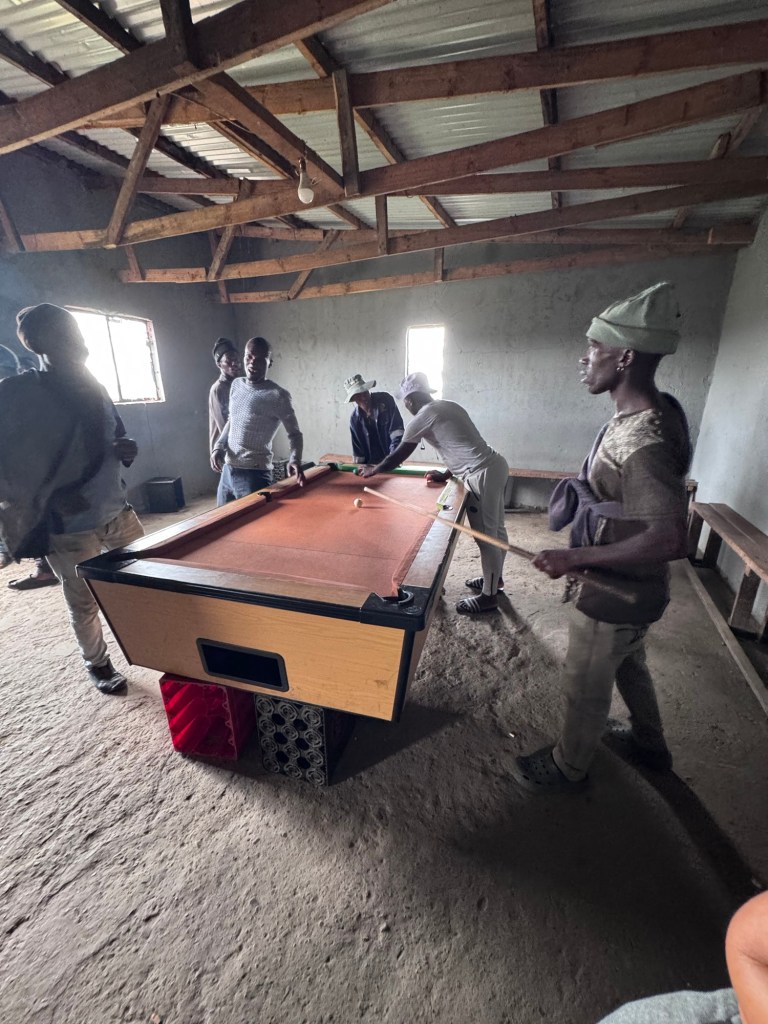
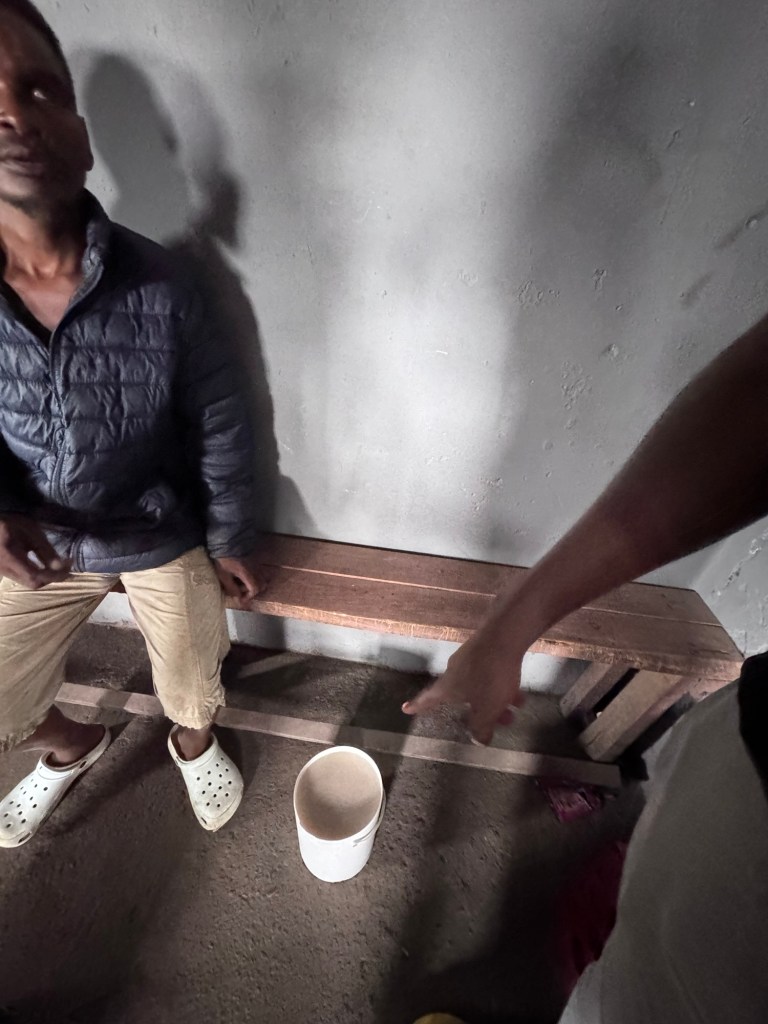
Below the ridge, a knot of men debate animatedly, voices rising and falling over a dispute between two villagers. The traditional council mediates quarrels here, calling the police only when talk fails. Around them, the rhythm of village life continues: cattle move lazily through the grass, sheep float like clouds in the expansive landscape, chickens dart between stones, children chase a tattered, deflated soccer ball. On top of the hill, a group of young men laugh aloud at the bar while playing on a dilapidated pool table, dipping their mugs into a bucket of home-made beer. Far off, the waves fall silently toward an empty beach.
“At least now we can go anywhere,” Team said, his eyes brightening. “The young can travel for work and send money home.” He speaks in Xhosa, each sentence adorned with the unique, crisp clicks of the tongue. When I asked if they truly lived without money, he stops and grimaces. “No. When we needed it, I went to the mines.” He gestures northward. “I took the bus to Mthatha. There they gave me an identity card, then sent us by train to the coal mines. I worked six, seven months at a time. Then I came back and bought some cows.
As my guide, S’Bo, translates, Team’s hand sweeps across the distant horizon beyond the Mngazi River—ten miles away—then his arm plunged straight down to the earth. “The mines were that deep,” he says. “No protection. No masks. Many men died of tuberculosis. If you were hurt or sick, they sent you home with a little money. There were no doctors.”
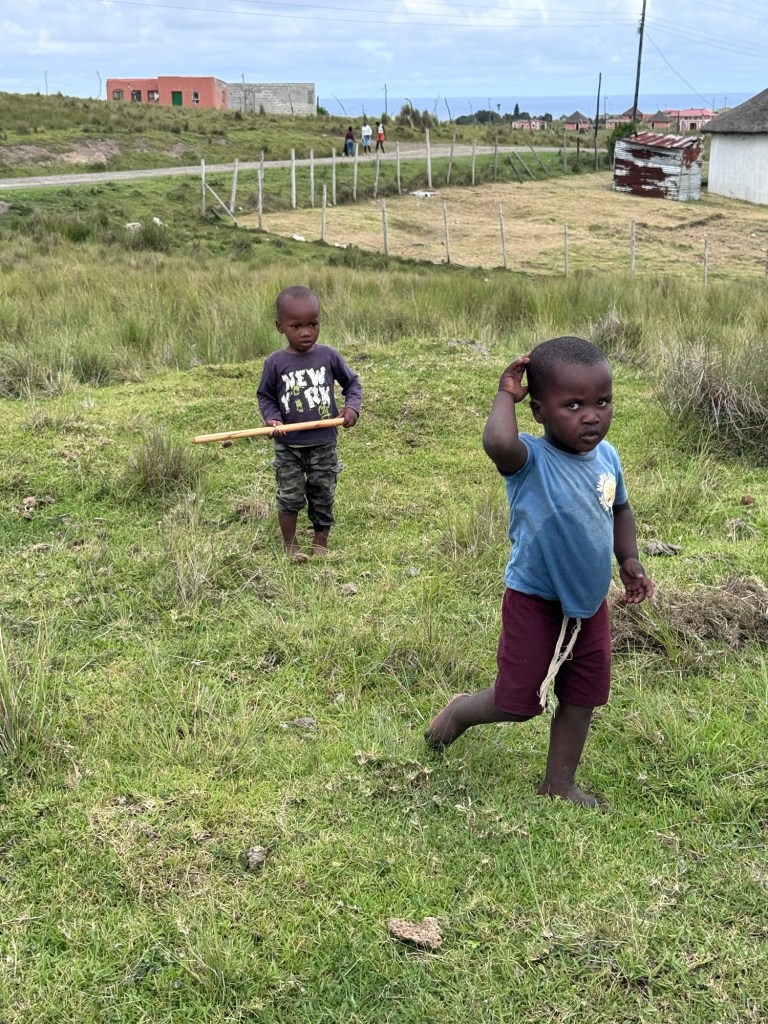
His words hang heavy in the air. My mind raced to find language for this strange feeling: a kind of affection for a harsh regime. I’ve read memoirs of prisoners who recall confinement with strange tenderness, of hostages who sympathize with their captors—but nostalgia for apartheid feels like something else entirely: an ache for the small tenderness of a simple life now transformed into the chaos of freedom and choice.
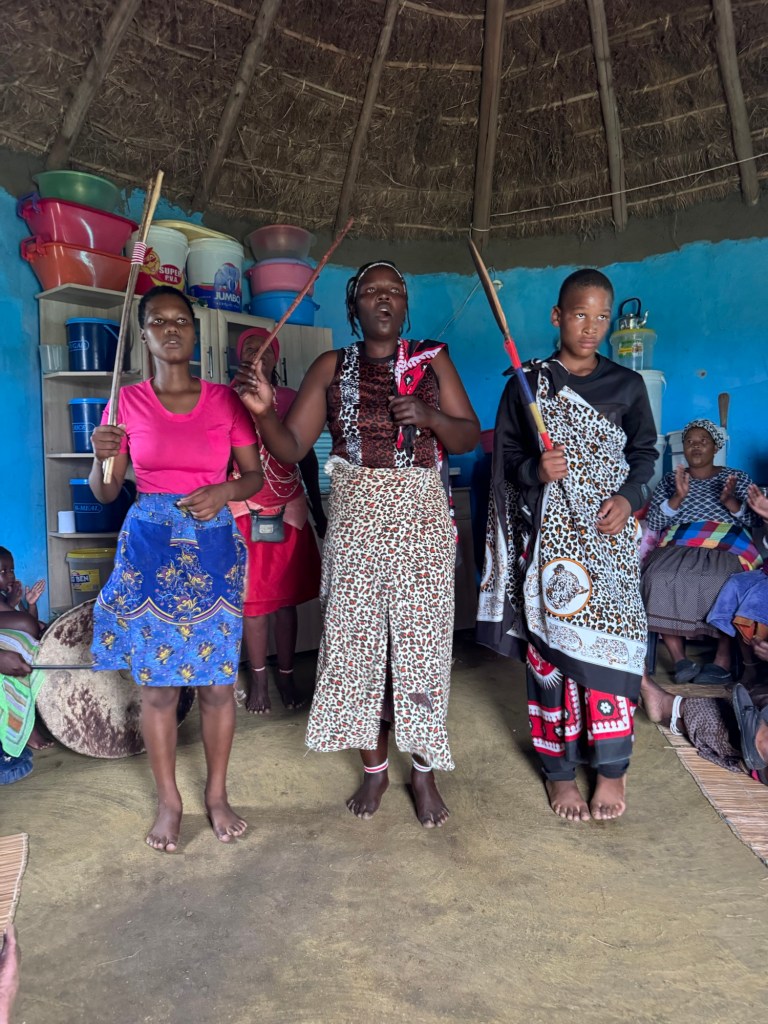
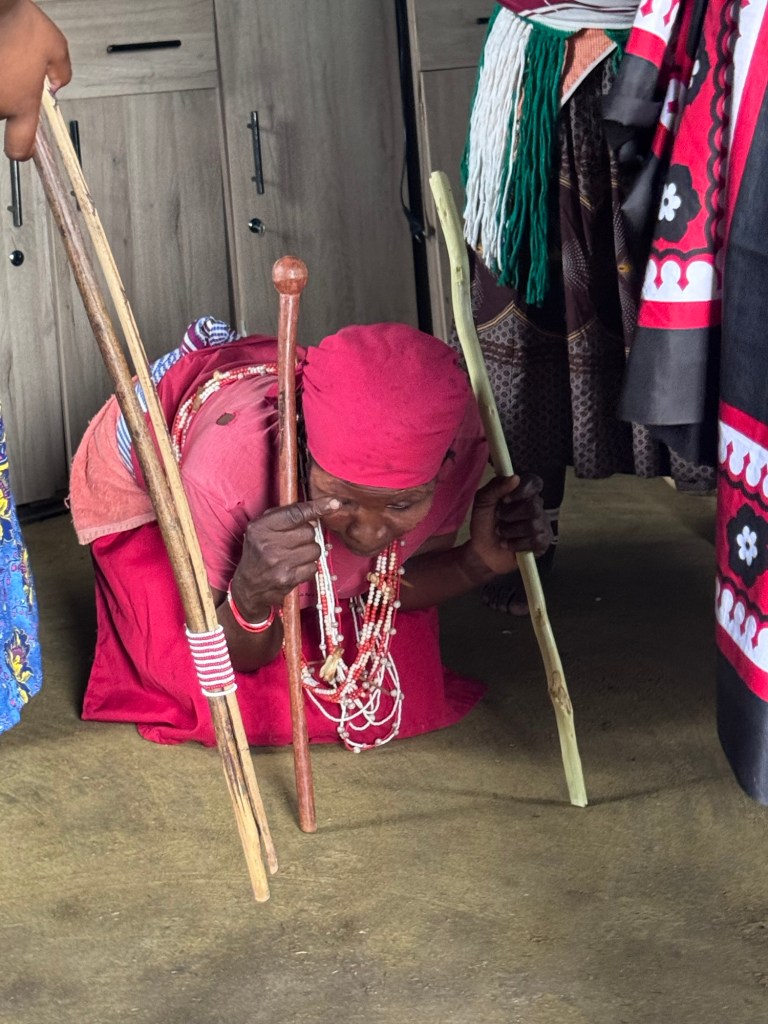
Earlier that day, S’Bo had taken us to a healing ceremony in a traditional circular rondavel home. Women and children crowded the earthen floor, clapping in rhythm as three dancers—bodies upright, feet stamping with fierce grace—circled a small fire kindled with sage. When the drumming ceased, two healers knelt, whispering prayers through a haze of aromatic smoke, careful not to sever the fragile link to the ancestors.
Outside, the Transkei hills burned gold in the last light, and the voices from the bar up the slope drifted down—laughter, the clack of pool balls, music rising and falling on a popular Zulu pop song. Somewhere between old constraints and new freedoms, the spirit of this land endures, wrapped in both sorrow and resilience.
 Vidante
Sitting here with my coffee, on a chair tilted to a favourite angle, I think I enjoy reading of your expedition almost as much as you do in person.
The conversation with Team brings to mind something remembered from decades ago. Though their name I can’t recall there was once a school of pre socratic fellows who held that nothing really changes. The props and trappings come and go, inventions arrive and become obsolete, nouns are born then parish, but the grammar stays, and in spite of the “New” very little is actually “Improved”. Team has his own version of this ancient observation, modified in his own experience but it’s the same thought and as accurate now as it’s always been. We had no money so we did everything ourselves, now we have money but it’s worthless and we can’t make anything here. Great….
The apartheid pattern doubtlessly robbed all of its participants of their best possibilities, albeit at vastly different levels. Still, even if that’s an old chestnut of popular journalism, it’s end hasn’t produced uniform well being for everyone. The haves and have nots look a bit different, but there are haves and have nots none the less. In all fairness the end of Apartheid wasn’t design to change human nature but perhaps to try again to put things on a better footing.
Again, many thanks for including us on your travels and,
Best Regards DM
LikeLike