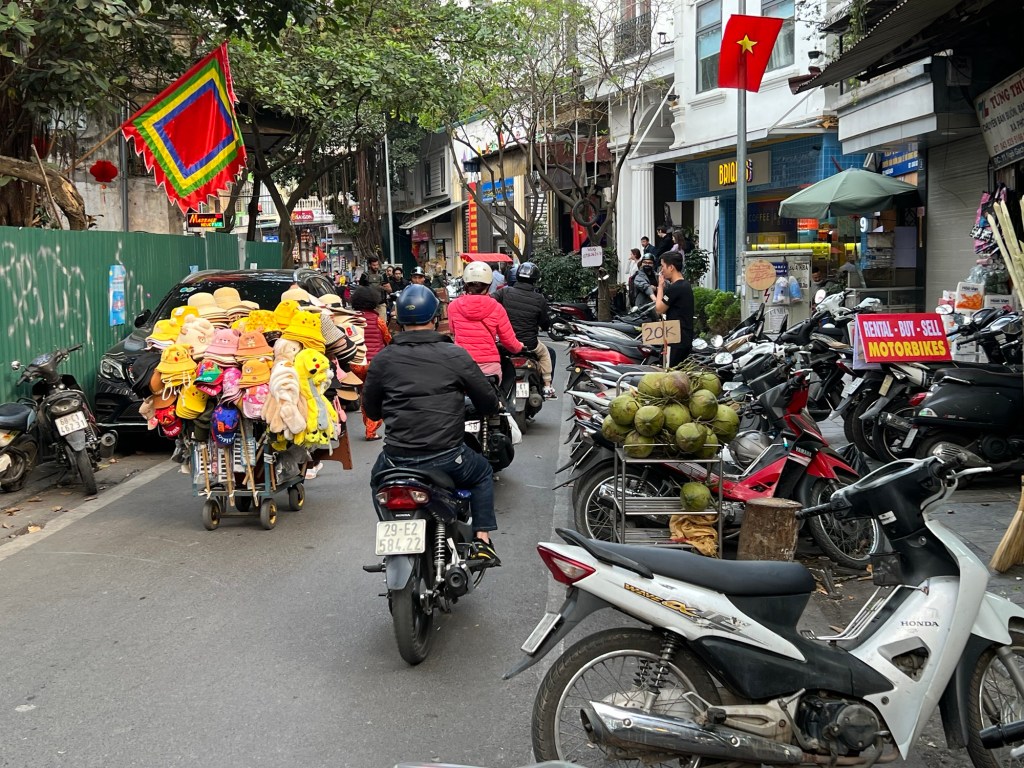
When walking in the streets of Old Quarter of Hanoi, known locally as Hoàn Kiếm, it is best to heed the word of the renowned Vietnamese Zen master, Thich Nhat Hanh, “Breathing in, I release the tension in my body. Breathing out, I smile.” That may be the best state of being with which to walk the streets of Old Hanoi. Almost certainly you will encounter countless street crossings and intersections along its narrow streets, their sidewalks spilling with street vendors and scores of people hunching over their green tea on tiny stools. A moving interlocking wall of traffic – pedestrians, bicycles, rickshaws, motorbikes, cars, trucks, carts, and an occasional giant tour bus weave around each other even through traffic lights like a perpetual square dance without a caller.
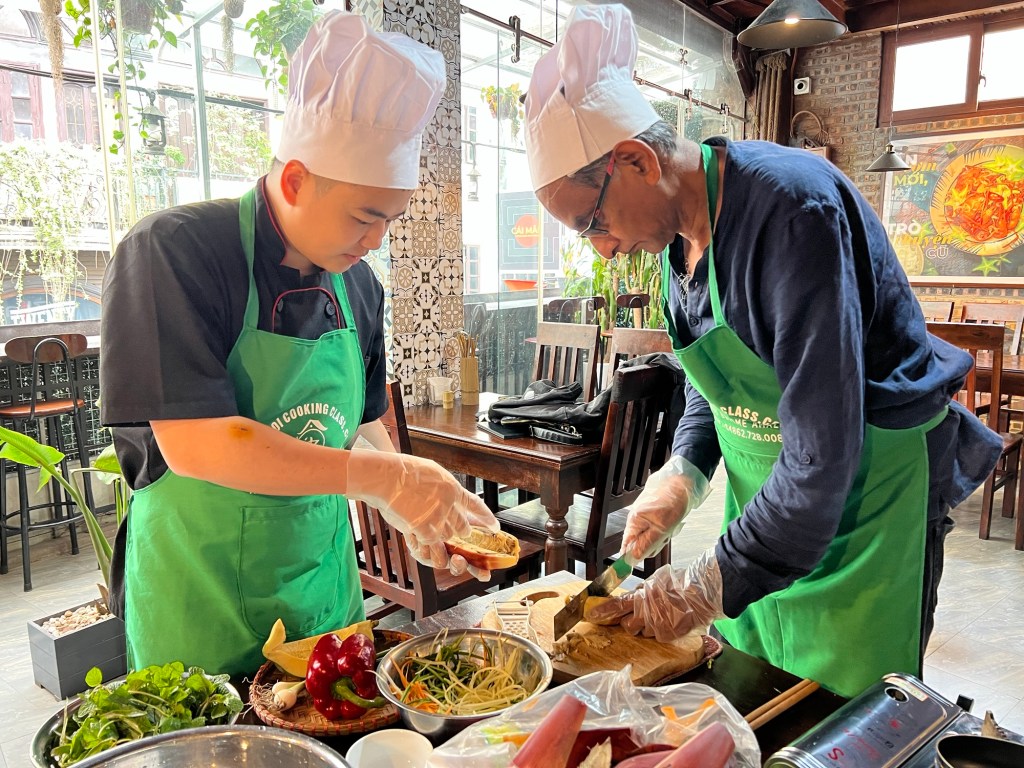
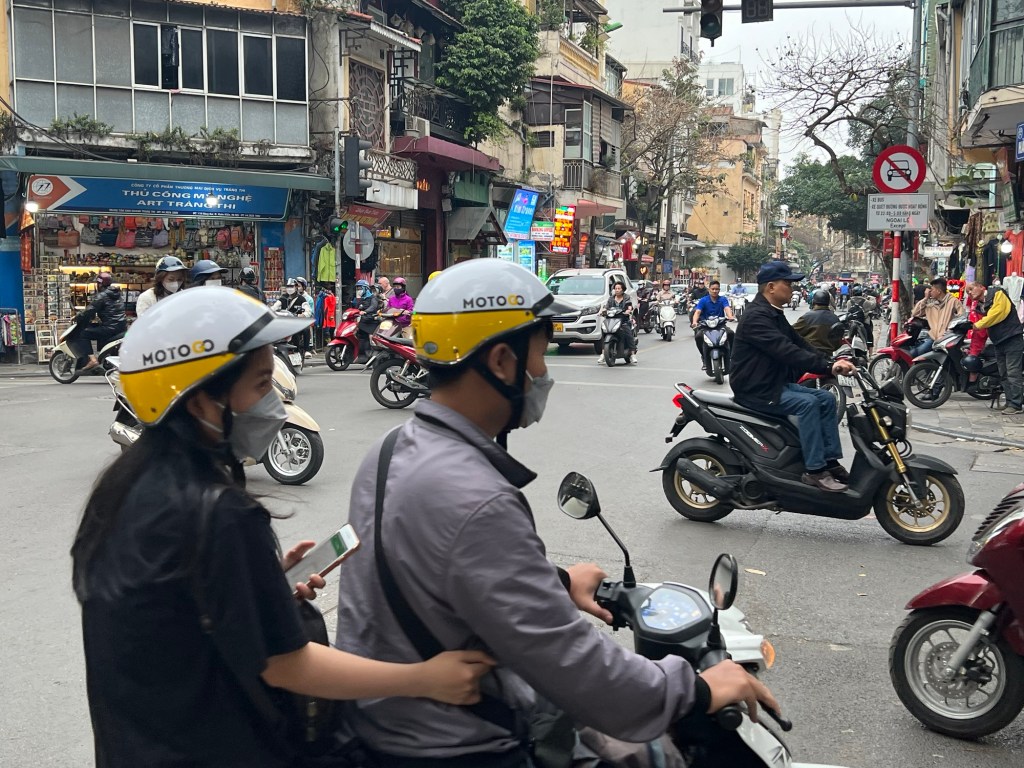
It is not easy to escape this run through the gauntlet of traffic in Old Hanoi’s narrow streets and intersections. There are green lights for pedestrians and although there is some profit in waiting for them, it is important to not lose a moment of attention as the green lights serve merely as optional for the charging traffic. “Walk slowly, but confidently” my street food tour guide told me, “You will confuse them if you walk too fast or seem uncertain.” “I have crossed streets in India,” I told me, “and I even practiced back and forth to get it right but this in different.” “How?” he asked. “In India all the moving participants in the street never lose eye contact with each other. They even have subtle eye and hand gestures to signal each other. Here there is nothing.” “Everyone is in their own world here,” He said, “preoccupied with their own thoughts.”
Westerners are the most dangerous of street crossers for local traffic but most of the moving hoard adjust for that fact. However, it is very important that newcomers practice the street walk in areas of low traffic, wait an extra length of time, or raise their hand in the air to announce their every move. Confidence will build with some practice and the final stage is to arrive at the Zen-like state in which the pedestrian becomes one with the traffic. Such a state will help in walking the streets of Old Hanoi and this newfound freedom will go a long way in enjoying the many streets that stay true to their original trade: Shoe Street (Hang Dau), Silk Street (Hang Gal), Bamboo Street (Hang Vai), Silver Street (Hang Bac), and Traditional Medicine Street (Lan Ong).
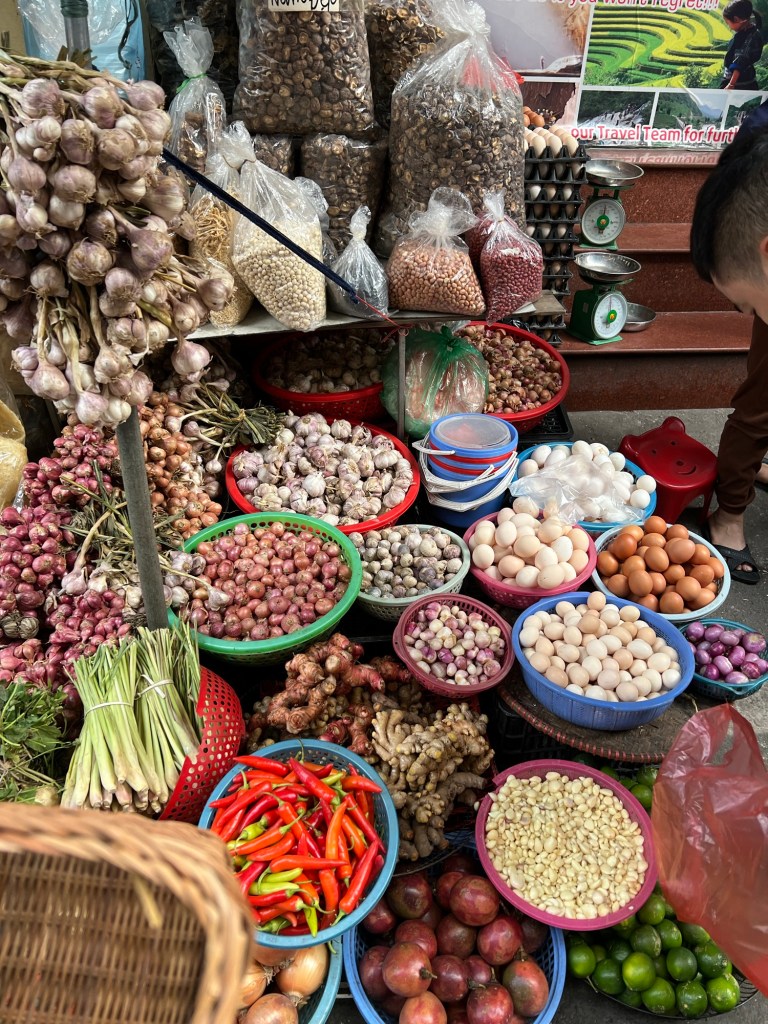
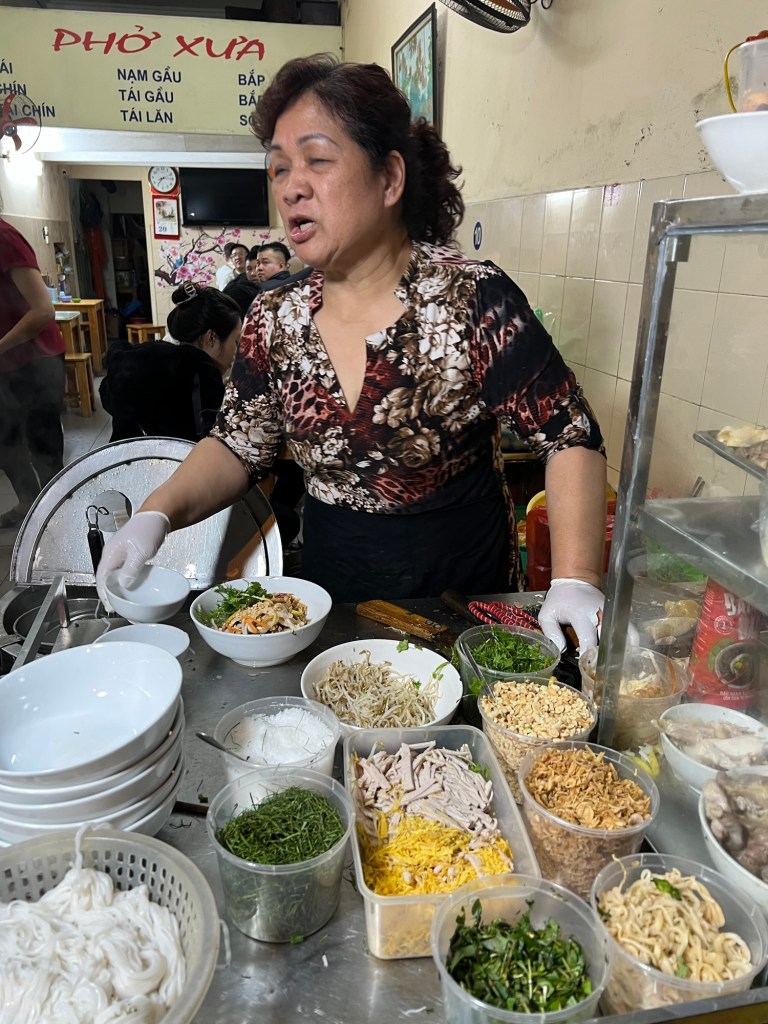
There is some likelihood that you will see a phenomenon that I witnessed in which dozens of sidewalk food vendors suddenly, like well practiced stage hands, disappear in seconds – their customers hustled into alleys, the tiny stools disappearing, the lights turned off and sidewalk swept. The cause – someone had phoned ahead that authorities were in the neighbourhood to police unlicensed vendors. Licensed or not the street food is superb – the produce is fresh and natural and the process of cooking clearly visible.
Also it is possible to encounter a “shoe repair” urchin that will point to your shoe and in one swift motion remove it from your foot, place the foot on a slipper – then adeptly sew up a nonexistent tear for an absorbent price. Almost certainly you will see someone burning play money – often $100 – in honour of ancestors. The various spa and foot massage services – all competent – are ready to help at a reasonable price to relieve feet from a day’s walk, and the omnipresent “Grab” motorbike-taxis are ready to offer a ride. Sadly, for males walking alone, the Grab drivers will boldly demonstrate their diverse offering of the most ancient of professions.
 Vidante