“You can trust me, saar” the bald driver said disingenuously, signalling for calm with his right hand in which he held a cell phone. His left hand was alternatively changing gears and holding the steering wheel. His eyes shifted nervously behind his thick glasses. The three of us were quiet and still. Not the calm stillness we had just experienced in a luxury Ayurvedic health retreat in Kerala from which we were returning. Instead, our hands were sweating. It was the quiet of one who had given up all hope – the stillness of the doomed. Traffic careened past us on the four-lane highway from the sparkling Rajiv Gandhi Airport in Hyderabad – designed by a famed Norwegian company and rated amongst the world’s best airports. The palm trees and manicured gardens left little room for a shoulder on the road. When we entered the highway a series of signs clearly blared out that bicycles and motorcycles were not allowed, that stopping on the shoulder was forbidden, and that all drivers should ensure they have gas in their cars when they enter – in all three local languages – Telugu, Hindi, and English.
The car we were in was clearly not an authorized taxi. Perhaps it was because of the two weeks of daily massages, yoga, and meditation in the resort on a pristine beach in Kerala, I had slipped away from caution and paranoia – the two required companions in years of traveling in India. I had broken one of a main tenets of travel all over the world – never use the cab from drivers who solicit you as you walk out of the arrivals area. We did. Worse still, we ignored each of the warning signs that announced loudly that we made a bad choice.
At first look, the cab had several dents in the rear and side. There were no clear signs that it was an official taxi. The countless times we took taxis at this airport had lulled us into believing that the airport authorities closely monitored each car that came into the taxi lot. This experience combined with the luxurious and transformative Ayurvedic treatment had seduced us into a trusting state of bliss devoid of the basic survival tools for traveling in India. Perhaps I should have stopped the driver early, when I heard the driver ask the parking attendant – the one who controlled who came in the lot – if he could bring him dinner after this ride. Instead, I congratulated myself that my childhood Hindi was still good enough to understand their conversation. Ah, New India’s seduction is thorough and complete.
Within ten minutes of entering the highway the car spluttered and spontaneously slowed down. Instead of showing concern the driver continued a tirade on his phone to his wife in Telugu. Perhaps unaware that my Telugu was far more functional, the driver told her that he had enough gas to get to the station. The engine sputtered again and the car slowed down to a crawl just as it would when running out of gas. Cars honked mercilessly – not the normal pleasant “beeps” drivers use to communicate with all moving items on Indian streets but sustained angry blares.
I leaned over nervously to look at the dashboard – the gas light was on. “You have no gas.” I said in Telugu. Surprised to hear my Telugu he turned to me and moved his right palm up and down as if to signal calm, “I have been driving for years, saar” he said in English to reassure me in a language that signified confidence. The car suddenly began to accelerate. We began weaving in and out of traffic with the agility of a young antelope in a galloping herd and my fear was suspended. Then I noticed he straddled the line between lanes between overtaking adversaries as if he needed the extra room.
Suddenly, the car coughed and sputtered again and the smell of engine oil seeped in. There was clearly no shoulder to turn to. The cars continued to careen around us and soon even the three wheeled tuk-tuks – some with robust truck-like horns to make up for their stature – began overtaking us on all sides. At one point, one lone bicyclist defied all the signs and rode past us in the little shoulder there was. It was then that I saw that even the engine light was lit.
“You have a problem with your engine.” I said, to which he shook his head, “You shouldn’t be driving while you are on the phone.” my wife interjected. “Can we now get off at the nearest exit and take an Uber?” my son said. But the exit ramps with no shoulders whatever led into each other before finally bringing us to a boulevard in Cyberabad – the exploding High Tech city with broad streets that narrowed in parts due to endless construction – massive residential compounds, office complexes, hundreds of telescopic cranes in all directions.
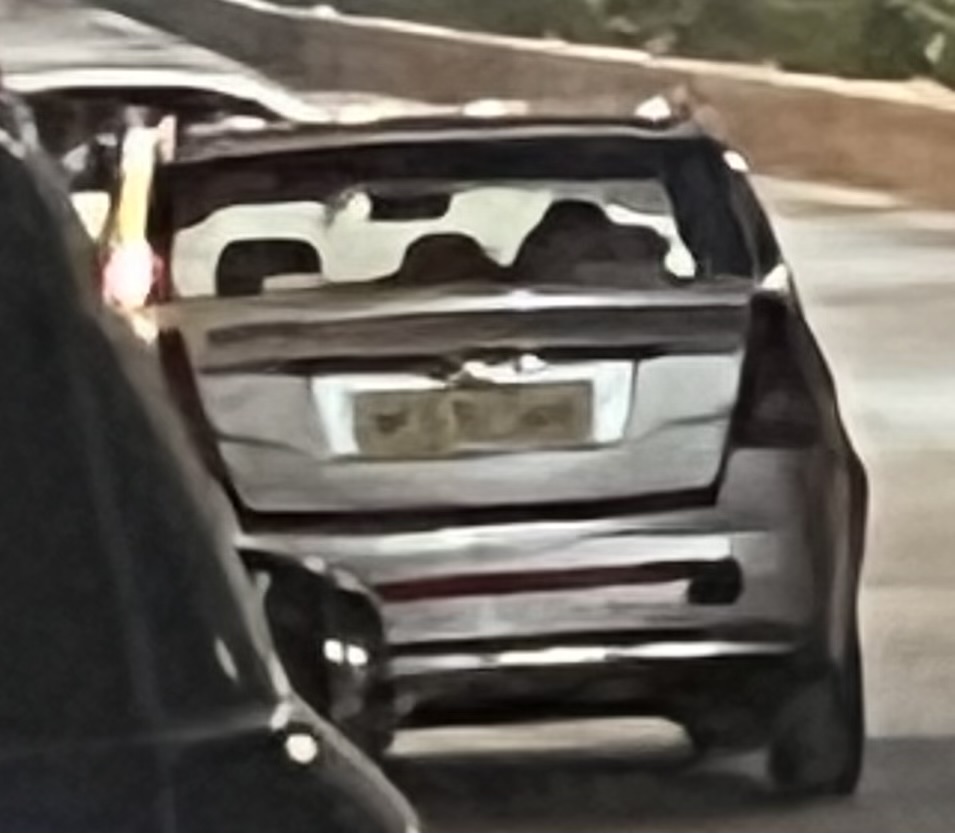
Our destination was one such complex – a walled mini city of ten thirty-five storey buildings with sixteen hundred apartments, perfectly groomed lawns and gardens, tennis courts, roller blade courts, cricket cages, gyms, groceries stores, pharmacy, a temple – a calm oasis. We were within a hundred yards of one of several gates, but he had entered a one-way street in the wrong end! He offered to drive around, and we all refused in unison despite having a lot of baggage. Soon as he stopped, we rushed out of the car. Unlike inside the immaculate compound where dog owners or their servants marched their pooches – pugs, beagles, rottweilers, German Shepherds and variety of designer variations of the poodle – and picked up their waste in bags and extension poop pickers the streets and sidewalks of India are the domain of packs of street dogs.
Soon as I exited the car and muttered expletives in Telugu, Hindi and English, I realized that I had stepped on dog shit. We would be navigating our luggage through an obstacle course of such droppings while the street dogs stretched on the sidewalk basking under the street lights paying us little heed. With the little anger left in me I raised my phone to take a photo of the cab as he drove away in the hopes that I could register a complaint only to notice the license plate was bruised and the number obscured.
 Vidante