The sun rose to the piercing cry of a kochila khai, a large-beaked bird endangered in much of India. In the backwaters of Kerala, all life thrives, and dawn is greeted by the cries of a host of birds in one of the world’s most diverse environments. Fish break the surface of the water sending concentric circles in canals and lakes, that would soon be broken by passing boats carrying young boys and girls to Sunday school – girls dressed in blue frocks, hair tightly braided with marigold wound at the top of their heads, boys in blue shorts and white shirts. Occasionally, an elaborately dressed priest in white robes sailed behind with his retinue of nuns. The forty foot ferry stopped at the small docks along the stone walls of the canal and carries passengers through the network of canals and lakes all day.
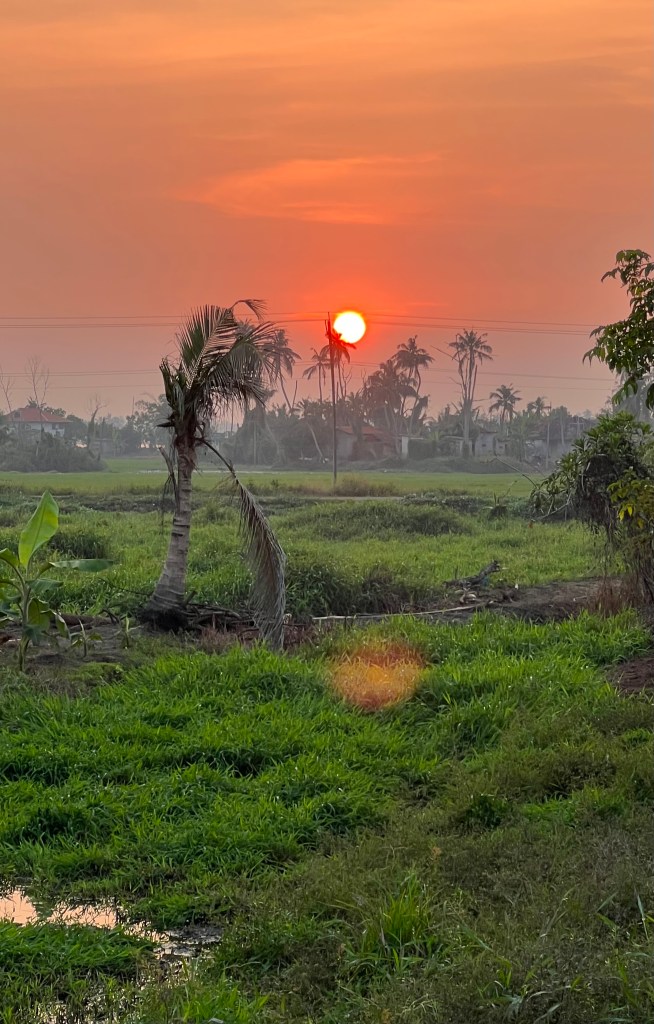
Several Hindu men lined the wall at the break of day. The sun had barely risen above the rice paddies when they lifted their hands, lowered their heads and silently muttered their morning prayers before jumping into the water and swimming back and forth. They rubbed themselves dry with cotton towels before going to work in the houseboats as their guests awoke. A few well dressed men and women with stiffly ironed shirts and colourful saris walked along the dirt path toward a Devi temple – for the powerful female consort of the equally powerful Lord Shiva. The night before, on the occasion of the lunar new year, the temple was glittering with hundreds of candles and blaring prayers to Devi through its loudspeakers. Now it was silent, Brahmins murmuring prayers they would each day.
In the distance, a muezzin’s piercing cry called people to prayer at the earliest rays of the sun. Sunday morning’s cacophony of religious sights and sounds – the boats that plied children and clergy to school, Brahmins muttering beneath this breath, the muezzin’s cry – attest to Kerala’s motto, ‘Gods Own Country’ a motto that belies the state’s deeply communist roots. Yet it is the state that is admired for inter-religious harmony.

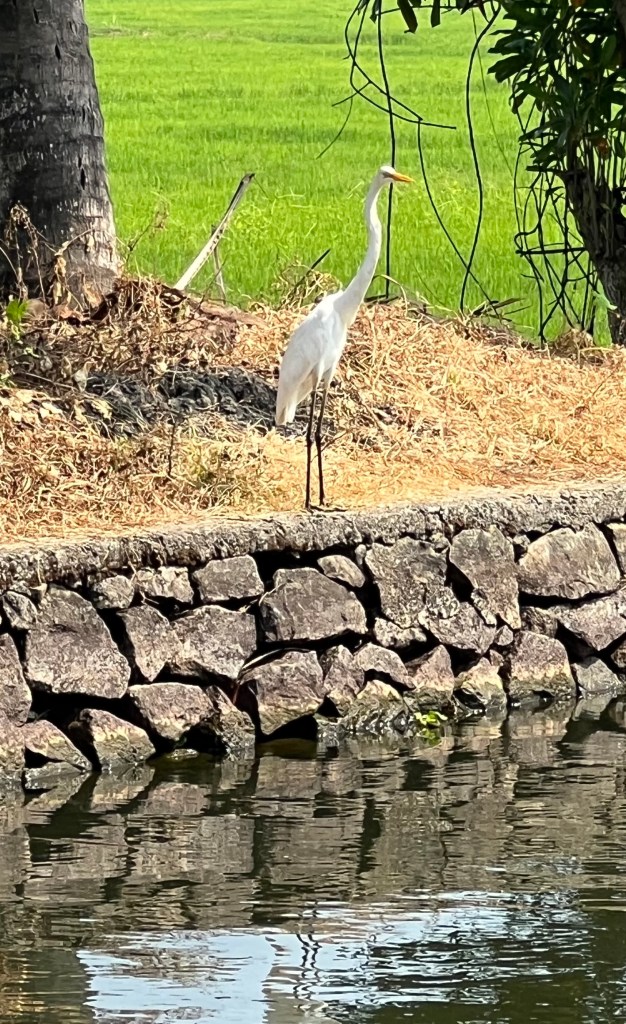
It is January, the cusp of winter when the backwaters are alive with the most diverse bird life in the world. Whiskered terns, egrets,and purple herons pirouette just above the water, giant cormorants and kingfishers line the shore, and above, kites, osprey, and hawks lazily petrol the skies. Black drongo with distinctive split tails, the sight of which, according to local legend, is a call to look deeply within yourself for gratitude and awareness, auspicious mynahs, and teals. Some like the stork would have migrated from far away Siberia.
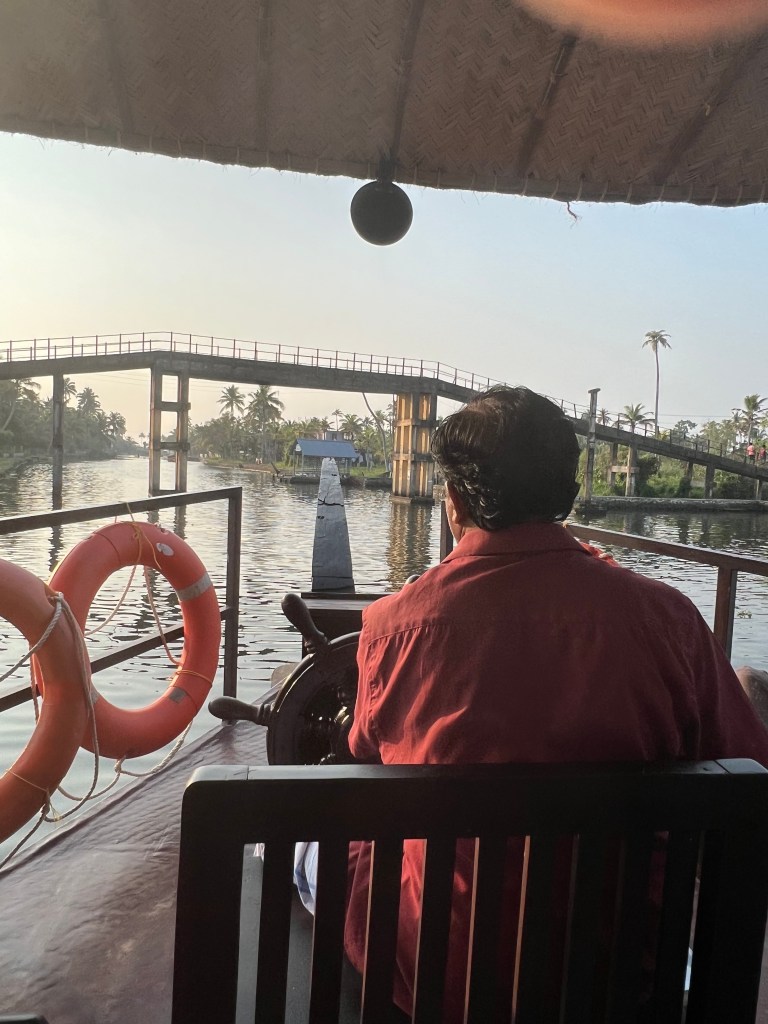
On the journey along the canal in our houseboat, the mango trees can be seen weighted down with green mangos yet to be harvested, banana trees are fully laden as are the coconut trees, the custard apple trees, and palms. Morning Glory vines smother the fences of the small homes along the canal – almost all are single storey bungalows – and are surrounded by sacred Marigold, yellow and pink Hibiscus, Chrysanthemums.
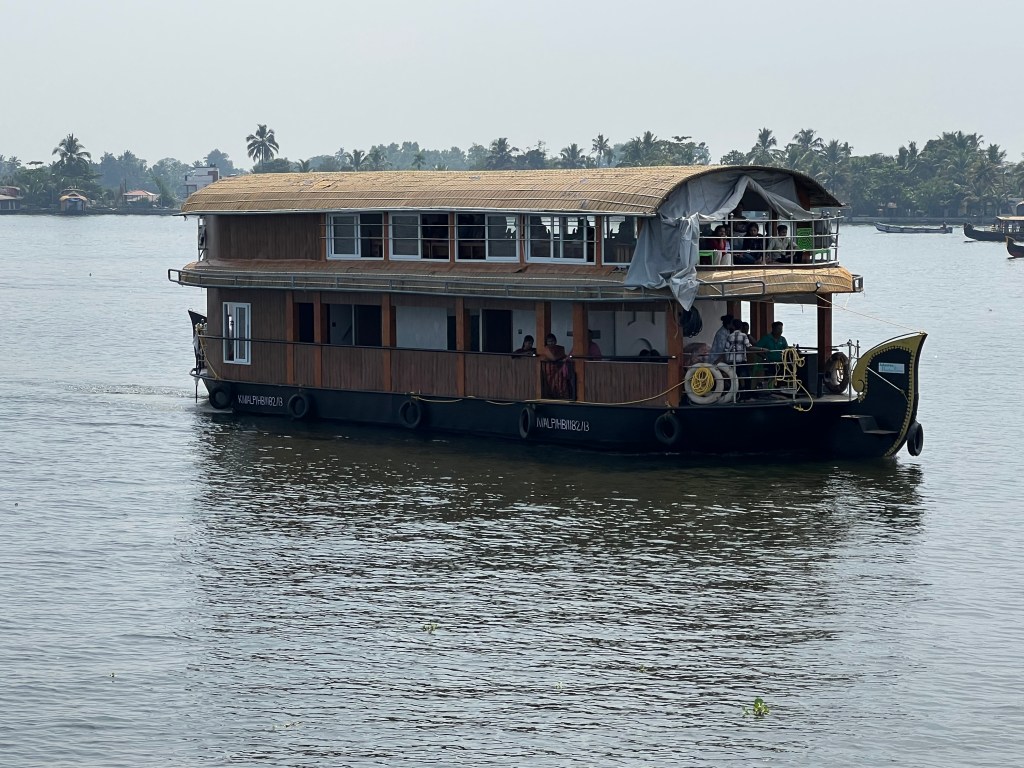
Soon the backwaters would be filled with activity. A double decker boat called, the Vatican, with dozens of men, women and children, all with white dots on their foreheads and some men with orange robes plows by – probably on their way to church. A well dressed couple goes by in a small boat – she holding a purple umbrella over both of them, and few men and women quietly clean their laundry. Despite the noises there is never a sense of discordance, rather it seems sights and sounds play within the large silences as the sun rises and life slows with each hour as the sultry heat envelops each sound.
The sense of sacred is near at hand in Kerala. The deep commitment to communism along with a deeply inculcated sense of sacred will always make Kerala unique. With a superb education system (99% literacy for women and men in a country where 84% of men and 71% of women are literate.), and well organized health care network as may be expected in a communist state, Kerala’s largest income stream is foreign remittances. Three and half million of her citizens dominate health care, IT, and business in the middle eastern Gulf states where Malayam has become the second language.
Articles about Kerala:
 Vidante