Suresh is barely thirty-five and considers himself fortunate despite having lost his father and his fifteen-year daughter on the same week two years ago. “My daughter was in college” he said, “she would have been the first of our family to study in college. She wanted to be a dietician.” “How did she die so young?” I asked. “Her blood pressure raced to over 240/140 after her covid vaccine.” He said, “we took her to hospitals everywhere and they couldn’t help” and he stopped before whispering, “she wanted to go to class even in those last days.” He put down his blade and showed me her picture on the phone. She was dressed formally with a bright red half sari worn by unmarried girls, a large red dot on her forehead customary amongst the labour castes, and a bright green blouse. She sat on a majestic old fashioned wooden chair like those in photography studios – the ones that were used for hundreds of years, the same ones that can be seen in photographs in every home in the village.
He has his own barber stall at the main junction between the main road of the village and the inter-village road. His is the blue stall with the pictures of several gods – Ganesh, Shiva, and Krishna. Around him were chai shops, candy stores, and vegetable stalls, and across the road, in the shadow of the crematorium, a man muttered mechanically beneath his breath selling a half-dozen defeathered chickens that hung along the ends of the stall. The sun had not yet climbed high enough to chase away the cool breeze. Shadows lingered of the large statue of the venerated 19th. c British engineer, Sir Arthur Cotton proudly seated on his horse near the edge of the very canal he had envisioned. Women washed their clothes in the bank, beating them against the steps.
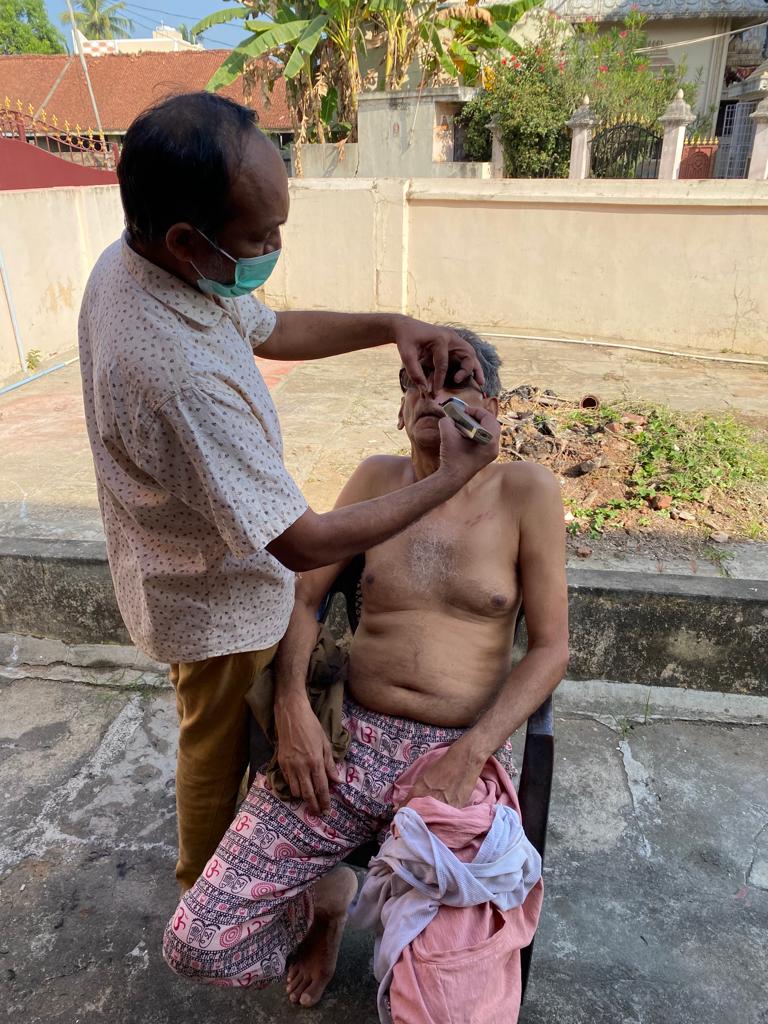
This morning, he closed his shop when my father-in-law summoned him to the mansion to give me a haircut, shave, and massage. He is adept with his blade which is adequately sharp, but I winced when he used only cold water to dip his blade in. “I prefer you use hot water,” I said and added, “perhaps you can use my shaving cream” He nodded and said, “Yes. Yes.” He said, “the foreigners use hot water and shaving cream.” He spread the cream on my face and once again began to work diligently.
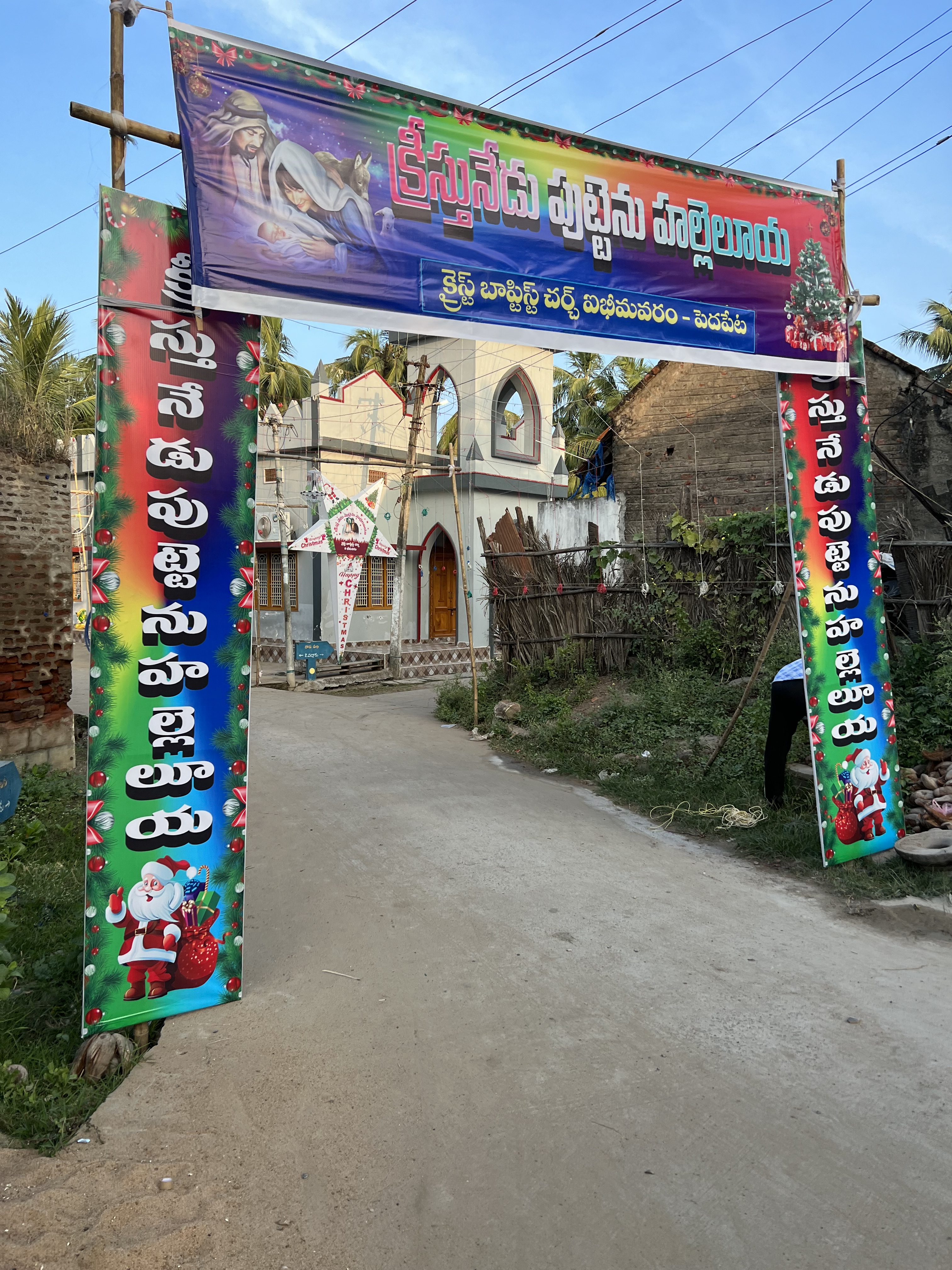
It was the day after Christmas and the loud recording of a Telugu rendition of “Silent Night” wafted from the Christian area of the village. The sun had risen enough that the parrots, and crows retreated into silence amongst the trees. There was little traffic and the few waterbuffalo that were marched down the main street to the canal and back left dung behind them on which the herdsmen threw sandy dirt from the side of the road and kicked to the side.
A few men gathered nearby – all wealthy landowners – and one of them with a starched silk shirt said to Suresh, “You didn’t forget I have a marriage next week?” to which Suresh nodded, “How could I, Sir. You have reminded me so many times. I will come to your home and will make you all look great before the groom’s family arrives.” The village President – the head of the ancient tradition of an elected, five-person, “panchayat” – took his place proudly, holding up his first grandchild – a beautiful little baby girl in diapers who surveyed the expression in the faces of foregathered when she smiled broadly.
“How did your father die?” I asked softly when the men turned to their favourite topic – the failing state economy and condition of the roads. “He went for a routine gall bladder operation.” He said, “and he never survived. He was only sixty.” He continued to ply his trade silently. After the shave he cut my hair, took out a bottle of coconut oil and massaged my head, my arms, chest, and legs. When he finished, he whispered, this time, as if to himself, “My son was accepted to college yesterday. He will be an engineer. That is the way life is… sometimes there is pain and sometimes, joy.”
 Vidante